"Moshiach is ready to come now-our part is to increase in acts of goodness and kindness" -The Rebbe

Thursday, June 21, 2012

Gimmel Tammuz--Join the Rebbe's Holy Work!


Dear Friend,

The holy day of Gimmel Tammuz is almost upon us, and so it surely behooves us to take a moment to reflect on the meaning and lesson of this day. The Rebbe gave us an important mission, a call that rings constantly in the ears of his every chossid: "Do everything you can to bring Moshiach!" (see here). 

Now, although the Rebbe called for many, many activities from his followers, and from all Jews, with the goal of completing our task in exile and bringing the final redemption, there was one particular task that he emphasized time and again is the "mission of our generation" (see here, for example)
--the dissemination of Judaism in general, and the teachings of Chassidus in particular. In fact, the Rebbe declared in his very first address (see bottom of the page here) that the goal of disseminating Judaism in general, as crucial as it is, is in fact subordinate to the latter--the goal of disseminating the teachings of Chassidus. As the Rebbe taught countless times, based on the promise of Moshiach to the Baal Shem Tov, the mass dissemination of Chassidus is the key to bringing Moshiach.

Although I trust that you, as a loyal chossid of the Rebbe, are surely devoted to this mission, please take a moment to consider supporting my activities, which are exclusively devoted to the above cause (with the help of Hashem). 

For the last four years I have maintained a website, www.a-farbrengen.blogspot.com. On it I have produced a consistent output of high-quality articles and essays--now numbering over 400!--on various topics related to the teachings and the lifestyle of Chassidus. Please make note that many of the topics that I address and the materials that I present are not available in English anywhere else. I have also distributed these postings via a growing e-mail list to subscribers worldwide, and you have been one of my loyal readers.

Do you like what you read? The articles I write require a lot of time and effort—for research, writing, and reviewing. And w
ith Hashem’s help, I hope to greatly develop this material, and compile it into a full-length book.

There are two things you can do in order join this effort. If you are unable to help me in both, then please consider helping out in at least one of them.

1. Do you have some friends who are looking for a refreshing boost of spiritual inspiration after a long, gruelling day at work, and would like to have the benefit of receiving regular updates in their email inbox to peruse at their convenience? I would imagine you do. Please consider referring them to me so that I can add them to my growing mailing list (which currently numbers 800+). And if every current reader can refer at least five people to me, I can multiply my readership many times, with the help of Hashem.

2. Thank G-d, I am blessed with a beautiful family that I must support. And so in order to continue this public service, financial assistance is needed. Please make a donation in order to help support these efforts. 

For just $36, please sponsor an article in honor of your loved one/s. I would suggest that you sponsor an article regularly in honor of your anniversary, in honor of the birthdays of your various family members, and in honor of the yohrtzeits of your departed loved ones. This donation can also be made lirefuah sheleimah, or in honor of a bris, wedding, or the like.

If you are able, please consider making a more substantial donation, to sponsor a series of articles, a full-length booklet, or even an entire book. And if there is a specific subject in Chassidus that is close to your heart, and you would like to sponsor an article discussing that particular topic, I would be eager to do so.

Please click on the Donate image on the right-hand-side of my site in order to make a secure donation via PayPal. Or, to send me a check, please get in touch with me via email for my mailing information.

Thank you, and best wishes for a meaningful and uplifting Gimmel Tammuz. And most importantly, may Moshiach come now, enabling us to spend this year's Gimmel Tammuz in our holy city of Yerushalayim, with the third Beis HaMikdash, with no more joy and sorrow, and reunited with our dear Rebbe (see here), and be privileged to again hear Chassidus from his holy mouth on Gimmel Tammuz of this year!

Yours sincerely,

Friday, June 15, 2012

Meraglim: Breaking Through the Resistance

Meraglim: Breaking Through the Resistance

Rabbi Yehoishophot Oliver

“We cannot ascend to that people,” the spies declared, “for it is more powerful than us [mimenu].”[1] The Gemara states[2] that mimenu can also be translated “than He”—than Hashem.

The spies were not just delivering their conclusion from their intelligence report, and pronouncing that the land was too difficult to conquer in a natural fashion, through warfare. They were denying Hashem’s very ability to employ supernatural means to enable the Jewish people to conquer the Land. Even if He were to leave His vessels there, He would be unable to retrieve them,[3] the Gemara explains. They were uttering heresy.

Now, the spies were no fools. On the contrary, each one was the leader of his respective tribe, a personage of the utmost distinction and stature. Moreover, from all the Jewish people, they had been personally selected by Moshe Rabeinu for this mission, which required keen perception and shrewdness. So if they rejected Hashem’s ability to conquer the Land, they must, it would seem, have had what in their minds was a very compelling justification for such a dramatic statement.[4]

Yet the Torah relates that Hashem’s response was to castigate them, “How long will this wicked assembly provoke complaints against Me?!”[5] Hashem instructed Moshe to convey His rebuke and curse that on account of their spies’ sin, they and all the Jews who believed them would die out in the desert.

Moshe Rabeinu was not told to respond to the spies’ claim by discussing fine points of philosophy with them, and rationally disproving their misconceptions about Hashem’s powers. Moshe did nothing but scream at them and curse them, along with the entire Jewish people (besides the women and the tribe of Levi).

And yet the Torah relates that the next morning, the spies (and all the Jewish people) awoke early, and recanted their heresy,[6] repenting and confessing their guilt, “We are ready; we will rise up to the place of which Hashem has spoken, for we have sinned!”[7] Now, if they had believed that it was simply impossible to enter the Land, even through the greatest of miracles, why would the threat of death have changed their minds? After all, they had been so convinced that the attempt to conquer the thirty-one kings in the Land was foolishly suicidal that they had proclaimed their desire to ... return to Egypt, with everything that that entailed, rather than travel onward toward the Land!

The answer is that a Jew is more than his mind, known as the Nefesh HaSichlis—the Intellectual Soul. A Jew possesses a Neshamah, which is “a part of Hashem from Above,”[8] and this is his true, inner self, and the source of his faith in Hashem. Thus, the Jew’s faith is not external and additional to his being, a result of intellectual proofs; it is fundamental to his very being (see here and here). Jews are “believers, the children of believers”[9]—a Jew is born with a natural, inherent faith in the reality of Hashem and Torah.[10] Of course, a proper chinuch (education) is necessary, but this merely reveals his inherent connection with Hashem.

So what is the origin of the doubts that sometimes fall into a Jew’s mind? They stem from the coarseness[11] within the Bestial Soul. This soul stems from Kelipah, which is a negative spiritual energy that conceals G–dliness.

In a spiritually healthy Jew, the Bestial Soul willingly submits to the Neshamah’s influence, and thereby becomes elevated to serve Hashem enthusiastically. However, sometimes Hashem tests the Jew by granting the Bestial Soul the strength to challenge the Neshamah in order to conceal its powerful G–dly light. It can do this in many ways, but one of its tricks is to cast into the Jew’s mind doubts in his or her faith. “Maybe it’s not really true ... ” If such a thought enters one’s mind, one must expel it immediately, “with two hands.”[12]

If one sins and continues entertaining the doubt after it fell into his mind, then even if he doesn’t lose faith completely, G–d forbid, the doubt weakens his devotion and prevents him from serving Hashem with joy, for joy depends upon certainty, as the saying goes, “There is no joy like the removal of doubts.”[13]

Now, on its own, Kelipah cannot exist and sustain anything. Its only power to do so stems from the energy that it receives from holiness. And so in reality, nothing that receives its life from Kelipah has true substance.

Likewise, since these doubts emerge from the coarseness of the Bestial Soul, they too have no substance. Although they may vest themselves in apparently rational arguments, in reality they are nothing but the evil inclination in the clever guise of the philosopher of supposedly superior intelligence. Hashem tests every person on his or her level, and for some—and especially for the more intellectually inclined—the test of faith when it seems that reason dictates otherwise, is very difficult.

Chassidus provides the solution for these struggles. Be aware that not only is the Bestial Soul merely Hashem’s messenger to test the person, but it knows very well that Hashem is true; it harbors no doubts in faith at all. Rather, it is acting like a salesman trying to sell a gullible consumer a product that the salesman knows very well is faulty. No matter how convincing the salesman may sound, once you find out that it’s just a scam, you will ignore the salesman’s pitch, and tell him to take a hike. Likewise, Chassidus tips us off that the doubts we may have are not real, for every Jew believes in Hashem; rather, the doubts are nothing but a test from Above.

The Zohar[14] compares this (this was discussed in an earlier post here) to a king who has spent years inculcating his son with proper morals, and wants to test him in order to ascertain whether he had truly absorbed the king’s values. So the king sends a harlot to seduce the prince, and instructs her to “give it everything she’s got.”

On the one hand, she must faithfully perform her mission—to use her every wile to seduce the prince. However, inside she knows that in reality the king wants her to fail, and that only then will her mission have met with success. If, however, the prince succumbs to temptation, then the harlot has failed.

This answers the question concerning the spies. The spies’ doubts only seemed intellectual, but in reality these thoughts were nothing but the unrefined coarseness of the spies’ Bestial Souls seeking to topple them. And so Moshe Rabeinu rebuked the spies harshly, thereby breaking through the coarseness of the Kelipah, and revealing the spies’ Neshamos, which radiated the inner faith that had lain dormant all along, unaffected. No religious debates were necessary, nor would they have succeeded.[15]

So the proper response to doubts is not to address them head-on. Rather, do something tangible to purge the inner coarseness that is giving rise to the doubts.

Likewise, we find that (unlike the approach of many other well-meaning outreach workers) the Rebbe’s general approach to spreading Yiddishkeit is to avoid entering into debates and giving logical proofs. Instead, simply encourage a Jew to perform a Mitzvah. Every Mitzvah he performs breaks through his inner resistance, especially since it requires much inner effort for him to do so, and allows his Neshamah to emerge more and more. Then “One Mitzvah brings another in its wake,”[16] until the resistance is completely removed, and the Jew’s Neshamah comes into full blossom, with the Jew enthusiastically undertaking full observance of Torah and Mitzvos.

I will end with a story that illustrates the above lesson: The Rebbe once related that the Alter Rebbe once came into a shul in Shklov where many Jews had assembled to hear him, including several young Torah scholars who were skeptical about the teachings of Chassidus, and had prepared Talmudic questions to ask him. The Alter Rebbe sang a soul-stirring niggun (melody), and all the questions in the listener’s minds were answered. They ran toward the Alter Rebbe in their eagerness to become his disciples.

Adapted from Tanya ch. 29.

________________________________________________________
[1] Bamidbar 13:31.
[2] Sotah 35a.
[3] Bamidbar ibid., Rashi.
[4] The commentaries discuss what this explanation may have been, but in this article we will not focus on that point.
[5] Ibid. 14:27.
[6] According to the Alter Rebbe in Mei’ah She’arim 26a, at that point the spies had not yet died, and they took part in this collective renunciation.
[7] Bamidbar 14:40.
[8] Tanya, beg. ch. 2.
[9] Shabbos 97a.
[10] This is in contrast to even the most devout of non-Jews, and even one who qualifies as a “pious gentile” because he accepts Torah and follows the Noahide laws (Mishneh Torah, Laws of Kings, 8:11). Yet his or her belief in Hashem is not an inborn phenomenon, but a learned and acquired understanding (Kuntres Uma’ayan, p. 130) that is a function of his or her Intellectual Soul.
[11] In the Hebrew, “chumriyus”—see here.
[12] Tanya ch. 12. It is a sin to dwell upon a thought of idolatry or heresy: “Do not turn astray to go after ... your heart—this refers to heresy” (Sifri on Bamidbar 15:39).
[13] Quoted in Hemshech Mayim Rabim, 5636, beg. Cf. Metzudas Dovid on Mishlei 15:30. Toras Ha’Olah 1:6.
[14] Zohar 2:163a. Cf. Kesser Shem Tov #115.
[15] Our response to the wicked son on the Seder night is also harsh, and doesn’t actually address his question; this appears to be the explanation for this approach.
[16] Avos 4:2.


Dedicated by Tzvi and Yehudis Rona and family, as a merit for the yahrtzeit of Golda Ruth bas Moishe Tzvi Halevi on 22 Tammuz.


Dedicated in the merit of a speedy release for the captives 
Yonasan ben Malka (Jonathan Pollard), Sholom Mordechai Halevi ben Rivka (Sholom Rubashkin), and Zeva Rochel bas Chaya (Wendy Weiner Runge).


Like what you read? The articles I write take a lot of time and effort. Please contact me to sponsor an article for (at least) $36 in honor of the birthday, wedding anniversary, or yarhtzeit of a loved one, or for a refuah shleimah or the like. Also, see here concerning the tremendous merit of supporting the dissemination of Chassidus, and the blessings that one receives for doing so.

Tuesday, June 12, 2012

Pure pleading

Pure pleading

Rabbi Yehoishophot Oliver

The highest point of Tefillah is the Shemoneh Esrei, in which we beseech Hashem for our needs. In so doing, we recognize and further reinforce the tenet of faith that we are totally dependent upon Hashem for all our blessings, and that only “the blessing of Hashem makes one wealthy.”[1]

But exactly what should you plead for? The simple answer: Whatever you feel that you’re lacking. But how is this defined?

Before analyzing this question, consider whether your goals in life are pure, because if they are tainted, then your prayer will also be tainted.

We can understand this by considering the extreme case mentioned by our sages: A thief can be standing at the entrance to a tunnel, poised to commit a burglary, and yet pray to Hashem to crown his endeavor with success![2] Now, to any normal ear, aside from constituting outrageous insolence, this “prayer” is the height of foolishness and absurdity. For if one is callously violating Hashem’s commandment, how could he reasonably expect Hashem Himself to grant his plea?! It’s akin to asking someone to hand you a dagger so that you can stab him! Of course, you’d naturally regard such a person as irrational and foolish, confident that you would never stoop to such depravity yourself. Right?

Wrong. Many of us are guilty of the same kind of behavior, albeit in a less blatant form.

One example of a self-contradictory request in Tefillah can be presented by the businessman.

The Torah strictly forbids any dishonesty whatsoever in one’s business dealings, calling for the highest standards of integrity.[3] If, however, one is doing business in some sort of questionable manner, then his request to Hashem for success is similarly self-contradictory. Yes, he correctly recognizes that his livelihood comes from Hashem, but he is asking Hashem to bless his efforts ... to defy Hashem’s will!

Moreover, his very request indicates the selfish, G–dless focus of his life. Yes, Torah requires that one work in order to earn a living, and thereby make a vessel for Hashem’s blessings within the natural order, as it is written, “Hashem will bless you in everything that you do.”[4] However (to state the obvious that is all too easy to lose sight of), the work is not the end in itself; it is not the purpose of our creation and brief sojourn on earth. Rather, Hashem declares, “I made the earth, and I created man upon it.”[5] The expression “I created,” בראתי, has the same numerical value of 613, for the purpose of creation is the fulfillment of the 613 Mitzvos.

One who is conscious of the primary importance of Mitzvos will only engage in mundane activities “for the sake of Heaven,”[6] in order to enable him to perform the Mitzvos and refine the sparks of holiness (see here) that lie in his livelihood. Since he genuinely desires to fulfill Hashem’s will, he will not use means to pursue a livelihood that are repugnant to Hashem, and that constitute a rebellion against Him, may Hashem save us.

Adapted from Sefer HaMa’amarim 5687, pp. 120-121.

__________________________________________________________
[1] Mishlei 10:22.
[2] Berachos 63a.
[3] The Gemara even exhorts us (Makkos 24a) to “speak the truth in one’s heart” (Tehillim 15:2) by relating the story of Rav Safra, who was approached in his store while in the midst of praying with an offer for a purchase. But since he was praying, he didn’t respond. The customer raised his bid, thinking that Rav Safra had turned down his offer. When Rav Safra finished praying, he told the customer that he would sell the item for the original amount, because in his heart he had then accepted that lower offer.
[4] Devarim 15:18.
[5] Yeshayah 45:12.
[6] Avos 2:12.

Dedicated in the merit of a speedy release for the captives Yonasan ben Malka (Jonathan Pollard), Sholom Mordechai Halevi ben Rivka (Sholom Rubashkin), and Zeva Rochel bas Chaya (Wendy Weiner Runge).

Also dedicated by the Braunstein and Rona families in honor of Shlomo ben Pesach on 8 Sivan.

Like what you read? The articles I write take a lot of time and effort. Please contact me to sponsor an article for (at least) $36 in honor of the birthday, wedding anniversary, or yarhtzeit of a loved one, or for a refuah shleimah or the like. Also, see here concerning the tremendous merit of supporting the dissemination of Chassidus, and the blessings that one receives for doing so.

Saturday, June 9, 2012

Meraglim: Inappropriate Fear of Tests

Meraglim: Inappropriate Fear of Tests

Rabbi Yehoishophot Oliver

The spies were the emissaries of the generation of the desert, and they were the Nesi’im, the leaders of their respective tribes. Thus, when they refused to enter the Land, this reflected on the level of their generation—the entire generation did not want to enter Eretz Yisrael.

What was the complaint of the generation of the desert? Why did they not want to enter the Land? Chassidus, as is typical, explains their refusal to enter on a deeper level than the peshat, the basic level of understanding. They were on a very advanced spiritual level, and they had a very profound reason, but they erred in their assessment because they lacked Kabbolas Ol—submission to the divine yoke, and this is the reason that they were so harshly punished.

They didn’t want to enter the land because they feared the detrimental effect that it would have upon them.

First, in the desert, they were enveloped in a cocoon of sublime holiness. They were eating the mon, drinking water from Miriam’s well, and being protected by the Clouds of Glory. They could not bring themselves to tear themselves away from this blissful, pure state, and enter the land of Canaan, where they would fall from their spiritual high.

Second, they were afraid of being tested. One test was related to Hashem’s instruction to observe the Shemitah year by letting the soil lie fallow: Hashem had instructed the Jewish people to enter the Land and “Let the Land rest for Hashem as a Shabbos; for six years sow your fields, and for six years prune your vineyards and gather their crops.”[1]

To act with the appropriate bitachon, trust, in Hashem,[2] and not work the Land, required tremendous self-sacrifice, and they did not want to enter such a test.

And even during the other six years, the Jewish people knew that they would have to work the soil, and they were afraid that lowering themselves to this mundane, physical task, and being so preoccupied with materialistic concerns might lead them astray from devotion to spirituality and Hashem.

Why is descending into the realm of the physical so spiritually dangerous? Because it involves getting “down and dirty” in enemy territory—the territory of Kelipah. One gets involved with Kelipas Nogah in order to refine it, and one comes into contact with Sholosh Kelipos Hatemei’os in order to reject it.

According to valid, Torah-based, holy calculations, their reluctance to engage in this activity had validity, and in a sense, it even stemmed from their humility. They were reluctant to enter into a situation in which their devotion to Hashem would be tested. For when you fight against a formidable enemy, you might very well lose. As we beseech Hashem in our prayers, “lead us not to temptation”[3]—and if one genuinely asks Hashem not to put oneself in such circumstances, one will surely not do so of one’s own initiative.

Now, even if one has sinned, all is not lost—ultimately, every Jew will do Teshuvah.[4] However, this is important to remind ourselves of after sin occurs, but we must never allow that awareness to detract from our fear of sin. Firstly, it is inherently wrong to sin, even if one does Teshuvah afterward, [5] for one severs one’s soul from Hashem.[6] Moreover, one has no way of knowing when one will do Teshuvah. One might not even end up doing Teshuvah in one’s lifetime, leaving one’s poor, suffering soul to do Teshuvah in a future incarnation,[7] or only after Moshiach comes. (The tremendous divine revelation of the time of Moshiach will make the Neshamah very embarrassed at being “caught” with the stains of sins for which the person has not done Teshuvah.)

This is why the generation of the desert reported that in the Land they saw the Nefilim, lit., “the fallen ones.”[8] These were angels that had fallen from the higher spiritual realms,[9] and observing this led the members of that generation to believe that by descending to refine a low level, they too might fall drastically in their spiritual level.

But although the fear of being led into temptation has validity, Moshe Rabeinu—who was Hashem’s spokesperson, as it is written, “The Shechinah speaks from his throat”[10]—instructed them to enter the land regardless, in order to engage in the task of refining the sparks of holiness in the material world. This was Hashem’s desire, as Yehoshua and Calev said of entering the Land, “If Hashem desires us.”[11]

And since this is what Hashem desired, even a well-meaning person who refused to obey because of the above concern was considered to be rebelling against Hashem, may G–d save us. This is the meaning of the verse, “Only, do not rebel against Hashem...”[12] Refusing to enter the Land, even on account of an otherwise legitimate concern, constitutes rebellion against Hashem’s desires.

Moreover, Moshe sought to bring them to grasp this intellectually by telling them: “The Land is very, very good.”[13] This implies that by entering the Land and working it, one connects to a level even higher than that revealed at the beginning of the creation, before the sin, when “The world was created whole,”[14] for then it was only written “very good” once,[15] while by descending into the Land, which represents the material world, one comes ultimately to an even higher level—“very, very good,” which refers to an incomparably higher spiritual level.[16]

The reason for this is that the higher the source of the spark, the further down it falls,[17] and so when we occupy ourselves with the lowly, physical world, we refine these exceedingly lofty sparks of holiness. By faithfully performing the task required on the lowly level, we reveal the true reality of the lofty source of the sparks that lie there.

This is why it was not enough to serve Hashem in the desert—they had to enter the land of Canaan, which was a low, degenerate land, and serve Hashem there and thereby bring holiness into it, making it into a holy land, and in this way they refined the sparks there.

We find a parallel concept in our divine service. There are two different kinds of souls:[18] those of Torah scholars, and of businesspeople.[19] Torah scholars correspond to the generation of the desert, whose main task was not refining sparks of holiness, while businesspeople correspond to the generation that entered the Land, whose main task was to refine sparks of holiness.

And yet, each one must engage in the other’s divine service as well. In the context of this article, it is noteworthy that Torah scholars should also give some amount of money to charity, albeit a very small amount.[20] True, the Torah study and prayer of Torah scholars also refines sparks of holiness, and on the contrary, for the Torah scholars, refining these sparks is their main task in the world. However, since the sparks in the physical stem from an even higher source, even Torah scholars must give some charity, in order to refine at least some of these sparks.

Based on the Rebbe's Hisva’aduyos 5746, Vol. 2, p. 626 ff.

_______________________________
[1] Vayikra 25:2-4.
[2] Vayikra Rabbah 1:1.
[3] Morning blessings. Cf. Berachos 60b.
[4] II Shmuel 14:14.
[5] Tanya ch. 25.
[6] Ibid. ch. 24.
[7] Shulchan Aruch Admur HaZakein, Laws of Torah Study, 4:3. Tanya, end ch. 39.
[8] Bamidbar 13:33.
[9] Yalkut Shimoni, Bereshis, 44. Cf. Pirkei DeRebbi Elazar ch. 22, Bereshis Rabbah, end ch. 26.
[10] Cf. Mechilta, Shemos 19:19.
[11] Bamidbar 14:9.
[12] Ibid. 14:8.
[13] Ibid. 14:7.
[14] Bereshis Rabba 14:7.
[15] Bereshis 1:31.
[16] Sefer HaMa’amarim 5567, p. 235.
[17] Likkutei Torah, Re’ei, 12a ff.
[18] Tanya 109a.
[19] Bereshis Rabbah 99:9. Rashi on Bereshis 49:13. Devarim 33:18.
[20] Shulchan Aruch, Yoreh Dei’ah 248:1. If one gives less than a third of a shekel to charity in the course of a year, one has not fulfilled the Mitzvah of giving charity.


Dedicated by Reb Yisrael Meir Rafael and family.


Like what you read? The articles I write take a lot of time and effort. Please contact me to sponsor an article for (at least) $36 in honor of the birthday, wedding anniversary, or yarhtzeit of a loved one, or for a refuah shleimah or the like. Also, see here concerning the tremendous merit of supporting the dissemination of Chassidus, and the blessings that one receives for doing so.

Wednesday, June 6, 2012

Educating for Yiddishkeit by Raising Leaders

Educating for Yiddishkeit by Raising Leaders

Rabbi Y. Oliver

We live in an age and culture in which, for better or worse, the average young person has an independent streak that makes it harder for him or her to obediently follow the example of the older generation. They feel a strong need to forge their own path, to individuate from their parents and elders. How are we to handle this phenomenon, which seems to be at odds with the fundamental goal of chinuch—passing on the timeless beliefs and practices of Torah observance to our offspring?

The Rebbe answers: Use this independent streak to raise children from the earliest years with the goal of being leaders, and encourage them to assume this role wherever and whenever possible.

In the words of the Rebbe:
... There has been a lack of attention given to educating the young generation. And even those who have been involved, wanted to educate the young generation “from above to below”—in other words, to have the youth look up to the elders, who are experienced, and learn from them. The young generation finds this unacceptable, because they want to be independent.

How, indeed, can we influence the young generation? By educating them from early childhood, and also by striving that at a later point, they too will become educators themselves. This is the way to conquer the young generation, and also the middle-aged generation.

This is one of the main purposes of yeshivos. In yeshivos, the students aren’t only taught on the individual level. Rather, the main goal is to imbue in the student the awareness that he has to influence his entire sphere of influence—at first, only a limited circle, and later on, a larger circle—to draw them close to Judaism, to the extent that they not only do they fight a defensive war, but an offensive war; i.e., they too will fight for Judaism.

This is especially prominent in Lubavitcher yeshivos. Lubavitcher yeshivos don’t just teach their students to be frum in their relationship with Hashem and with their fellow Jew. Rather, they teach the students that even while still in yeshivah, they must make use of their talents and opportunities to influence others, and serve as leaders.

Thus, a gathering to support a Chabad yeshivah entails more than supporting a particular group or movement. Everyone who joins in by donating to the yeshivah takes part in supporting Judaism overall, because the students of the yeshivah will develop into warriors for Judaism and leaders of the Jewish people—in New York, in the entire United States, and even overseas.

The students of the yeshivah are the soldiers who will go out to the front of the war for Judaism. Thus, one who supports the yeshivah and enables it to accept additional students, takes part in the war for Judaism in New York, in the United States, and in the entire world.

Adapted from Toras Menachem, Vol. 10, p. 147. Cf. Igros Kodesh, Vol. 19, p. 373.
In my own words, with a bit of explanation:

Practically speaking, in our times, raising children to be G–d-fearing means raising them to lead. Of course, parents should send their children to a proper Jewish school, make sure to provide a home atmosphere permeated with Yiddishkeit, love and fear of Hashem and His Torah, learn with each child one-on-one, and the like. Yet in addition to all these efforts, parents should actively encourage children and teenagers to exert a positive influence on their less-observant peers in an appropriate manner, make sure they take part in outreach activities (mivtzo’im) as much as possible, and imbue in their hearts the aspiration to one day assume a leadership role of some kind themselves.

In addition to the benefit for others, this focus will in itself enable the child to be proud and independent in a positive, constructive way, while at the same time remain humble before Hashem and His Torah, and protected from detrimental outside influences.

In addition to the parents’ own efforts in this direction, it is of crucial importance that they send their children to a school that shares the awareness of the crucial role that making leaders plays in educating children and youth in our time. The most suitable school and yeshivah for this purpose is a Lubavitcher one.

Moreover, it deserves to be emphasized that this instruction applies not only to children and teenagers, but also to those who are in mid-life, and whose devotion to Torah observance unfortunately leaves something to be desired. Their Torah observance can be rejuvenated and filled with new meaning and purpose by their taking an active role in activities of Jewish outreach.

_________________________________________
Dedicated by Reb Yisrael Meir Rafael and family.


Dedicated in the merit of a speedy release for the captives Yonasan ben Malka (Jonathan Pollard), Sholom Mordechai Halevi ben Rivka (Sholom Rubashkin), and Zeva Rochel bas Chaya (Wendy Weiner Runge).

Like what you read? The articles I write take a lot of time and effort. Please contact me to sponsor an article for (at least) $36 in honor of the birthday, wedding anniversary, or yarhtzeit of a loved one, or for a refuah shleimah or the like. Also, see here concerning the tremendous merit of supporting the dissemination of Chassidus, and the blessings that one receives for doing so.

Monday, June 4, 2012

The weekdays and Shabbos—two levels of the heart

The weekdays and Shabbos—two levels of the heart

Rabbi Y. Oliver

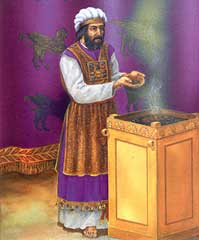
The altar represents the Jew’s process of “sacrificing” his or her inner self to Hashem. Thus, the Mishkan contained two altars, the outer and inner altar, representing the two general stages in the Jew’s service of Hashem.

On the outer altar, the Jew would offer up animal sacrifices. This represents the refinement of the Bestial Soul, and in our divine service, this corresponds to the Jew’s divine mission during the weekdays—to refine the body and the Bestial Soul. This gives Hashem pleasure, which is referred to anthropomorphically as “a pleasant fragrance.”[1]

The part of the heart that descends to vest itself in terms that will influence the Bestial Soul is merely the heart’s lower level, known as chitzoniyus ha’lev, the external aspect of the heart. This is the significance of the outer altar.

However, the inner altar was used only for incense offerings, for incense represents a higher form of divine service than animal sacrifices.

The purpose of incense is to produce a pleasant fragrance. We can understand the significance of fragrance from the Talmud: “Which is the thing that the soul enjoys, but the body does not enjoy? Fragrance.”[2] This represents a deeper form of divine service, one that involves the penimiyus ha’lev, the inner dimension of the heart. Of this it is written, “May the entire soul praise Hashem.”[3] This refers to the efforts of the soul itself to rise up to connect to Hashem, without having to lower itself to influence the body, the Bestial Soul, and its worldly environment.

Here the goal is not to refine the body and Bestial Soul, but for the Yechidah, the Neshamah’s essence, to bond and unite with the Essence of Hashem.

Although the animal sacrifices on the outer altar also produced a fragrance that brought pleasure to Hashem, as it were, this fragrance did not compare to that produced by the incense on the inner altar, for just as the entire purpose of the incense is to emit physical fragrance, so does it bring a much more sublime fragrance to Hashem.

This is the difference between the way we serve Hashem in the weekdays, and on Shabbos. On the weekdays (see also here) we refine the Bestial Soul through the chitzoniyus ha’lev, while on Shabbos, we transcend all involvement with the physical (which is the reason for the prohibitions of the thirty-nine categories of work on Shabbos) in order to reach a sublime unity of the penimiyus ha’lev and the Yechidah with Hashem's very Essence (see also here).

This is the deeper significance of the concept that the weekdays act as a preparation for Shabbos, for the more successful one is at refining the Bestial Soul through the chitzoniyus ha’lev during the weekdays, the higher the level of revelation of the penimiyus ha’lev that one merits on Shabbos.

Ma’amarei Admur HaEmtza’i, Shemos, Vol. 2, p. 674 ff.
________________
[1] Vayikra 6:14.
[2] Berachos 43b.
[3] Tehillim 150:6.

Dedicated by Reb Yisrael Meir Rafael and family.


Dedicated in the merit of a speedy release for the captives Yonasan ben Malka (Jonathan Pollard), Sholom Mordechai Halevi ben Rivka (Sholom Rubashkin), and Zeva Rochel bas Chaya (Wendy Weiner Runge).

Like what you read? The articles I write take a lot of time and effort. Please contact me to sponsor an article for (at least) $36 in honor of the birthday, wedding anniversary, or yarhtzeit of a loved one, or for a refuah shleimah or the like. Also, see here concerning the tremendous merit of supporting the dissemination of Chassidus, and the blessings that one receives for doing so.

Thursday, May 31, 2012

Why work?

Why work?
Or: The Deeper Significance of the Weekdays

Rabbi Yehoishophot Oliver

When we examine our mundane lives, it seems that the true spiritual experience is to be had on Shabbos, when we are able to withdraw from our mundane concerns and devote ourselves to Torah study and prayer. After all, what could be spiritual about the rat race of pursuing a livelihood and the numerous tasks of cooking, cleaning, and the like necessary to maintain a household?

Yet Chassidus, known as the “inner dimension of the Torah”, sheds light on this aspect of the inner dimension of our mundane lives. It explains that in fact, everything we do during the week, even the most mundane activity, has an underlying spiritual purpose.

The main purpose of our divine service during the weekdays is to create a birur, a spiritual separation and refinement, of the impure spiritual energy that permeates the physical world known as kelipas nogah. The Jew accomplishes this goal through engaging in various kinds of work, which are encompassed by the thirty-nine categories of work forbidden on Shabbos, known as melachos.

The melachos are closely related to eating, for, among other things, they encompass all the stages necessary in the process of preparing food—from the earliest stage of sowing the seeds, to the final stage of baking or cooking. And since the goal of all the efforts necessary to prepare the food is that it be eaten, eating food is the culmination of this step in refining Kelipas Nogah (albeit only the first stage; see below).

This parallels the process of refinement that takes place during physical eating, in which the stomach and the liver process the food. The higher-quality nutrients are extracted from the food’s inferior aspects and are absorbed into the body, even rising up to the level of the superior faculties of the mind and heart. The inferior aspects, however, are eliminated.

Likewise, when one eats in the proper way, the sparks of holiness that lie in the physical are extracted from the “shell” of the forces of the Kelipah, which is rejected.

The above is the first stage in the weekday birur of Kelipas Nogah. However, a further birur of Kelipas Nogah occurs when one uses the energy from the food one eats[1] to recite the weekday prayers.

Prayer is compared to eating, for just as eating involves birur, so does prayer.

The highlight of Tefillah is the Shema, in which one declares Hashem’s absolute unity, and that one is willing to give up one’s life for it.[2]

This creates a birur comparable to that of eating:

When the heart and mind of the Jew become inspired with the desire to become subsumed in the sublime G–dliness that lies at the source of the Jew’s soul,[3] this parallels the way that the energy of the food becomes absorbed in the body’s higher organs.

Likewise, Tefillah draws one closer to Hashem, and this experience humbles the person and impresses upon him just how distant he is from Hashem during the rest of the day. This realization crushes his ego and eliminates a significant amount of the Kelipas Nogah within his Bestial Soul.

This is the reason that Tachanun follows the earlier parts of the Tefillah, for once one has reached the sublime spiritual heights, he senses his lowliness all the more, and turns to Hashem and begs for forgiveness.

We can carry the comparison to digestion further. The more thoroughly the food is digested, the more nutrients are separated from the food for constructive use, and the more the waste matter that is eliminated is truly bereft of any beneficial components. Likewise, the more attention one devotes to Tefillah, the more one’s intellect and emotions become inspired to submit to Hashem, and the more one comes to realize one’s lowliness before Hashem.

This is the meaning of “The belly of the wicked is lacking”[4]: “The wicked” refers to the forces of Kelipah, which are “lacking” the sparks of holiness that were extracted through the Jew’s efforts to accomplish the weekday birurim.

Sefer HaLikkutim, Shin, pp. 93-94.
__________________________________________________
[1] Cf. Tanya, beg. ch. 8, “be’ko’ach achilah ha’hi.”
[2] In the original, “limsor nafsho be’echad.”
[3] In the original, “le’ishto’avo begufa de’Malko.”
[4] Mishlei 13:25.


Dedicated by Reb Yisrael Meir Rafael and family.

Like what you read? The articles I write take a lot of time and effort. Please contact me to sponsor an article for (at least) $36 in honor of the birthday, wedding anniversary, or yarhtzeit of a loved one, or for a refuah shleimah or the like. Also, see here concerning the tremendous merit of supporting the dissemination of Chassidus, and the blessings that one receives for doing so.

Thursday, May 24, 2012

Jews and Non-Jews: Complementary Missions Given at Sinai

Jews and Non-Jews:
Complementary Missions Given at Sinai

Rabbi Yehoishophot Oliver

It may come as a surprise, but according to many opinions,[1] before the giving of the Torah at Sinai, the Jewish people had the halachic status of non-Jews. Their basic philosophical beliefs about the oneness of Hashem, His providence, and so on, were no different from those that Jews believe in today (on the contrary, we are continuing the mission to carry on these sacred beliefs, with the help of Hashem). Moreover, the Jewish people existed as a separate nation ever since the time of Yaakov, all of whose sons were Jews. We even knew Torah, for all the forefathers sat and studied Torah,[2] and passed it on to future generations. And yet the Torah tells us that they were not real Jews until much later on, when the Torah was given at Sinai. Why?

When Hashem chose us as a nation, He separated us from the nations around us by giving us the Torah and its Mitzvos.In other words, a Jew then ceased being merely a person—in essence, a non-Jew—with a belief system and practices (along with the distinguished lineage of the forefathers) that differed from those of the rest of mankind. The Jew’s fundamental being, core, and every aspect of his or her life, became irrevocably transformed.

Now, at first glance, some (especially those with, through no fault of their own, little Torah-true Jewish education, which is accompanied by the tendency to view everything in Judaism through the critical lens of the values and yardsticks of modern secular culture) may interpret this chosenness as somehow belittling non-Jews. As implying that they are somehow second-rate, unimportant, and even subhuman. As being what in our modern world is a cardinal sin—racist. But this is simply not so.

Let’s explain.[3] The natural order—and not only our physical world, but even the higher spiritual worlds—receive their sustenance from the divine name of Elokim. Thus, our sages say, “The name of Elokim is mentioned thirty-two times in the account of Bereshis (creation).” Now, this includes not only mankind, but even the awesome system of the sun, planets, and stars, which all possess intelligence and rotate constantly out of their excitement in singing the praise of Hashem—they too derive their existence from the name of Elokim. Even the incredibly pure and sublime beings known as angels, which reside in the higher spiritual realms—and not only the lower angels, such as the Ofanim, but even the highest of all, the Seraphim (see here)—they, too, derive their existence from the name of Elokim.

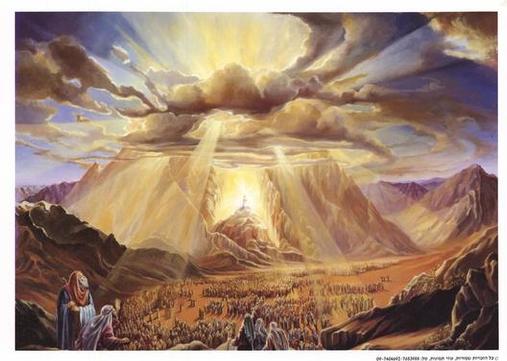
Then there is the name of Havayeh,[4] which represents a level of G–dliness that is supernatural and otherworldly. This is a level so lofty that until the Torah was given, no one had any access to it.[5] Until the giving of the Torah. At this unspeakably awesome, one-time occasion, Hashem chose to infuse the sublime level of Havayeh within every Jew.[6]

(This is the meaning of the Jew’s additional soul, the Nefesh HoElokis, the divine soul.[7] One might ask: Why is this soul is called a divine soul; after all, everything that exists has a soul that is divine, for Hashem created (and continually recreates) everything in existence? The answer is that the soul in all other beings comes from the name of Elokim, while the Jew possesses an additional soul that completely transcends the natural order, one that flows from Havayeh—the divine soul.)

However, this was only the beginning. Hashem then gave us a mission, a mission of the most unparalleled cosmic proportions. He charged us with the task of bridging the cosmic divide between Havayeh and Elokim, by revealing the name of Havayeh in the world.

To this end, He gave us the Torah, which is specifically called the Torah of Havayeh, and the Mitzvos, which are specifically called the Mitzvos of Havayeh. When we study the Torah and adhere to the Mitzvos, we reveal this level in the world around us, and to the gentile nations as well. This was in fact Hashem’s ultimate intent in creation, also known as “making a dwelling place for Hashem,”[8] for Havayeh, in the world and among the gentile nations, who stem from Elokim.

Since this is the ultimate purpose of creation, this mission carries the utmost responsibility and requires the utmost devotion and sacrifice. This is the meaning of Hashem’s statement that He made us “A kingdom of priests and a holy nation.”[9]

A Kohen, a priest, represents someone whose entire life, and every minute aspect of his life, is different from those of others. It is consecrated to Hashem.

And so Hashem gave us the Torah, which is related to the world hora’ah, guidance, for every single minute aspect of a Jew’s life, from the cradle to the grave, is guided by Torah. There is no area of life where Hashem does not provide guidance to his priests, the Jewish people, in His Torah.

This surely applies to the home, which the Jew is charged with making a Mikdash (sanctuary) for Hashem, regardless of where—in the kitchen, the living room, the bathroom, and the bedroom—the Torah guides the Jew how to bring the divine presence into all these places.

And it applies no less to the workplace, where a Jew is charged with the mission of setting an example of scrupulous honesty and integrity, and influencing his environment in a pleasant, peaceful manner, for of the Torah it is written, “Its ways are ways of pleasantness, and all its paths are peace.”[10] He should influence the Jews around him to adopt Torah observance, and the non-Jews around him[11] to believe in Hashem and Torah, and follow the Noahide Code—the eternal laws and principles of basic morality and decency incumbent upon all mankind.

This is not to say that non-Jews can’t connect to Hashem; on the contrary, they can and must, especially in light of the fact that they are created “in the image of Hashem.” However, the focus of their G–d-given mission is to abide by their Mitzvos, whose fundamental purpose is “yishuv ha’olam”—civilizing society, to settle the world physically and maintain a cohesive, peaceful, just, G–d-fearing social order, as it is written, “Not for chaos did He create it [the world, but rather] He formed it to be settled.”[12] It is this vital role for which non-Jews were assigned. Thus, non-Jews’ mission is related to the natural order, which stems from the name of Elokim, and this is the reason that the Noahide laws are rational laws that stem from the natural world. Thus, in order to accomplish this goal, non-Jews need not perform any of the Mitzvos specifically commanded to Jews.[13]

So Jews have a role—to reveal the name of Havayeh, and non-Jews have a very different role—to ensure the appropriate expression of the name of Elokim, through ensuring that the natural order follows the wishes of Hashem in His Torah.

Is this in a certain sense a lower mission than the mission given to the Jews? Yes. But so what—Hashem can do as He wishes—His will need not conform to the passing whims of the philosophical fads of mortals.

Moreover, every individual has a personal mission, one that differs from that of everyone else. Of these, Hashem clearly assigns different missions to different people—some receive more advanced, risky, responsible missions, and others, less challenging, more everyday ones.

Likewise, we find that only a Levi may sing in the Holy Temple, and only a Kohen may serve in it. I myself, for example, am not a Kohen, and as such I am barred from entering certain parts of the Holy Temple, and not allowed various Kohen privileges. But I am not bothered by that fact one bit, because since Hashem made me a non-Kohen, that role is clearly not what Hashem wants of me, and so I have been deprived of nothing.

Racism, in contrast, means refusing to treat someone with proper decency and respect simply because they belong to a group that one has some kind of animosity towards. However, the “Torah of light”[14] instructs clearly how one should view non-Jews: “Beloved is man, for he was created in the image [of Hashem].”[15] All mankind must be treated with the utmost respect, for they are beloved to Hashem by virtue of their special human intellect, which resembles the divine.

When a Jew assumes his role uncompromisingly and proudly, in addition to the inherent worth of this behavior, he also does a tremendous service for the world and all the gentile nations. He performs his role as priest, role model, and teacher to the nations, to illuminate and uplift them with the sublime spirituality of Havayeh for which he serves as a channel.

However, if the Jew chooses, may Hashem save us, to compromise his Torah observance and behave in inappropriate ways that conflict with Torah, behaviors typical of the secular culture, then not only does he harm himself grievously, but he also does a disservice to the nations by abdicating and thereby withholding from them his holy example, guidance, and the awesome revelation of Havayeh that they could have received through his unswerving allegiance to Torah.

____________________________________________________
[1] See at length Parashas Derachim, Rabbi Yehuda Rosanes.
[2] Yoma 48b.
[3] Cf. Likkutei Sichos, Vol. 25, pp. 186-192.
[4] Hashem has other names, but these are the primary ones, and the main ones relevant to this discussion.
[5] With some notable exceptions, such as Avraham, on a lower level, and Moshe, on a higher level. Further discussion of this is beyond the scope of this article.
[6] Likkutei Torah, Bamidbar 16d.
[7] See Tanya ch. 2, beg.
[8] Midrash Tanchuma, Naso 16. Explained in Tanya ch. 36.
[9] Shemos 19:6.
[10] Mishlei 3:17.
[11] As per Moshe Rabeinu’s instruction to the Jewish people at Sinai. Mishneh Torah, Laws of Kings, 8:10.
[12] Yeshayah 45:18.
[13] However, it is praiseworthy for non-Jews to adopt certain Jewish practices on a voluntary basis, such as daily prayer, blessings on food, and so on, while other Mitzvos, which were meant exclusively for Jews and would therefore be spiritually harmful for non-Jews, are therefore forbidden for them, such as observing the Shabbos (Cf. Mishneh Torah, Laws of Kings, 10:9. As explained in The Divine Code, Vol. I, Part I, Chapter 3, on “The Prohibition Against Making a New Religion or Adding a Commandment.”)
[14] Mishlei 6:23.
[15] Avos 3:14.


Like what you read? The articles I write take a lot of time and effort. Please contact me to sponsor an article for (at least) $36 in honor of the birthday, wedding anniversary, or yarhtzeit of a loved one, or for a refuah shleimah or the like. Also, see here concerning the tremendous merit of supporting the dissemination of Chassidus, and the blessings that one receives for doing so.

Monday, May 21, 2012

Listening to the Spiritual Health Experts


Health experts are constantly coming out with new “revelations.” They reveal to the undiscerning masses of laypeople how many foods that seem harmless are in fact poisonous or at least very unhealthy.

The same goes for spiritual health. What to the less spiritually attuned may seem harmless at first glance may contain elements that, even if not outright forbidden, are inappropriate and spiritually unhealthy and damaging; what’s more, often these things are outright forbidden!

The proper gauge to assess such matters, and to find out which apparently harmless things might in fact be inappropriate or even prohibited, is to delve into Torah. There Hashem expresses His will, and instructs us not only in what is permitted and forbidden, but also in the importance of going beyond the letter of the law, and avoiding the inappropriate and unworthy.

And just as it would be presumptuous of a dabbler in physical health to come out and declare that a practice that experts deem damaging to one’s health, e.g., smoking, is in fact harmless and even healthy, based on whatever “proofs” might seem logical to him or her, so would it be presumptuous of someone whose knowledge of Torah is only on a beginners level to make such critical decisions for him or herself or family without first consulting, without preconceived notions, with Torah texts and with a Torah sage—one who has devoted his life with self-sacrifice to rigorous Torah study with the goal of attaining the expertise in Torah necessary to accurately transmit the word of Hashem to the community.

This is all the more so considering that our sages rule that even a rabbi with full rabbinic ordination (“semichah for dayonus”) and training (“shimush”) who becomes a businessman is thereby disqualified from sitting on a rabbinic court and issuing rabbinic decisions, despite his being an indisputably G–d-fearing Jew.[1] Only a full-time practicing rabbi may issue halachic rulings, because involvement in the business world taints the purity of the person’s judgment on holy matters. How much more so does an ignoramus have no business making such weighty decisions for him or herself, and thereby aggrandize the mantle of halachic authority!

The same goes for matters that are not strictly halachic, but are in one way or another related to questions of what behavior is appropriate for a Jew in his or her individual circumstances. In these matters one should consult with one’s personal asei lecha rav or mashpia (see here) as appropriate, in accordance with the Rebbe’s instructions.

And if the above caution is even true of physical health, although we find that the health experts often change their minds, how much more so when it comes to spiritual health, the conditions for which are taught in our timeless, perfect, immutable Torah. And if this caution is even true of physical health, although the body is temporary and secondary to the soul, it surely applies to spiritual health associated with the soul, which is eternal and primary, and whose health is also the key to material blessings, health, and prosperity.

______________________________________________
[1] Shulchan Aruch, Choshen Mishpat, 3:13, S’meh. Cited in Igros Kodesh, Vol. 26, p. 345-346. Toras Menachem 5720, Vol. 27, p. 223. Toras Menachem 5720, Vol. 23 p. 164 ff.

Dedicated by Chana Hawkins in honor of John Wilson.

Like what you read? The articles I write take a lot of time and effort. Please contact me to sponsor an article for (at least) $36 in honor of the birthday, wedding anniversary, or yarhtzeit of a loved one, or for a refuah shleimah or the like. Also, see here concerning the tremendous merit of supporting the dissemination of Chassidus, and the blessings that one receives for doing so.

Friday, May 18, 2012

Reciprocating for the Rebbe's blessings

Reciprocating for the blessings
Rabbi Yehoishophot Oliver

A chossid once wrote a letter to the Previous Rebbe, eagerly conveying the good tidings that the Previous Rebbe’s blessings to a whole list of people had been fulfilled. The Previous Rebbe replied with a demand:
In response to your second letter, in which you convey at length all those whom Hashem helped, and for whom the replies [of blessing from the Previous Rebbe] brought them success, and the blessings were fulfilled; our great, honorable, and holy Rebbe[1] stated clearly in words of the holy of holies in his holy letters concerning requests for advice in worldly matters.[2] The honorable and holy Tzaddik, Rabbi Menachem Mendel of Horodok, of blessed memory, once replied to one of his chassidim who asked him for a blessing for children, that in reward for his faith in Tzaddikim, he deserved the blessing of Heaven for healthy children.

The success of the responses and the fulfillment of the blessings that, with Hashem’s help, and in the merit of our holy ancestors, we [the Rebbes] respond to those who ask, and that we bless them, depends upon the hiskashrus [bond with the Rebbe whom they consult] and personal conduct of those who present the request, and upon their faith—a skilled faith[3]—in the words of our holy Rebbes, of blessed memory.

Faith in the words of Tzaddikim and hiskashrus with them cannot be merely verbal, or an emotional resolve, to declare, “I am a chossid, I am a mekushar [one bound with the Rebbe].” It must express itself in one’s actions, every man and woman according to their abilities and character, by fixing times for Torah study, caution in observing Shabbos, family purity, educating one’s sons and daughters, and the like.

This was the way of the original chassidim. Yes, they would encourage their acquaintances to become chassidim, but they would also encourage them to consistent good deeds, for on this account, those who would present requests [for blessing] would merit that Hashem assist them and grant their wishes. And as a result of Hashem granting their wishes, they increased further in their striving for fine conduct.

I greatly enjoyed your letter, in which you wrote in detail about those whom Hashem blessed, and their every request was fulfilled. However, I would like to know, also in detail, how each and every man and woman, may Hashem bless them, whose requests were granted—how did they express their gratitude to Hashem by increasing their efforts in their divine service in order to repay Hashem?

Igros Kodesh Admur HaRayatz, Vol. 17, pp. 201-202.
____________________
[1] I.e., the Alter Rebbe.
[2] Tanya, Iggeres HaKodesh ch. 22.
[3] In the original, “be’emunas eimun.” See Tanya ch. 42:
“.'וזה נכלל ג"כ בלשון אמונה שהוא לשון רגילות שמרגיל האדם את עצמו כמו אומן המאמן ידיו וכו”
In my own words:


1. True, an essential part of being a chossid is simply identifying as a chossid within oneself and to others. This identification is essentially a public declaration of one’s faith in the Tzaddik and of one’s commitment to follow that Tzaddik’s guidance, and this is all very worthy and noble. However, this identification is only the beginning; in order to be meaningful, it must be accompanied by an appropriate change in behavior.

2. Likewise, when one lovingly encourages a fellow Jew to enter into the relationship of a chossid of the Rebbe—among many other reasons, due to the tremendous spiritual and material benefits that this relationship stands to bring him or her—one must stress (along the lines, perhaps, of the way one would speak to a prospective convert) that this also includes undertaking a great responsibility, for becoming a chossid means genuinely committing to follow a higher standard of behavior, and in an ever-increasing manner.

3. When one approaches a Tzaddik and requests a brachah, its fulfillment depends largely upon the efforts and spiritual state of the one approaching the Tzaddik. Through deep faith in the Tzaddik and consistent adherence to the commandments of Torah in general, and the Tzaddik’s instructions in particular, the brachah has the vessel for fulfillment. (On this topic, see also here and here.)

4. After the brachah that one received comes to fruition, with Hashem’s help, it behooves one to reciprocate for the blessing by “giving back” to Hashem and the Rebbe, by increasing still further in good deeds. One should also encourage others who have seen Hashem’s blessings in general, and the fulfillment of the blessings of the Tzaddik in particular, to reciprocate in this manner, and also report these extra good deeds to the Tzaddik who blessed them.

5. Now, too, after Gimmel Tammuz, nothing has changed. Chassidim or non-chassidim can and do write to the Rebbe—whether by sending the letter to the Ohel, placing it inside one of his holy books, or the like—and receive his blessings in accordance with the efforts they make to be worthy of those blessings. And once the requests for blessing have been fulfilled, one should reciprocate by intensifying still more one’s efforts in Torah and Mitzvos in general, and one’s fulfillment of the Rebbe’s directives in particular.

___________________________________
Like what you read? The articles I write take a lot of time and effort. Please contact me to sponsor an article for (at least) $36 in honor of the birthday, wedding anniversary, or yarhtzeit of a loved one, or for a refuah shleimah or the like. Also, see here concerning the tremendous merit of supporting the dissemination of Chassidus, and the blessings that one receives for doing so.

Monday, May 14, 2012

Spiritual Sickness


Spiritual Sickness

Rabbi Y. Oliver


During the weekday Amidah prayer, over the course of twelve blessings the Jew beseeches Hashem for his needs. This request presupposes a strong awareness that one is lacking and needy, and totally dependent upon Hashem to provide for one’s every need.


Moreover, in addition to the literal meaning of the requests, there is also a spiritual meaning.


For instance, in the Amidah prayer, we ask Hashem to heal the sick. Now, what is the true root of sickness? The frustration from unfulfilled expectations. This sickness can manifest itself both in unholiness and in holiness.


When one is lacking in “holy fire,” in passion in serving Hashem, he eventually becomes consumed with a “foreign fire”—a negative, self-destructive spiritual energy, that saps the person of refinement and spirituality and excites him or her with a craving for materialistic and forbidden pleasures, may G–d save us.


This then “weakens G–d,”[1] as it were, for it diminishes the divine revelation in one’s soul, and then in the cosmos in general.[2]


So when we beseech Hashem to heal the sick, we also mean to ask that He heal those who are spiritually sick by contamination with impure and unholy materialistic desires.


But then there is a positive, holy kind of sickness, of which it is written, “I am lovesick.”[3] This refers to a powerful, unconsummated love for Hashem.


To explain, there are fifty “gates of divine understanding.” Once one has climbed ever higher in levels of holiness until he has reached the forty-ninth level, he senses the intensity of the fiftieth and highest level, and aches and yearns to attain it, but he lacks the tools to do so. Thus, the Hebrew word choleh, sick person, has the numerical value of forty-nine,[4] alluding to the one who is lovesick for Hashem.


This is the second meaning of our plea to Hashem to heal the sick—that He heal those who are lovesick for Him by granting them the revelation for which they yearn.


These two kinds of yearning are extremes. They represent the two general categories of intense yearnings: for the spiritual and for the materialistic. We may all suffer from one of these at times, albeit to a lesser degree. May Hashem help us to be healed from the state of suffering or even being susceptible to the first kind of sickness, and merit to attain the second kind—along with its cure.


Adapted from Sefer HaMa’amarim 5713, p. 124 ff.


_______________________________
[1] Cf. Devarim 32:18.
[2] Cf. Eichah Rabbah 1:33.
[3] Shir HaShirim 2:5.
[4] Ta’amei HaMitzvos LehoArizal, Vayera. Likkutei Torah, Berachah 97b.


Like what you read? The articles I write take a lot of time and effort. Please contact me to sponsor an article for (at least) $36 in honor of the birthday, wedding anniversary, or yarhtzeit of a loved one, or for a refuah shleimah or the like. Also, see here concerning the tremendous merit of supporting the dissemination of Chassidus, and the blessings that one receives for doing so.

Thursday, May 10, 2012

Shabbos: Utterly transcending the world

Shabbos: Transcending the world
Rabbi Yehoishophot Oliver


Our sages say, “He who toils before Shabbos, will eat on Shabbos.”[1] On the simple level, this means that in order to eat a ready meal on Shabbos, one should toil to prepare the food before Shabbos. But on the deeper level, this alludes to the relationship between the divine service of the weekdays and of Shabbos. During the week we prepare ourselves spiritually for Shabbos, and so the more one toils to accomplish the divine service required during the week, the higher the level of the Shabbos experience that follows it.


The main theme of Shabbos is menuchah, rest, as our sages say, “What was the world lacking [after the completion of the six days of creation]? Menuchah. When Shabbos came, menuchah came.”[2] Thus, the verse tells us, “And Hashem completed [His work of creating the world] on the seventh day.”[3] But didn’t He complete the creation on the sixth day, as it states concerning the sixth day in the previous verse, “And He completed the heavens, the earth, and all their hosts”? No, for in a sense, Hashem did create something on Shabbos—menuchah.


This is related to the intense divine revelation on Shabbos, for Hashem is called menuchah.[4]


To explain, everything in the world is in a state of constant movement, for it is fundamentally bound by the limitations of time and space. Time is constantly changing—the future is becoming the present, and the present is becoming the past.[5] And space too, which is fundamentally intertwined with time, also involves movement.[6]


Hashem, however, is infinite, and so He completely transcends space—He does not move from one place to another—and He transcends time, a construct that He created. Thus, Hashem is called menuchah, for in His Essence, He is utterly unchanging—the epitome of true menuchah.


We mentioned the verse, “And He completed [“vayechulu”] the heavens, the earth, and all their hosts.” Vayechulu can also imply kilayon, yearning,[7] for after He finished creating the world, on the first Shabbos, Hashem revealed the level of menuchah associated with His Essence, and this inspired all His creations with a yearning to rise up and reach this level of menuchah.


This also explains the deeper meaning of the weekly cycle.[8] In the daily Shacharis liturgy, we speak of Sunday as being the “first day.”[9] Since everything in Torah is precise, if so much time has passed since the first day of Creation, why don’t we count by the number of days since creation, or use some other more precise phrase when counting?


The answer is that since on Shabbos the level of Hashem’s very Essence shines, this elevates the world completely beyond its mundane state. Thus, on the following Sunday, the mundane world is indeed new, both in space and time, and so we start the count anew.


Likewise, on every Shabbos, the Jew who keeps Shabbos as is required is given the privilege to “eat on Shabbos”—to personally experience a special revelation from Atzmus, Hashem’s very Essence. This comes as a reward for his or her divine service during the week—“He who toils before Shabbos,” and renews and invigorates him physically and spiritually in preparation for the coming week.


Based on Sefer HaMa’amarim 5722, s.v. Basi LeGani, pp. 132-133. 


______________________________________________________________________
[1] Avoda Zara 3a.
[2] Bereshis 2:2, Rashi.
[3] Bereshis ibid.
[4] Kesser Shem Tov §400-401. Likewise, Hashem is called Shabbos (Zohar 2:88b).
[5] Sha’ar HaYichud VehaEmunah ch. 7. Likkutei Torah, Berachah 98a.
[6] This is all the more so according to modern science, which teaches that nothing is truly stationary; everything in the universe is moving. Likewise, all matter consists of atoms and molecules that are in constant motion.
[7] Ohr HaTorah Bereshis 42b ff.
[8] Likkutei Torah, Shir HaShirim 25a. Ohr HaTorah, Berachah, p. 1891. ibid., p. 1897 ff.
[9] “Hayom yom rishon laShabbos.”


Like what you read? The articles I write take a lot of time and effort. Please contact me to sponsor an article for (at least) $36 in honor of the birthday, wedding anniversary, or yarhtzeit of a loved one, or for a refuah shleimah or the like. Also, see here concerning the tremendous merit of supporting the dissemination of Chassidus, and the blessings that one receives for doing so.

Tuesday, May 8, 2012

Two categories of physicality

Two categories of physicality
Rabbi Yehoishophot Oliver

Chassidus differentiates between two general categories of the physical: gashmiyus—“physicality” and chumriyus—“coarseness.” The term gashmiyus refers to something that is physical, but not animalistic or coarse per se. To be sure, everything physical conceals the absolute reality of Hashem, and even the higher spiritual worlds, and is undesirable in that sense. However, gashmiyus refers to physicality of a kind that does not actively entice one to sin or otherwise behave inappropriately in any way. For instance, an ordinary table is a physical, mundane item; although it conceals the divine life force that sustains it; however, it contains no further inappropriate element.

Then there is chumriyus, which is coarse gashmiyus. This refers not only to worldly objects related to sin (which are obviously coarse), but also to objects that have some kind of inappropriate or crass element that is liable to desensitize the person and bring one to decline spiritually until he or she ultimately falls into sin.

Of this, our sages teach:[1] “Such are the wiles of the evil inclination: Today he says to him, ‘Do this’; tomorrow he tells him, ‘Do that,’ until he tells him, ‘Go and serve idols,’ and he goes and serves [them].”[2]

The challenge of gashmiyus is to fulfill the Torah’s instructions, “All your actions should be for the sake of Heaven,”[3] and “In all your ways, know Him.”[4] Not only should gashmiyus not be used for sin, G–d forbid, but it should not even be used for personal benefit alone.[5] Rather, all one’s gashmiyus should be used for the sake of serving Hashem, and only then does one rectify it and elevate it.

In contrast, one should in general[6] abstain from chumriyus, and in that way one rectifies it.

As mentioned, Tefillah is “a ladder fixed in the earth” whose “head reaches the heavens.” “Earth—aretz” refers specifically to gashmiyus, not chumriyus. Thus, as a preparation to Tefillah, we must reject chumriyus from our lives.

Then Tefillah acts as a two-way ladder connecting the “earth,” the gashmiyus, with “the heavens,” the spiritual. It functions “from below to above,” by elevating the physical to the spiritual, and “from above to below,” by bringing the spiritual down into the physical.

Based on Likkutei Dibburim, Vol. 3, p. 497.

_________________________________________
[1] Shabbos 105b.
[2] See Kuntres Uma’ayan, p. 66.
[3] Avos 2:12.
[4] Mishlei 3:6.
[5] Cf. Tanya ch. 6.
[6] An exception might be when one assesses that permitted chumriyus is necessary in order to save one from sin. An example of this may be the concept of the eishes yefas to’ar (Devarim 21:11), the beautiful gentile woman whom the Jewish soldier lusts after in war, whom the Torah permits the soldier to marry, albeit with certain conditions, in order to save him from marrying her in sin.

This post was dedicated by Rochel'e and Sholom Ber Odze in honor of the birthday of Yitzchak Aizik bas Rochel on 18 Nissan.


Like what you read? The articles I write take a lot of time and effort. Please contact me to sponsor an article for (at least) $36 in honor of the birthday, wedding anniversary, or yarhtzeit of a loved one, or for a refuah shleimah or the like. Also, see here concerning the tremendous merit of supporting the dissemination of Chassidus, and the blessings that one receives for doing so.

Thursday, April 19, 2012

Chof-Ches Nissan: Do Everything You Can!


Today is Chof-ches Nissan, the day that the Rebbe delivered the famous sicha in which he charged us with our core mission after Gimmel Tammuz. See my former posts on the significance of this day here, here, and here. Moshiach now, and lechaim!