"Moshiach is ready to come now-our part is to increase in acts of goodness and kindness" -The Rebbe

Showing posts with label the Previous Rebbe's teachings. Show all posts

Tuesday, April 30, 2013

On Defying Anti-Torah Government Edicts


On Defying Anti-Torah
Government Edicts

Rabbi Yehoishophot Oliver

Since the Jew’s observance of the civil law stems from Torah alone, if there is ever a conflict between Torah law and civil law, the Jew follows Torah faithfully in all its minutiae and refuses to even consider doing otherwise. Although, as discussed in an earlier article, “The law of the land is [Torah] law,”[1] this only applies to matters such as “merchants’ customs,”[2] international relations, and the like,[3] which stem from the mazal, the constellation, and higher, the guardian angel, of each country.

However,[4] only the Jewish people were sent into exile, but the holy Torah itself was never subjected to exile, for “The Torah will never change.”[5] Hence, non-Jews have no right to issue laws that somehow interfere with the Jews’ observance of the Torah, and Jews need not and should not honor and obey such laws (see also here).


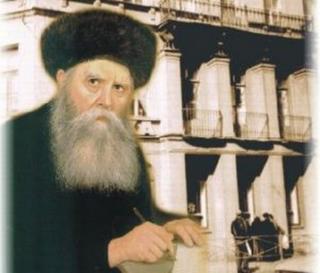
Not only are non-Jews and their legal system unauthorized to override matters of Jewish observance that are a strict obligation or prohibition, they may not even dictate to a Jew how to keep a minhag Yisrael (Jewish custom), or in any way detract from the observance of a minhag Yisrael. The Previous Rebbe made a daring public statement to this effect after he was released from prison and about to be sent into exile. He famously repeated the following timeless words of one of his predecessors:[6]
All the nations on the face of the earth must know that only our bodies have been sent into exile and the servitude of [foreign] rulers, but our souls have not been exiled or enslaved. We must declare openly before all that in all matters relating to our religion, the Torah, the Mitzvos, and Jewish customs, we Jews have no one who can dictate to us, nor may any pressure be brought to bear against us.
In the same vein, the Previous Rebbe once related[7] a powerful story of how the Tzemach Tzedek courageously stood up to the government when it attempted to interfere in Jewish observance:
...In the first session, the Minister of Haskalah instructed the secretary of the conference to present a plan for the curriculum of Jewish children that the minister and his assistants had devised, and he commanded the four who had been summoned—the Rebbe [the Tzemach Tzedek], Reb Itcheleh of Volozhin, Reb Yisrael Halperin, and the scholar, Betzalel Stern, to sign on the plan.

...When the Rebbe [i.e., the Tzemach Tzedek] saw that the situation was dangerous, he stood up and said:

“The government summoned us to hear our opinion, and not to sign on what others have prescribed. I refuse to sign, and resign from my participation in the meeting.”

Lilienthal, who stood next to the Minister, whispered something into his ear, and immediately the minister stood up in anger and said with great fury, “Doesn’t it say that ‘The law of the land is the [Torah] law’?”

The Tzemach Tzedek responded: “‘The law of the land is the [Torah] law’ applies only to monetary matters, such as taxes and property rates. While ‘A Jewish custom is Torah,’[8] and no one has the permission to nullify it.”

 “The custom of women to cover their faces with their hands when they light the Shabbos candles—is that also Torah?” asked the minister.

“Yes,” answered the Tzemach Tzedek, “that too is Torah, as the Talmud Yerushalmi states: ‘The custom of [Jewish] women is Torah.’”[9]
Of course, we have suffered such persecution time and again from various oppressors through the course of history, and in the Jewish calendar, most notably in the time of Chanukah (see here). 

This is of timely relevance in recent months and years, in which the age-old Jewish custom of metzitzah be’peh has come under attack.

_______________________________________________
[1] Gittin 10b.
[2] Cf. Mishneh Torah, Laws of Selling, 26:8.
[3] Shulchan Aruch, Choshen Mishpat, 369:18.
[4] Hisva’aduyos 5744, Vol. 2, pp. 612-613.
[5] Ninth of Maimonides’ 13 Principles of Faith. Mishneh Torah, Laws of the Foundations of the Torah, 9:1.
[6] 3 Tammuz, 5627. Printed in Likkutei Dibburim, Vol. 4, 692a-692b..
[7] Likkutei Dibburim (Ivrit), Vol. 3, p. 610.
[8] Menachos 20b, Tosafos, s.v. nifsal. Maharil, cited in Rema on Yoreh Dei’ah, 376:4. See Likkutei Sichos, Vol. 22, p. 56.
[9] Pesachim 4:1.


Dedicated by Menashe Fleisher. Dedicated by Mrs. Rivky Katz and family in memory of Reb Mordechai Meir haKohen z"l ben Chaim Elazar haKohen z"l. May he have aliyas haneshama and be a gutteh better for all of us, especially to "convince Hashem" that we need Moshiach down here, "l'mata m'asara t'fochim," immediately!!!


Dedicated in the merit of a speedy release for the captives Yonasan ben Malka (Jonathan Pollard), Sholom Mordechai Halevi ben Rivka (Sholom Rubashkin), Yaakov Yehuda ben Shaindel (Jacob Ostreicher), and Zeva Rochel bas Chaya (Wendy Weiner Runge).

___________________________________
Like what you read? The articles I write take a lot of time and effort. Please contact me to sponsor an article for (at least) $36 in honor of the birthday, wedding anniversary, or yarhtzeit of a loved one, or for a refuah shleimah or the like. Also, see here concerning the tremendous merit of supporting the dissemination of Chassidus, and the blessings that one receives for doing so.

Wednesday, February 13, 2013

The Fundamental Components of Existence

The Fundamental Components of Existence:
Kedushah and Kelipah

Rabbi Yehoishophot Oliver

All physical beings draw their vitality from one of two fundamental spiritual energies: Kedushah, holiness, or Kelipah, unholiness.

Kedushah is a spiritual energy that is in a state of bittul, submission to Hashem,[1] while Kelipah is a spiritual energy in a state of yeshus, a sense of ego that arrogantly declares “I exist” and denies the absolute reality of Hashem.

Although the Kelipah typically admits that Hashem exists, and even obeys His will in practice,[2] it feels itself independent from Hashem, and so it denies that He is the only true reality.[3]

Thus, the word Kelipah literally means “shell,” for the essence of this force is that it conceals the reality of Hashem just as a peel hides the fruit within it.[4]

Within the Kelipah itself, there are two general categories:
  • The higher level of Kelipah, known as Kelipas Nogah, which constitutes a mixture of good and evil.[6] This is the source of the spiritual sustenance of all objects in the world that the Halacha (Jewish law) permits one to use.
  • The lower level of Kelipah, known by the collective title of Shalosh Kelipos HaTemei’os, literally, “The Three Impure Kelipos.” Aside from a minute spark of holiness hidden very deep down, this level constitutes total evil and selfishness, without any positive aspect. This is the source of the spiritual sustenance of all forbidden objects.
The Nefesh HoElokis, the Divine Soul, stems from Kedushah, while the Nefesh HaSichlis, the Intellectual Soul, and the Nefesh HaBehamis, the Bestial Soul, stem from Kelipas Nogah.[5]

More particularly, the Nefesh HaSichlis stems from a higher level of Kelipas Nogah, while the Nefesh HaBehamis stems from a lower level of Kelipas Nogah.[6]

Kelipas Nogah also acts as the intermediary between Sholosh Kelipos HaTemei’os and Kedushah.[7]

(For an earlier article on this topic, see here.)

____________________________________________
[1] Tanya ch. 6: “The side of holiness is nothing but the indwelling and extension of the holiness of the Holy One, blessed be He, and He dwells only upon a thing that nullifies itself to Him.”
[2] Ibid. ch. 24: “[The forces of Kelipah] are completely unable to contravene Hashem’s will, for they know and apprehend that He is their life and sustenance, since they nurture from the ‘hinder-most part’ of the blessed Supreme Will that encompasses them.”
[3] Ibid. ch. 22.
[4] Torah Ohr 61d. Sefer HaMa’amarim 5648, p. 220.
[5] Etz Chaim, Sha’ar Kelipas Nogah ch. 3. Tanya ch. 1, end; ch. 7. In some sources it is explained that the Nefesh HaSichlis and Nefesh HaBehamis are in fact one soul consisting of two components, the former being the higher component, and the latter, the lower component (Sefer Kitzurim, p. 81, cited in Tanya Betziruf Marei Mekomos, Likkutei Pirushim, Shinuyei Nuscha’os, chs. 1-28, p. 37). See also Likkutei Torah, Tetzei 37d, which states that “human intellect” comes from the Nefesh HaBehamis.
[6] Sefer HaMa’amarim 5700, p. 93.
[7] Tanya ch. 37.


This post was dedicated by ovi mori, Reb Kasriel Oliver and family in honor of the yohrtzeit of Yehudis bas Dov Ber on 3 Adar.

Like what you read? The articles I write take a lot of time and effort. Please contact me to sponsor an article for (at least) $36 in honor of the birthday, wedding anniversary, or yarhtzeit of a loved one, or for a refuah shleimah or the like. Also, see here concerning the tremendous merit of supporting the dissemination of Chassidus, and the blessings that one receives for doing so.

Thursday, February 7, 2013

Two Kinds of Intellect

Two Kinds of Intellect

Rabbi Yehoishophot Oliver

One can understand a concept in two ways:

Lowering the concept to the student: The teacher lowers the concept into terms to which the student can relate by using analogies, concrete examples, and elaborate explanations that convey the concept on the level of the recipient. This simplifies and coarsens the concept, robbing it of the abstract purity of its original state. The recipient remains unchanged in his intellectual domain; all that is expected of him is to pay attention to the lesson. When he listens, he learns new information.

Elevating the student to the concept: The student invests tremendous effort to develop, refine, and purify his faculties until he is able to grasp the concept as is, in its unadulterated state. He may also make some use of analogies and the like during the learning process, but these methods are more “transparent,” and his primary focus is on bonding with the concept itself.

This is the difference between human intellect, the intellect of the Intellectual Soul, and divine intellect, the intellect of the Divine Soul:

Human intellect seeks to bring the concept it strives to understand down into its own frame of reference, and only then is it able to accept and assimilate it. This selfish focus dilutes and coarsens the concept, leaving the mind in its original lowly state. The mind has merely learned some new information on its own terms, but it has not fundamentally changed at all. On the contrary, the more one understands, the more powerful and self-confident the mind becomes.

In contrast, divine intellect seeks to rise out of its parameters, to use intellect itself to transcend the limitations of ego, lose itself, and become subsumed within G–dliness itself.

This explains the difference between the approaches of human intellect and divine intellect to faith in Hashem:

Understanding leading to faith: Human intellect starts without faith, with its own existence as its first premise. Then, through intensive study and comprehension, it comes to accept the existence of Hashem and appreciate His greatness and unity. However, no matter how much it learns, it views Hashem and G–dliness as external subjects of study, not as all-pervasive realities to which it ought to surrender and abnegate itself.

Faith followed by understanding: Divine intellect starts with faith, a faith that stems from its fundamental G–dly makeup, which endows it with an innate sensitivity to the transcendent, absolute reality of Hashem. Then the intellect strives to not only sense this reality, but to understand it intellectually by toiling in study of Hashem’s greatness and unity as explained in Kabbalah and Chassidus. However, the goal of this cognitive process is to bond with the G–dliness whose existence this intellect naturally senses.

This also reflects itself in the emotions that emerge from these two types of intellect:

Selfish, uncooperative emotions: Since human intellect relates to everything through a selfish focus, its intellect need not be translated into commensurate emotions. For instance, one can appreciate the virtue of humility well, but be conceited and obnoxious.

Humble, pliant emotions: In contrast, since divine intellect seeks to humble itself before the Truth of Hashem, it also has a humbling effect on the emotions, making them susceptible and open to becoming aroused with the emotions that divine intellect calls for—love and fear of Hashem, love of Torah, love of one’s fellow Jew, fine character traits as taught in Torah, and so on.

Adapted from the Frierdikeh Rebbe’s Sefer HaMa’amarim 5691, p. 186.


Dedicated by avi mori Reb Kasriel Oliver (Kasriel ben Shmuel) and family in honor of the birthday of my dear sister, Bracha Tsap (Hinda Zelda Bracha bas Kasriel), on 2 Adar. May she be blessed with a sh'nas hatzlachah begashmiyus uveruchniyus!

Dedicated in the merit of a speedy release for the captives Yonasan ben Malka (Jonathan Pollard), Alan Gross (Aba Chonah ben Chava Chana), Sholom Mordechai Halevi ben Rivka (Sholom Rubashkin), and Zeva Rochel bas Chaya (Wendy Weiner Runge).


~~~~~~~~~~~~~~~~~~~~

Like what you read? The articles I write take a lot of time and effort. Please contact me to sponsor an article for (at least) $36 in honor of the birthday, wedding anniversary, or yarhtzeit of a loved one, or for a refuah shleimah or the like. Also, see here concerning the tremendous merit of supporting the dissemination of Chassidus, and the blessings that one receives for doing so.

Thursday, January 31, 2013

Intellect: True or False?


Intellect: True or False?

Rabbi Yehoishophot Oliver

Using the intellect involves absorbing information, giving explanations, drawing distinctions, making comparisons, reaching conclusions, and so on.

Yet although this is the nature of intellect, it is not the goal of intellect, for all these intellectual processes can be carried out in a correct, true way or in a twisted, false way. The goal of intellect is to transcend selfish, emotional considerations and reach a pure, unbiased understanding of a concept.

True intellect knows that it is liable to be blinded by self-interest, and so it actively seeks to divest itself of this corrupting influence.

To explain, the Torah warns us: “Bribery blinds the eyes of the wise.”[1] No matter how refined, knowledgeable, and experienced a judge may be, when he stoops to take a bribe, he creates an inner emotional bias that makes it impossible for him to judge fairly, leading inevitably to a travesty of justice.

If at first the judge was inclined to rule against the accused, when he accepts a bribe, he does not necessarily rule leniently in order to consciously fulfill his side of the dishonorable deal he made when he took the bribe. Rather, accepting the bribe sways his judgment, inducing his mind to devise of all kinds of pretexts to acquit the accused.

Likewise, consider two parties who come to court, each one pleading his side. Even when the case is highly complex and two-sided, each litigant will present a long list of claims in his own favor—including elaborate, advanced, and even innovative arguments. This will even happen when one or both sides has done things that outsiders would consider egregiously wrong.

Each one is convinced beyond any shadow of doubt of his own righteousness, even to the extent that he is simply incapable of acknowledging any merit in his opponent’s claims. Moreover, instead of partially conceding the perspective of his opponent, he turns around his opponent’s every argument to further bolster his own case. In fact, even simple, completely uneducated people can come up with such arguments.[2]

The reason for this amazing capacity for rationalization is the tremendous personal investment that each side has in winning the case.

The challenge of the judge is to examine the case with zero personal bias and apply the law to the specifics of the case before him faithfully and correctly.

Likewise, Hashem endowed us with intellect and charged us with the task of using it to assess the world and our fellow the dilemmas that we face in life in a mature, true, and objective manner.

When emotions are strong, the person is at risk of rendering intellectual decisions that are incorrect and ethical decisions that are unjust. This danger is completely unrelated to the extent of his intellectual development. No matter how high his IQ and how vast his knowledge, if his emotions are allowed to affect his intellect, all his arguments will be false. On the contrary, the brighter he is, the greater the danger that he may persuade others to adopt his false ideas.

Generally speaking, an immature person relates to the world through his emotions, and his intellect is not true intellect, but intellect recruited—rather, hijacked—for the benefit of his emotions. In the language of Chassidus, only the intellect of his Bestial Soul is active. This is also known as mochin de’katnus, “immature intellect.”

In contrast, an intellectually mature person assesses every issue that he analyzes objectively. Not only is his judgment not colored by his feelings, but even when his personal feelings directly contradict the conclusion warranted by intellect, he reaches the conclusion correctly.

In short, his intellect is not controlled at all by his emotions, but only by the dictates of the faculty of intellect.[3] Although this may seem like a high level, it is one that we should all strive towards. 

This is not to say that this person’s emotions are nonexistent or even that that they are weak. Nor is refining his emotions a prerequisite. One can possess fiery, unrefined emotions, and still possess an intellect with the power to utterly disregard those emotions. This is maturity in intellect. In the language of Chassidus, this is a person whose Nefesh HaSichlis (Intellectual Soul) truly dominates. This is also known as mochin de’gadlus, “mature intellect.” (See here and here.)

However, it should be noted that although some people are more naturally gifted with the ability to reach this level than others,[4] one can only truly attain it when one predicates the use of one’s intellect on faith in Hashem and humble submission (“bittul”) to His will as revealed in our holy Torah.[5]

Based on the Previous Rebbes Sefer HaMaamarim 5691, pp. 162-163;
cf. the Rebbe Rashab’s Sefer HaMaamarim 5679, p. 181; ibid. 5671, p. 91. 

____________________
[1] Shemos 23:8.
[2] Hayom Yom, Elul 9.
[3] Chassidus calls such a person a “chochom be’etzem ko’ach chochmoso.”
[4] See Tanya ch. 2, end, which explains that the spiritual level of a child depends upon the purity of the parents’ thoughts and behavior during conception. The Tzemach Tzedek explains (Kitzurim Ve’Ha’oros LeTanya p. 75) that this is referring to the degree of the refinement of the child’s Nefesh HaSichlis.
[5] Cf. Likkutei Sichos, vol. 3, pp. 889-890.


Dedicated by Shmuel and Sara Rochel Markel in honor of the birth of their daughter, Yehudis bas Shmuel Leib. Yegadluha leTorah, lechuppah, ulemaasim tovim mitoch harchavah!


Dedicated in the merit of a speedy release for the captives Yonasan ben Malka (Jonathan Pollard), Alan Gross (Aba Chonah ben Chava Chana), Sholom Mordechai Halevi ben Rivka (Sholom Rubashkin), and Zeva Rochel bas Chaya (Wendy Weiner Runge).


~~~~~~~~~~~~~~~~~~~~

Like what you read? The articles I write take a lot of time and effort. Please contact me to sponsor an article for (at least) $36 in honor of the birthday, wedding anniversary, or yarhtzeit of a loved one, or for a refuah shleimah or the like. Also, see here concerning the tremendous merit of supporting the dissemination of Chassidus, and the blessings that one receives for doing so.

Tuesday, January 22, 2013

The Inner Struggle Against Spiritual Desensitization

The Inner Struggle Against
Spiritual Desensitization

In honor of 10-11 Shevat

Rabbi Yehoishophot Oliver

Our sages say, “A person does not sin unless possessed by a spirit of foolishness.”[1]  It is “foolish” because it seeks to entice the person to sin by concealing from him the truth.

The core truth that the “spirit of foolishness” seeks to conceal is the absolute reality of Hashem. “Hashem Elokim is true; He is the living G–d.”[2] Hashem is the ultimate Truth, He grants life to all creatures, and true life comes only through bonding with Him (see here).

But the “spirit of foolishness” seeks to pull the wool over our eyes and bring us to forget this. Hence it is called Kelipah, “shell,” for it conceals the reality of Hashem just as a peel hides the fruit within it.[3]

When the “spirit of foolishness” takes hold of the person, although he may accept that Hashem exists, and believe in the Torah, this awareness becomes abstract and distant from his heart. How does the Evil Inclination bring the person down to this state?

It does so by enticing him to pursue selfish, crude, base desires with intense passion.[4] He gets so carried away with his lusts that he becomes completely desensitized to spirituality, may G–d save us.

More subtly, the mere immersion in and pleasure from worldly matters, even if they are not outright hedonistic, gradually desensitizes the Jew from holiness. The Hebrew word for world, olam, is etymologically related to the word he’elem, concealment, for the world conceals the true reality of Hashem.[5] Therefore, when the person becomes immersed in worldly, secular pursuits and derives his pleasure from them, that very preoccupation dulls his heart to the spiritual and the holy.

In any case, after some time passes, the person no longer feels the rich beauty of fulfilling Hashem’s Mitzvos, the sublime sweetness of delving into Hashem’s Torah, and the intense ecstasy of pouring out his heart to Hashem in prayer.

Then he degenerates further, until he no longer feels low and embarrassed before Hashem when he sins, no longer feels pained at the thought of rebelling against Hashem, and no longer feels disgust and horror at the thought of living a G–dless life.

Then he degenerates still further, his Bestial Soul taking over to the extent that he behaves like a beast—hence the name. An animal tramples and pays no attention to what is underfoot—whether it’s earth, wood, or a person. It has no ability to discern. So does this degenerate person act without discernment, scoffing at religious people and spiritual pursuits of which he has no concept (although he may choose to perform some Mitzvos—the ones that appeal to him). His failure to recognize the value of the spiritual and even scoff at it stems from his complete desensitization to the spiritual.

When we are aware of this danger, we are able to, with the help of Hashem, be vigilant to sensitize ourselves to holiness by striving to constantly grow in our observance of Torah and Mitzvos, especially through the light and inspiration derived from studying Chassidus and following its ways, thereby overcoming the spiritual darkness of the world in the last moments of exile, and bringing Moshiach now.

Based on this year’s chapter of the Previous Rebbe's Basi Legani (ch. 3).
See p. 7ff. in this booklet).

____________________________
[1] Sotah 3a.
[2] Yirmiyahu 10:10.
[3] Torah Ohr 61d. Sefer HaMa’amarim 5648, p. 220.
[4] Cf. Sefer HaMa’amarim 5709, p. 163ff.
[5] See Likkutei Torah, Shelach 37d. Ibid., Va’eschanan 2c.


Dedicated by Shmuel and Sara Rochel Markel in honor of the birth of their daughter, Yehudis bas Shmuel Leib. Yegadluha leTorah, lechuppah, ulemaasim tovim mitoch harchavah!


Dedicated in the merit of a speedy release for the captives Yonasan ben Malka (Jonathan Pollard), Alan Gross (Aba Chonah ben Chava Chana), Sholom Mordechai Halevi ben Rivka (Sholom Rubashkin), and Zeva Rochel bas Chaya (Wendy Weiner Runge).


~~~~~~~~~~~~~~~~~~~~

Like what you read? The articles I write take a lot of time and effort. Please contact me to sponsor an article for (at least) $36 in honor of the birthday, wedding anniversary, or yarhtzeit of a loved one, or for a refuah shleimah or the like. Also, see here concerning the tremendous merit of supporting the dissemination of Chassidus, and the blessings that one receives for doing so.

Thursday, January 17, 2013

Modeh Ani: Inviolate and ineffable

Modeh Ani: Inviolate and ineffable

Rabbi Yehoishophot Oliver

As mentioned in a previous article, in Modeh Ani, the Neshamah’s essence—“ani”—becomes manifest. This is the soul-level of Yechidah, the Pinteleh Yid, the essential Jewishness within every Jew (for more on the Yechidah, see here). This level of the Neshamah is so pure and transcendent that it cannot ever become blemished or defiled, G–d forbid.

This also explains why Modeh Ani is said before we wash our hands with neggel vasser, when they are still ritually impure, for as the Previous Rebbe stated, “All the impurities in the world cannot contaminate the Modeh Ani of a Jew. He may be lacking in one area or another, but his Modeh Ani remains whole.”[1]

In the recital of Modeh Ani, the Yechidah is manifest, elevating the Jew above all the world’s temptations, sorrows, and impurities.

This[2] is the reason that no divine names are mentioned in Modeh Ani. It is not because Modeh Ani is less than other prayers, as one might have thought. On the contrary, in Modeh Ani we acknowledge and connect with Hashem’s very Essence, which is so sublime that it utterly transcends all limitations and cannot be “grasped” and revealed to us through any name.[3]

_____________________________________________________
[1] Sefer HaSichos 5703, p. 7. Hayom Yom, 11 Shevat.
[2] See Kuntres Inyanah Shel Toras HaChassidus, sec. 11, fn. 78.
[3] Likkutei Torah, Pinchas 80b. Cf. Zohar 3:257b.


Dedicated by Shmuel and Sara Rochel Markel in honor of the birth of their daughter, Yehudis bas Shmuel Leib. Yegadluha leTorah, lechuppah, ulemaasim tovim mitoch harchavah!


Dedicated in the merit of a speedy release for the captives Yonasan ben Malka (Jonathan Pollard), Alan Gross (Aba Chonah ben Chava Chana), Sholom Mordechai Halevi ben Rivka (Sholom Rubashkin), and Zeva Rochel bas Chaya (Wendy Weiner Runge).


~~~~~~~~~~~~~~~~~~~~

Like what you read? The articles I write take a lot of time and effort. Please contact me to sponsor an article for (at least) $36 in honor of the birthday, wedding anniversary, or yarhtzeit of a loved one, or for a refuah shleimah or the like. Also, see here concerning the tremendous merit of supporting the dissemination of Chassidus, and the blessings that one receives for doing so.
Wednesday, December 26, 2012

Yechidah: Suprarational stubbornness

Yechidah: Suprarational stubbornness

Rabbi Y. Oliver

The Jew’s bond with Hashem at the soul-level of Yechidah transcends intellect completely, even the intellect of the Divine Soul.

The Yechidah is also known as the “eisan of the soul.”[1] The word eisan means firm, for this level is firm and unyielding to any force that might separate the Jew from Hashem, G–d forbid. Of this stubbornness to obey Hashem the Jewish people are called “a stiff-necked nation”[2] in the positive sense.[3]

In the Hoshanos liturgy,[4] it is written: “It embraces and is attached to You, it carries Your yoke, the Yechidah to unite You.” This alludes to the qualities of the soul-level of Yechidah:

  • “It embraces and is attached to You”: The core of every Jew, no matter who he may be, is connected to Hashem’s very Essence. This expresses itself in the Jewish custom to constantly thank and otherwise refer to Hashem, such as by saying “boruch Hashem.”[5]
  • “It carries Your yoke”: Regardless of his external behavior, the Jew’s Yechidah naturally submits to and “carries” the yoke of observance of Torah and Mitzvos.
  • “The Yechidah to unite with You”: On this level, the bond with Hashem is so deep that the Jew is even willing to give up his life rather than sin.[6] Of this the Alter Rebbe taught: “A Jew neither desires, nor is able, to sever himself from G–dliness.”[7] 
(For one way to reveal the Yechidah, see here.)

Based on the Previous Rebbe’s Ma’amar Hachodesh hazeh lachem 5685, pp. 16-17.

________________________________
[1] Sefer HaMa’amarim 5703, p. 73 ff. Igros Kodesh Admur HaRayatz, Vol. 3, p. 335.
[2] Shemos 34:9.
[3] Shemos Rabbah 42:9, cited in Torah Ohr, Megillas Esther 123b.
[4] As recited on the third day of Sukkos.
[5] “Shem Shomayim shagur befi kol.” Cf. Ma’amarei Admur HaZaken 5565, Vol. 1, p. 12. Sha’arei Teshuvah, Vol. 1 8b.
[6] Tanya chs. 18, 19, 24.
[7] Hayom Yom p. 73.


Dedicated by Reb Shmuel Leib and Sara Rochel Markel in honor of the birth of their daughter, Yehudis bas Shmuel Leib. Yegadluha leTorah, lechuppah, ulemaasim tovim mitoch harchavah!


Dedicated in the merit of a speedy release for the captives Yonasan ben Malka (Jonathan Pollard), Jacob Ostreicher (Yaakov Yehuda ben Shaindel), Alan Gross (Aba Chonah ben Hava Chana), Sholom Mordechai Halevi ben Rivka (Sholom Rubashkin), and Zeva Rochel bas Chaya (Wendy Weiner Runge).

~~~~~~~~~~~~~~~~~~~~
Like what you read? The articles I write take a lot of time and effort. Please contact me to sponsor an article for (at least) $36 in honor of the birthday, wedding anniversary, or yarhtzeit of a loved one, or for a refuah shleimah or the like. Also, see here concerning the tremendous merit of supporting the dissemination of Chassidus, and the blessings that one receives for doing so.

Thursday, November 29, 2012

The Intellectual Soul (pt. 1): "In the image of G-d"

The Intellectual Soul (pt. 1)

All mankind is created “in the image of G–d”

The Mishnah states:[1]
Beloved is man, for he was created in the image of G–d; it is by special divine love that he was informed that he was created in the image of G–d. As it is stated: “For G–d made man in His own image.”[2]
The Tosafos Yom Tov notes that the Mishnah cites a verse addressed to Noach and his descendants, who were not Jewish. He interprets that “beloved is man” refers not only to Jews, but to all mankind. All mankind is created “in the image of G–d,” and is therefore beloved to G–d. And since human beings are beloved to G–d, all mankind should also respect, value, and love one another.

Of course, although in this context “man” refers to all mankind, not only the Jewish people, it surely includes Jews as well. Although Jews possess an additional soul that is “literally a part of Hashem above,”[3] they too were created “in the image of G–d.”

The Intellectual Soul

What indeed does it mean to have been created “in the image of G–d,” and why is this “beloved to G–d”? To state the obvious, G–d has no image or form, neither material nor spiritual.[4] Rather, echoing the Rambam,[5] Chassidus explains[6] that “the image of G–d” refers to the Nefesh HaSichlis, the Intellectual Soul.

The Intellectual Soul is the mind, the spiritual faculty that enables a person to think in a uniquely human way. Its goal is to transcend personal interest and pursue abstract, objective truth. This is alluded to in the verse, “The spirit ... of man rises upwards”[7]; i.e., man—and the faculty that defines man as different from animals, the Intellectual Soul—naturally yearns upward, to transcend itself.

Both Jews and non-Jews possess an Intellectual Soul. However, the Jew’s Intellectual Soul is higher than the non-Jew’s, for it “senses spiritual refinement, so although it is by nature human intellect, it has a feel for spiritual refinement.”[8]

This sensitivity to spiritual refinement enables the Jew who follows Torah properly to truly transcend his own self-interest in his intellectual strivings.

By contrast, the non-Jew’s Intellectual Soul naturally relates to the world in a coarse, materialistic way, lacking the Jew’s natural sensitivity to the spirituality that underlies the world.

The non-Jewish Intellectual Soul comes fully manifest in secular wisdom, which is the culmination of the intellectual efforts of the finest of non-Jewish minds.

This wisdom naturally fosters a feeling of arrogance; in fact, it fosters a feeling of the utmost arrogance. Thus, ongoing study of secular wisdom without the spiritual fortification that Torah study provides will spoil the student spiritually until he or she ultimately degenerates to a state of spiritual and moral coarseness.[9]

To be continued, with the help of Hashem.

Based on the Rebbe's Likkutei Sichos, Vol. 15, pp. 58 ff.

_________________
[1] Avos 3:18.
[2] Bereshis 1:17.
[3] Tanya ch. 2.
[4] See the Yigdal hymn: “He has no semblance of a body, nor is He corporeal.” Cf. Derech Mitzvosecha, Shoresh Mitzvas HaTefillah ch. 2.
[5] See Guide for the Perplexed 1:1:
Now man possesses as his proprium something that is very strange in that it is not found in anything else that exists under the sphere of the moon, namely, intellectual apprehension. In the exercise of this, neither sense, nor any part of the body, nor any of the extremities are used; and therefore this apprehension was compared to G–d’s apprehension, which does not require an instrument, although in reality it is not like the latter apprehension, but only appears so at first.

It is because of ... the divine intellect conjoined with man, that it is said of man that he is “in the image of G–d” and “after His likeness”—not that Hashem, may He be exalted, is a body and possesses a shape.
Likewise, Rashi explains kidmuseinu, “after our likeness” to mean “with the power to comprehend and discern.”
[6] Sefer HaMa’amarim 5702, p. 104 ff.
[7] Koheles 3:21.
[8] Ibid.
[9] Sefer HaMa’amarim 5709, p. 52 ff.


Dedicated in the merit of a speedy release for the captives Yonasan ben Malka (Jonathan Pollard), Jacob Ostreicher (Yaakov Yehuda ben Shaindel), Alan Gross (Aba Chonah ben Hava Chana), Sholom Mordechai Halevi ben Rivka (Sholom Rubashkin), and Zeva Rochel bas Chaya (Wendy Weiner Runge).


~~~~~~~~~~~~~~~

Like what you read? The articles I write take a lot of time and effort. Please contact me to sponsor an article for (at least) $36 in honor of the birthday, wedding anniversary, or yarhtzeit of a loved one, or for a refuah shleimah or the like. Also, see here concerning the tremendous merit of supporting the dissemination of Chassidus, and the blessings that one receives for doing so.

Monday, August 20, 2012

An Unflinching Reckoning


An Unflinching Reckoning

Rabbi Yehoishophot Oliver

Our Sages warn us: “Don’t judge your fellow until you have reached his place.”[1] The Bartenura explains: “If you see that your fellow has been tested and succumbed, do not judge him as guilty until you are tested like him and you are saved.”

The Torah requires that when we see fault and even sin in our fellow Jew, we give him the benefit of the doubt that his behavior stems from “his place,” which consists of two influences: 1. his external, physical location, which constantly bombards him with temptation; 2. his inner, spiritual “location,” which is his very powerful evil inclination, which constantly bombards him with inner struggles.[2] We discussed this in an earlier post here.

It should be noted that this perspective is only appropriate when viewing another. When viewing oneself, on the contrary, one should not seek to excuse one’s own behavior (with the exception of one who was raised in an atmosphere of secularism, and was therefore genuinely a tinok shenishba, one so completely ignorant of Torah that he or she is not held to blame for his actions in violation of Torah).

Rather, one should take full responsibility—both for his actions and for his inactions, and in both his relationship with Hashem and with his fellow. Some actions Hashem expected him to do, yet he inexcusably neglected to do them; conversely, when faced with temptation, he inexcusably chose to sin. Had he been truly permeated with awareness of Hashem’s constant presence, he would not have sinned no matter how great the temptation.

However, the one who seeks refuge in excuses 1. does himself a disservice; 2. deceives himself.

1. He does himself a disservice. Every excuse distances the Jew from Teshuvah, for why should one sincerely regret actions that were simply not his fault? And if his unfortunate circumstances indeed forced him to do wrong, how could he possibly do Teshuvah, and truly change and fix himself? He is a hapless victim of circumstance. Moreover, whenever he is faced with temptation down the line, he will succumb and excuse his inappropriate behavior with more claims that come down to the belief that he is fundamentally incapable of being in control of his life and himself. One with such a mentality cannot ever truly grow and mature in his character traits; on the contrary, he is at constant, high risk of falling into ever more unsavory behaviors.

2. He deceives himself. The Torah is eternal,[3] and so it is not only applicable when all is well, such as during the era when the Beis HaMikdash stood, but in every single time and place, forever, even during the darkest periods of exile. The one who claims to be a victim of circumstance denies this, for he loses sight of the awareness that as difficult as his circumstances may be, they are not some kind of cosmic accident, G-d forbid; rather, Hashem Himself created them, and brought them to the Jew for a reason. Moreover, Hashem declares (what is regardless simple logic): “I only ask of them [the Jewish people] according to their ability,”[4] and therefore He surely endows every single Jew—man, woman, and child—with the ability to overcome whatever tests and temptations he or she may face (and likewise for non-Jews when it comes to their observance of the Laws of Noach and the promotion of justice and righteousness).

This is vital to recognize now, in the month of Elul. In this month every Jew is charged with making a cheshbon nefesh, a spiritual stocktaking, in preparation for the month of Tishrei. The key to success in this endeavor is simply being ruthlessly honest with oneself and taking full responsibility for one’s own actions.

Based on the Previous RebbeAni Ledodi, in Sefer HaMaamarim 5700.

____________________________
[1] Avos 2:4.
[2] Tanya ch. 30, beg.
[3] Ibid., ch. 17, beg.
[4] Vayikra Rabba 12:3.


Dedicated in the merit of a speedy release for the captives Yonasan ben Malka (Jonathan Pollard), Sholom Mordechai Halevi ben Rivka (Sholom Rubashkin), Yaakov Yehuda ben Shaindel (Jacob Ostreicher), and Zeva Rochel bas Chaya (Wendy Weiner Runge).

___________________________________
Like what you read? The articles I write take a lot of time and effort. Please contact me to sponsor an article for (at least) $36 in honor of the birthday, wedding anniversary, or yarhtzeit of a loved one, or for a refuah shleimah or the like. Also, see here concerning the tremendous merit of supporting the dissemination of Chassidus, and the blessings that one receives for doing so.

Wednesday, August 8, 2012

Night and Day—Body and Soul

Night and Day—Body and Soul

Rabbi Yehoishophot Oliver

“In the beginning, Hashem created the heavens and the earth. ... And there was evening, and there was morning, one day.”[1]


There are many fundamental differences between the Torah and non-Torah approach to time, and this manifests itself on many levels. One of the most immediate is that although all agree that a period of a day consists of a period of daylight and nighttime, the non-Jewish world defines a period of a day by saying that night follows day, while Torah in general, and halachah in particular, rules that day follows night.[2] On a practical level, this is most apparent on Shabbos (and Yom Tov), which begins at sundown and ends after three stars have emerged the following night.

But it applies to every day as well, and we must keep this in mind so that we can approach life with a mindset drawn from Torah, instead of the secular model with which we are surrounded.

This is also evident in the prayers, which are alluded to in the verse, “Night, morning, and noon, I will tell.”[3] We relate Hashem’s praises starting in the evening, with the Ma’ariv prayer; then we continue in the morning, through Shacharis; and we conclude in the afternoon, through Minchah.

But on a deeper level, the Torah is telling us a lesson about our inner selves, of which the external world is a reflection: 
  • Darkness and night correspond to the body, which conceals the Neshamah and the absolute reality of Hashem, and pulls one down toward the physical and coarse.
  • Light and day correspond to the soul, which illuminates spiritually, for it inspires the Jew with the reality of Hashem and a yearning to connect to Him; likewise, it grants him the ability to illuminate the surrounding world with awareness of Hashem and the desire to submit to Him.
Here, too, we find that “day follows night”—Hashem created the body first: “Then G–d, the L–rd, formed the man of dust of the ground,” and only then did He instill the soul into it: “ ... and He breathed into his nostrils a soul of life.”[4]

The same goes for the way in which a Jew should approach self-refinement—refining the body must precede revealing the Neshamah:

Refining the body: This consists of rejecting coarseness and selfish materialism (“chumriyus”) from one’s life and refining the physicality of one’s body (“gashmiyus”—see here for explanation of the difference between chumriyus and gashmiyus) by humbling and subduing the body. This can be accomplished through Iskafya (see here) and through Teshuvah.

In particular, before prayer, one should contemplate the lowliness of the body for concealing the absolute reality of Hashem, which brings the person to humility and a broken heart.[5] This is also the meaning of “One should not approach [Hashem] to pray unless one has due seriousness.”[6]

Revealing the NeshamahThis is accomplished through prayer itself (see here), which consists of a series of stages in which the Jew reveals his Neshamah ever more in his body, until, with the help of Hashem, the Neshamah permeates the body completely. and then lights up the outside world as well through good deeds, devoted Torah study, and careful Mitzvah observance.

The main purpose of Tefillah is to grasp the greatness of Hashem and then become inspired with love for Hashem, thereby revealing the Neshamah. Here the focus is positive, and so Tefillah should be recited with joy. 

However, this joy is only possible because it was preceded by the bitterness at one’s lowliness that preceded prayer, for only after bitterness can one feel true joy.[7] (Note: This analogy parallels the analogy of ploughing being a necessary prerequisite to sowing discussed here.)

This is the meaning of “And there was evening, and there was morning, one day.” By serving Hashem through “evening”—subduing the body, and “morning”—revealing the Neshamah with joy, we reveal the reality of one—the unity of Hashem in the world. Thus, the Jewish people are called “one nation on earth,”[8] for they reveal Hashem’s absolute oneness even in this lowly physical world.[9]

This is also the meaning of the verse, “Days are formed, and if only [we could use to the fullest even] one of them.”[10] Each person is given a limited number of days to live, and the purpose of this time is that we reveal “one in them”—the unity of Hashem in every aspect of life. Moreover, the Hebrew word for one, echad, has the numerical value of thirteen because our task is to reveal Hashem’s oneness in the world through illuminating the ten faculties (which, generally speaking, comprise the intellect and emotions) and thought, speech, and action with this awareness.


Based on the Previous Rebbe’s Sefer HaMa’amarim 5700, pp. 142-143.

__________________________________________________________
[1] Bereishis 1:1,5.
[2] It should be noted that there are some exceptions to this rule; for instance, with regard to sacrifices the rule is that the night follows the day; hence, one who neglected to offer a sacrifice during the day may still do so until dawn of the following morning.
[3] Tehillim 55:18.
[4] Bereishis 2:7.
[5] Cf. Tanya ch. 29: 
"וגם ירעים עליה בקול רעש ורוגז להשפילה כמאמר רז"ל לעולם ירגיז אדם יצ"ט על יצה"ר שנאמר רגזו וגו' דהיינו לרגוז על נפש הבהמית שהיא יצרו הרע בקול רעש ורוגז במחשבתו לומר לו אתה רע ורשע ומשוקץ ומתועב ומנוול וכו' ככל השמות שקראו לו חכמינו ז"ל באמת עד מתי תסתיר לפני אור א"ס ב"ה הממלא כל עלמין היה הוה ויהיה בשוה גם במקום זה שאני עליו כמו שהיה אור א"ס ב"ה לבדו קודם שנברא העולם בלי שום שינוי כמ"ש אני ה' לא שניתי כי הוא למעלה מהזמן וכו' ואתה מנוול וכו' מכחיש האמת הנראה לעינים דכולא קמיה כלא ממש באמת בבחי' ראייה חושיית."
[6] Berachos 5a.
[7] Cf. ibid. ch. 26.
[8] II Shmuel 7:23.
[9] Cf. Tanya 114a.
[10] Tehillim 139:16. Cf. Likkutei Torah, Shelach end; Hayom Yom18 Nissan.

Dedicated in honor of the birthday of my dear wife, Atoroh Arielle bas Sarah 
on 22 Menachem-Av. May you have a shenas berachah vehatzlachah begashmiyus uveruchniyus!


Dedicated in the merit of a speedy release for the captives Yonasan ben Malka (Jonathan Pollard), Sholom Mordechai Halevi ben Rivka (Sholom Rubashkin), 
Yaakov Yehuda ben Shaindel (Jacob Ostreicher), and Zeva Rochel bas Chaya (Wendy Weiner Runge).


___________________________________
Like what you read? The articles I write take a lot of time and effort. Please contact me to sponsor an article for (at least) $36 in honor of the birthday, wedding anniversary, or yarhtzeit of a loved one, or for a refuah shleimah or the like. Also, see here concerning the tremendous merit of supporting the dissemination of Chassidus, and the blessings that one receives for doing so.

Wednesday, August 1, 2012

Intellectual Excitement

Intellectual Excitement

Rabbi Yehoishophot Oliver

Intellect and emotions are directly interlinked. Intellect leads to emotions; emotions develop from intellect. Intellect is the cause (“ilah”), and emotions are the effect (“alul”).

Appreciating this progression is not merely a point of philosophical interest; it is highly practical, and even vital. Torah in general and Chassidus in particular instruct us to work to refine and change our character traits. So one who wants to change a negative emotion or develop a positive one must know that this noble goal simply cannot be accomplished by merely willing it to be so, by furrowing one’s brow and firmly deciding, “Yes! I can, I will, I must feel it!” Rather, one’s resolve to strive for inner change must involve deciding to work on cultivating the intellect in a way that will be conducive to producing the emotion that one aspires to feel. (This principle is also fundamental to the derech of Chassidus Chabad in particular.)

But in order to succeed at this, with the help of Hashem, one needs a deeper understanding of intellect, emotions, and the way they interact. With the help of Hashem, this article will explain one facet of this relationship.

As mentioned, intellect and emotions share a cause-and-effect relationship.

As Chassidus defines the cause-and-effect relationship, the effect exists in a hidden, potential state within the cause, and then, when the cause ceases, this preexisting potential emerges from the cause and evolves into an independent entity—the effect.

Likewise, the emotions exist within the intellect first, and then, when the stage of intellect finishes, they emerge and evolve into actual, tangibly-felt emotions.

However, the emotions within intellect (middos shebe’sechel) are distinctly different from true emotions, which are the emotions as they exist within the heart.

True emotions are fundamentally subjective and egotistical, revolving around one’s personal perception of self-interest. E.g., the main emotions are love and fear. Love is an attraction, a desire to bond with that which I feel is beneficial for me, while fear is a repulsion, a desire to avoid that which I feel is detrimental to me. Either way, the emotion is self-focused.

In contrast, intellect is, or at least strives to be, fundamentally objective and self-transcending, and so the emotions within intellect involve transcending self and connecting to truth. How does this occur? Once the mind truly understands the intricacies of a concept, it becomes impressed and excited at the depth, complexity, richness, beauty, and truth of that concept. “Wow! Awesome!” the intellect exclaims. This is hispa’alus sichlis, intellectual excitement (see this earlier article where I touch on this concept), and these are the emotions within intellect.

On the one hand, this form of intellect is different from raw intellect, which is exclusively concerned with dissecting the technical details of the concept under study, and is characterized by measured coldness. In contrast, hispa’alus sichlis is considered in a sense emotional because the quality of excitement and passion is typical of the emotions. Yet it is not truly emotional, because it is not at all concerned with “what’s in it for me,” and so it is still generally classified within the realm of intellect.

To be continued, with the help of Hashem.

Adapted from the Previous RebbeSefer HaMa’amarim 5700, pp. 134-140.


Dedicated in honor of the birthday of Shaina bas Atara Arielle 
on 22 Tammuz.

___________________________________
Like what you read? The articles I write take a lot of time and effort. Please contact me to sponsor an article for (at least) $36 in honor of the birthday, wedding anniversary, or yarhtzeit of a loved one, or for a refuah shleimah or the like. Also, see here concerning the tremendous merit of supporting the dissemination of Chassidus, and the blessings that one receives for doing so.

Tuesday, July 17, 2012

Overcoming the coarse pre-Tefillah state

Overcoming the coarse pre-Tefillah state
Rabbi Yehoishophot Oliver

During[1] sleep, the higher faculties of intellect and emotions[2] fall dormant, and only the more inferior faculties, such as the respiratory and digestive systems, remain functioning actively.


A parallel process occurs within the Neshamah: During sleep, the faculties of the Neshamah withdraw and become hidden, and the Bestial Soul, the coarse, animalistic side of the person, seizes control. And so before the Jew begins to pray in the morning, he is in a coarse, lowly, selfish state.


Of[3] this state we are told:[4] “Anyone who greets his fellow before he has prayed, it is as if he made him a bamah [a sacrificial altar for idolatry, may G–d save us], as it is written, “Stay away from a man whose soul is in his nose, for what [“bameh”] is he worth?”[5] The Talmud explains: “The word bameh can also be read bamah.”[6]


Granted,[7] every morning the Jew becomes “a new creature.”[8] This means that Hashem restores his Neshamah to him renewed and refreshed,[9] for which the Jew thanks Hashem in Modeh Ani “for returning my Neshamah within me.”


However, although upon waking, the Neshamah exists within in a refreshed state, before Tefillah it is said to be only “in his nose.”[10] This alludes to the Neshamah as it exists in a makif (“encompassing”) state.


In this context, the concept of makif refers to something that is present but hidden, not affecting the person on a conscious level.


So although the Jew always possesses a Neshamah,[11] when he first awakens, it is yet to have an impact on his conscious self. However, proper Tefillah reveals the Neshamah—i.e., it brings one to be consciously connected with and sensitive to his Neshamah.


Moreover,[12] through Tefillah one can overcome not only the coarseness brought on by sleep, but even the natural coarseness of the body and Bestial Soul.


To explain,[13] before birth, while the Neshamah is in heaven, it knows only spiritual realities. But when it descends to this world and becomes vested in a body and Bestial Soul, its perception of Hashem is vastly diminished. Its conscious intellect is coarsened, making it relate directly to the physical, and connect with the spiritual only via the physical.


To be specific, the soul-levels vested in the body are Nefesh, Ru’ach, and Neshamah. These levels also lie dormant before Tefillah,[14] and one reveals them through the first three sections of Tefillah, respectively.


Then in Shemonah Esrei one manifests the soul’s essential faculties (which surely lie dormant before Tefillah), as they existed before the Neshamah descended into a body. Generally speaking, this refers to revealing the level of Chaya, which is the root of the Neshamah. This is the ultimate goal of Tefillah.


______________________________________
[1] Sefer HaMa’amarim 5714, p. 156.
[2] In Chassidic parlance, the “kochos penimiyim.”
[3] Cf. Toras Menachem 5718, Vol. 22, pp. 89-90. Preface to Likkutei Torah l’Gimmel Parshiyos. Also printed in Ohr HaTorah, Bereshis, Vol. 6, 1020a ff.
[4] Berachos 14a.
[5] Yeshaya 2:22.
[6] This is a deeper explanation. The simple meaning of this law, as Rashi explains ibid., is that one should not engage in conversation with someone who has not yet prayed Shacharis, because the duty to honor Hashem in prayer takes precedence over the duty to honor one’s fellowman. Hence, the Maharsha explains that honoring one’s fellowman first is like sacrificing on a bamah, a personal altar outside the Beis HaMikdash, where it is forbidden to offer a sacrifice.
[7] Sefer HaMa’amarim 5724, pp. 176-177.
[8] Yalkut Shimoni, Tehillim, #702.
[9] Shulchan Aruch Admur HaZaken, Orach Chaim, Mahadura Kama, 4:1. Cf. 6:1, 46:6.
[10] Yeshaya 2:22. Cf. Likkutei Torah, Pinchas 79d. Ma’amarei Admur HaEmtza’i, Vayikra, Vol. 2, p. 757. Ma’amarei Admur HaEmtza’i, Hanachos 5577, p. 15.
[11] Even the most wicked Jew still possesses a Neshamah—see Tanya ch. 11, end.
[12] Sefer HaMa’amarim 5692-5693, p. 40 .
[13] Ibid., p. 24.
[14] Sefer HaMa’amarim 5672, Vol. 2, p. 809.


Dedicated in the merit of a speedy release for the captives 
Yonasan ben Malka (Jonathan Pollard), Sholom Mordechai Halevi ben Rivka (Sholom Rubashkin), and Zeva Rochel bas Chaya (Wendy Weiner Runge).


Also dedicated by the Solomon family in honor of the birthday of Yehoshua Simcha ben
Chana Devorah.


Like what you read? The articles I write take a lot of time and effort. Please contact me to sponsor an article for (at least) $36 in honor of the birthday, wedding anniversary, or yarhtzeit of a loved one, or for a refuah shleimah or the like. Also, see here concerning the tremendous merit of supporting the dissemination of Chassidus, and the blessings that one receives for doing so.

Saturday, July 14, 2012

Tefillas HaShachar: Uninternalized commitment

Tefillas HaShachar: Uninternalized commitment
Rabbi Yehoishophot Oliver

We begin Tefillah with the declaration, “Hodu—acknowledge Hashem.” This is the purpose of the first section of Tefillah: A general, all-encompassing submission (hoda’ah) to Hashem that is yet to be fully understood and integrated within one’s personality.

However, this hoda’ah is different from that of Modeh Ani.[1] Since Modeh Ani is recited when one first wakes up in the morning, the person has not engaged in any reflection at all. He is akin to one who simply recognizes that something exists, despite his total lack of comprehension of it. He sees that Hashem has restored his Neshamah to him, so he offers thanks to Him on the most basic level, despite his total lack of understanding.

In contrast, Tefillas HaShachar is akin to a person who acknowledges something that he has begun to understand, albeit only on a very superficial level. The reason that this section involves some level of understanding is that it follows the Morning Blessings, in which the person reflects upon Hashem’s kindnesses on a basic level.

Here one connects one’s Neshamah with the spiritual energy of the world of Asiyah, the world of action.

This reveals the lowest level of the Neshamah, that of Nefesh, which drives the Jew to bring his thought, speech, and action to conform to the will of Hashem. This is the most basic level of divine service. This represents the concept that divine service begins with obedience, with declaring “we will do” before “we will hear [understand].”[2]

At this point one lacks inspiration and enthusiasm, for by definition, a beginner has not yet invested the necessary effort to reach such a feeling, for that is a more advanced stage—the next level of Tefillah, Pesukei DeZimrah.

_____________________________________
[1] Sefer HaMa’amarim 5691, p. 207.
[2] This was the declaration with which the Jewish people committed themselves to follow the Torah. See Shemos 24:7; Shabbos 88a.


Dedicated in the merit of a speedy release for the captives 
Yonasan ben Malka (Jonathan Pollard), Sholom Mordechai Halevi ben Rivka (Sholom Rubashkin), and Zeva Rochel bas Chaya (Wendy Weiner Runge).


Dedicated by Doctor Binyomin Rothstein and family, as a merit for their aliyah to our Holy Land to be crowned with material and spiritual success and prosperity.


Like what you read? The articles I write take a lot of time and effort. Please contact me to sponsor an article for (at least) $36 in honor of the birthday, wedding anniversary, or yarhtzeit of a loved one, or for a refuah shleimah or the like. Also, see here concerning the tremendous merit of supporting the dissemination of Chassidus, and the blessings that one receives for doing so.

Monday, July 9, 2012

The toxicity of spiritual emptiness

The toxicity of spiritual emptiness

Rabbi Yehoishophot Oliver


Recently someone said to me, and in all seriousness: “I’ve become more moderate and modern. I trim my beard, I don’t make a point of studying Torah so much anymore ... But I’m very careful on Halachah, really. True, I watch movies sometimes, but only kosher ones ... Yes, I do a, b, and c, which most people consider forbidden, but I got a heter from my Rav, so it’s alright ... It’s just that I’m not as machmir as I once was.”

When[1] Yosef was thrown into a well, the Torah tells us, “The pit was empty; it contained no water.”[2] Now, if the pit was empty, then it certainly contained no water. So what is this apparently repetitive language coming to tell us? The Gemara explains: “It contained no water—but it did contain snakes and scorpions.”[3]

In context, the Torah is explaining to us that on account of Yosef’s righteousness, he was saved from these lethal creatures. However, there is a deeper meaning and lesson. “Water refers to Torah,”[4] and when the Jew “contains no water”—no Torah, i.e., his life is bereft of Torah study, then “he does contain snakes and scorpions”—he exposes himself to the assault of his evil inclination, which is compared to a pit.[5]

Likewise, the Baal Shem Tov interprets[6] the verse, “When you stray and worship other gods,”[7] to mean that as soon as you stray from Hashem and Torah, “you will worship other gods.”

To explain, as soon as the Jew allows a situation in which he neglects Torah study and Mitzvah observance, he is left in a spiritually empty atmosphere, an “empty pit.”[8] He then goes from drifting to sliding down a slippery slope, and “one sin brings another in its wake”[9]: It begins with machshovos zoros—empty, idle, and inappropriate thoughts; it continues with devarim beteilim—empty, idle, and inappropriate chatter; until, may Hashem save us, it leads to inappropriate actions and behavior.

Unless this downward fall is halted, the inappropriate but perhaps technically permitted thought, speech, and action degenerate slowly (and sometimes not so slowly) into borderline forbidden thought, speech, and action, and from there to outright forbidden thought, speech, and action.[10]

To be more specific, different people will be affected by living in an atmosphere of spiritual emptiness in different ways.[11] One may be overcome with an urge to gaze at forbidden sights; think thoughts of irreverence and heresy; gossip and spread malicious rumors about others, or listen to such speech; or tell hurtful and even perverse jokes, and so on.

This also relates to our interactions with others.[12] Our sages say: “When two sit together, and they do not exchange words of Torah, it is a gathering of scoffers. However, when two sit together and they exchange words of Torah, the Shechinah [divine presence] resides in their midst.”[13] Our sages indicate that there is no middle option—a gathering to eat that is neither a gathering of scoffers nor a resting place for the Shechinah. The very act of neglecting to discuss words of Torah is in itself an act of derision of Torah, may Hashem save us, for Hashem commanded: “You shall speak in them”[14]—in words of Torah—“and not in idle chatter.”[15] Thus, as our sages say[16] “One who has the opportunity to engage in Torah study and does not do so, of him the verse states,[17] ‘He has disagraced the word of Hashem.’”

There is only one way for a Jew to live in happiness and personal fulfillment (see here): “I was created to serve my Maker”[18]—the Jew’s purpose in life is to serve Hashem, and so he must live a life sincerely devoted to this goal, in which “Hashem is always placed before him.”[19] He sets fixed times for Torah study, and is careful in all mundane matters that “All your actions should be for the sake of Heaven,”[20] and “In all your ways, know Him;”[21] he is careful to follow the letter of the law, and he strives to go beyond the letter of the law according to his capabilities, all the while setting up a solid wall (see here) between himself and the spiritually hostile secular world (see here).

Thus, there is no middle ground, no “Modern Othodox,” no “pareve” and “neutral” way to live as a Jew vis-à-vis the world., to have “the best of both worlds,” somewhere “moderate” and “modern” in between holiness and unholiness.

The explanation for this is simple. Evil lurks both within and without, waiting to pounce. It exists within, in one’s own evil inclination, for “man was created evil from his youth,”[22] and the evil inclination fights mightily for total control over the Jew’s body.[23] And it exists without, for ours is a “world of the forces of Kelipah and Sitra Achra, and the wicked prevail in it.”[24]

Our survival as Jews depends upon Torah. As Rabbi Akiva taught,[25] Torah is to the Jewish people as water is to fish. When fish are separated from water, they immediately die; so, too, when the Jewish people separate from Torah, they cannot survive as Jews. Just as a fish cannot spend some of its time inside the water and some of the time outside it, so is it with a Jew—either he is actually learning Torah, or he is involved in revealing the light of Torah in the mundane world.

_________________________________________
[1] Likkutei Sichos, Vol. 15, pp. 324-325.
[2] Bereshis 37:34.
[3] Rashi, from Shabbos 22a.
[4] Bereshis Rabba 84:16. Cf. Bava Kama 82a.
[5] Likewise, our sages declare, “Fortunate is the Jewish people, for when then are occupied with Torah and bestowing kindness, their evil inclination is delivered into their hands, and they are not delivered into the hands of their evil inclination” (Avoda Zara 5b).
[6] Tzava’as HaRivash §76. Cf. Likkutei Torah Shelach 41a ff.
[7] Devarim 11:16.
[8] See Sefer HaMa’amarim 5658, p. 213.
[9] Avos 4:2.
[10] Cf. Shulchan Aruch, Orach Chaim, 240:1—“ ... the permitted [indulgence] will lead him to forbidden [indulgence].”
[11] Sefer HaMa’amarim 5701, p. 61.
[12] Bi’urim l’Pirkei Avos, chs. 1-5, p. 139.
[13] Avos 3:2.
[14] Devarim 6:7.
[15] Yoma 19b.
[16] Sanhedrin 99a. Cf. Tanya ch. 1.
[17] Bamidbar 15:31.
[18] Kiddushin 82b.
[19] Tehillim 16:8. Quoted in Shulchan Aruch, Orach Chaim, 1:1.
[20] Avos 2:12.
[21] Mishlei 3:6.
[22] Bereshis 8:21.
[23] Tanya ch. 9.
[24] ibid. ch. 6.
[25] Berachos 61b.

Dedicated in the merit of a speedy release for the captives 
Yonasan ben Malka (Jonathan Pollard), Sholom Mordechai Halevi ben Rivka (Sholom Rubashkin), and Zeva Rochel bas Chaya (Wendy Weiner Runge).


Dedicated by Doctor Binyomin Rothstein and family, as a merit for their aliyah to our Holy Land to be crowned with material and spiritual success and prosperity.

Like what you read? The articles I write take a lot of time and effort. Please contact me to sponsor an article for (at least) $36 in honor of the birthday, wedding anniversary, or yarhtzeit of a loved one, or for a refuah shleimah or the like. Also, see here concerning the tremendous merit of supporting the dissemination of Chassidus, and the blessings that one receives for doing so.