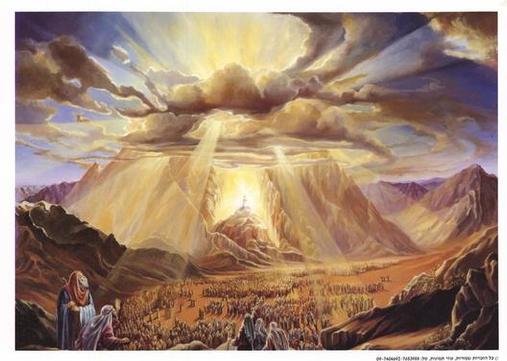
"Moshiach is ready to come now-our part is to increase in acts of goodness and kindness" -The Rebbe

Showing posts with label relating to non-Jews. Show all posts

Tuesday, April 30, 2013

On Defying Anti-Torah Government Edicts


On Defying Anti-Torah
Government Edicts

Rabbi Yehoishophot Oliver

Since the Jew’s observance of the civil law stems from Torah alone, if there is ever a conflict between Torah law and civil law, the Jew follows Torah faithfully in all its minutiae and refuses to even consider doing otherwise. Although, as discussed in an earlier article, “The law of the land is [Torah] law,”[1] this only applies to matters such as “merchants’ customs,”[2] international relations, and the like,[3] which stem from the mazal, the constellation, and higher, the guardian angel, of each country.

However,[4] only the Jewish people were sent into exile, but the holy Torah itself was never subjected to exile, for “The Torah will never change.”[5] Hence, non-Jews have no right to issue laws that somehow interfere with the Jews’ observance of the Torah, and Jews need not and should not honor and obey such laws (see also here).


Not only are non-Jews and their legal system unauthorized to override matters of Jewish observance that are a strict obligation or prohibition, they may not even dictate to a Jew how to keep a minhag Yisrael (Jewish custom), or in any way detract from the observance of a minhag Yisrael. The Previous Rebbe made a daring public statement to this effect after he was released from prison and about to be sent into exile. He famously repeated the following timeless words of one of his predecessors:[6]
All the nations on the face of the earth must know that only our bodies have been sent into exile and the servitude of [foreign] rulers, but our souls have not been exiled or enslaved. We must declare openly before all that in all matters relating to our religion, the Torah, the Mitzvos, and Jewish customs, we Jews have no one who can dictate to us, nor may any pressure be brought to bear against us.
In the same vein, the Previous Rebbe once related[7] a powerful story of how the Tzemach Tzedek courageously stood up to the government when it attempted to interfere in Jewish observance:
...In the first session, the Minister of Haskalah instructed the secretary of the conference to present a plan for the curriculum of Jewish children that the minister and his assistants had devised, and he commanded the four who had been summoned—the Rebbe [the Tzemach Tzedek], Reb Itcheleh of Volozhin, Reb Yisrael Halperin, and the scholar, Betzalel Stern, to sign on the plan.

...When the Rebbe [i.e., the Tzemach Tzedek] saw that the situation was dangerous, he stood up and said:

“The government summoned us to hear our opinion, and not to sign on what others have prescribed. I refuse to sign, and resign from my participation in the meeting.”

Lilienthal, who stood next to the Minister, whispered something into his ear, and immediately the minister stood up in anger and said with great fury, “Doesn’t it say that ‘The law of the land is the [Torah] law’?”

The Tzemach Tzedek responded: “‘The law of the land is the [Torah] law’ applies only to monetary matters, such as taxes and property rates. While ‘A Jewish custom is Torah,’[8] and no one has the permission to nullify it.”

 “The custom of women to cover their faces with their hands when they light the Shabbos candles—is that also Torah?” asked the minister.

“Yes,” answered the Tzemach Tzedek, “that too is Torah, as the Talmud Yerushalmi states: ‘The custom of [Jewish] women is Torah.’”[9]
Of course, we have suffered such persecution time and again from various oppressors through the course of history, and in the Jewish calendar, most notably in the time of Chanukah (see here). 

This is of timely relevance in recent months and years, in which the age-old Jewish custom of metzitzah be’peh has come under attack.

_______________________________________________
[1] Gittin 10b.
[2] Cf. Mishneh Torah, Laws of Selling, 26:8.
[3] Shulchan Aruch, Choshen Mishpat, 369:18.
[4] Hisva’aduyos 5744, Vol. 2, pp. 612-613.
[5] Ninth of Maimonides’ 13 Principles of Faith. Mishneh Torah, Laws of the Foundations of the Torah, 9:1.
[6] 3 Tammuz, 5627. Printed in Likkutei Dibburim, Vol. 4, 692a-692b..
[7] Likkutei Dibburim (Ivrit), Vol. 3, p. 610.
[8] Menachos 20b, Tosafos, s.v. nifsal. Maharil, cited in Rema on Yoreh Dei’ah, 376:4. See Likkutei Sichos, Vol. 22, p. 56.
[9] Pesachim 4:1.


Dedicated by Menashe Fleisher. Dedicated by Mrs. Rivky Katz and family in memory of Reb Mordechai Meir haKohen z"l ben Chaim Elazar haKohen z"l. May he have aliyas haneshama and be a gutteh better for all of us, especially to "convince Hashem" that we need Moshiach down here, "l'mata m'asara t'fochim," immediately!!!


Dedicated in the merit of a speedy release for the captives Yonasan ben Malka (Jonathan Pollard), Sholom Mordechai Halevi ben Rivka (Sholom Rubashkin), Yaakov Yehuda ben Shaindel (Jacob Ostreicher), and Zeva Rochel bas Chaya (Wendy Weiner Runge).

___________________________________
Like what you read? The articles I write take a lot of time and effort. Please contact me to sponsor an article for (at least) $36 in honor of the birthday, wedding anniversary, or yarhtzeit of a loved one, or for a refuah shleimah or the like. Also, see here concerning the tremendous merit of supporting the dissemination of Chassidus, and the blessings that one receives for doing so.

Saturday, April 20, 2013

How to Relate to the Law of the Land


How to Relate to the Law of the Land

Rabbi Yehoishophot Oliver

When Hashem sent the Romans to banish the Jewish people into exile outside the Holy Land, they became the guests of foreign nations. These nations have legal systems that are different from halacha, Torah law, and so residing in these countries means submitting to their laws, just as a guest must follow the house rules. 

Torah itself recognizes civil law and even requires that a Jew abide by it when living in that country, as the Talmud rules: “The law of the land is [Torah] law.”[1] This[2] elevates secular law to a higher standard than it accords for itself, for according to this principle, secular law has divine authority, for by adhering to it, one adheres to a law in the Shulchan Aruch, the Code of Jewish Law. (This is comparable to the Torah’s words concerning a doctor’s instructions: Since the Torah prescribes that in circumstances of poor health one should consult with a doctor and obey his advice, it follows that by fulfilling the doctor’s instructions, one fulfills Torah law.[3])

However, this does not mean that the Jew submits absolutely to the civil law. On the contrary, the Jew’s Master and King is Hashem alone, and at Mount Sinai the Jew took a solemn oath to follow Hashem’s law—halacha.[4] Halacha is the only law that the Jew follows, it permeates every moment and aspect of his life, and he does not submit to any mortal king or ruler.

Yes, a Jew must follow the law of the land, but not in a way that is somehow detached from his absolute subservience to Hashem. His gentile hosts have no inherent power to dictate his behavior. Rather, he follows the law of the land because Torah itself requires that he follow it, as long as it does not contradict Torah, as part of Hashem’s decree that the Jew be in exile. 

On a basic and external level, the reason that Torah requires adherence to the law of the land is that this brings tranquility and peace in society. This is particularly relevant to Jews during their stay in gentile lands, because when gentiles are at peace, their Jewish guests can also live in peace, as the verse puts it, “Through its [the gentile city’s] peace, you [the Jewish people] will have peace.”[5]

Similarly, Torah requires gentiles themselves to follow the law of the land, in the context of their duty to observe the Noahide commandment of dinim, establishing a justice system.[6]

On[7] a deeper level, this is also related to the way that Torah views nature. The reason that the Jewish people need the assistance and hosting of gentiles during the exile, which is accompanied by the Torah obligation to adhere to the law of the land, is that Hashem requires that the Jew follow the natural order. However, this does not mean that the Jewish people are inherently subject to the rule of nature, G–d forbid. On the contrary, since the Jew’s Neshamah stems from supernatural G–dliness, a Jew has the power to control the nature of the world. Rather, the Jews’ dependence on non-Jews stems from Hashem’s desire that the Jewish people follow the natural order during the age of exile. Thus, by doing so, the Jewish people comply with the command and will of Hashem.


____________________________________
[1] Gittin 10b.
[2] Hisva’aduyos 5744, Vol. 2, pp. 612-613.
[3] Berachos 60a. See Taz, Yoreh Deah, beg. ch. 237.
[4] In the Hebrew, the Jew is “mushba ve'omed mei’Har Sinai” (Shavuos 22b).
[5] Yirmiyahu 29:7.
[6] Gentiles are “obligated to appoint judges ... to dispense judgment concerning these [other] six laws” (Mishneh Torah, Laws of Kings, 9:19). 
[7] Hisva’aduyos 5743, Vol. 1, p. 170-171.


Dedicated in honor of my own birthday, Yehoishophot Yisrael Yehuda Leib ben Chana Feigeh, on 10 Iyar.

Dedicated in the merit of a speedy release for the captives Yonasan ben Malka (Jonathan Pollard), Sholom Mordechai Halevi ben Rivka (Sholom Rubashkin), Yaakov Yehuda ben Shaindel (Jacob Ostreicher), and Zeva Rochel bas Chaya (Wendy Weiner Runge).

___________________________________
Like what you read? The articles I write take a lot of time and effort. Please contact me to sponsor an article for (at least) $36 in honor of the birthday, wedding anniversary, or yarhtzeit of a loved one, or for a refuah shleimah or the like. Also, see here concerning the tremendous merit of supporting the dissemination of Chassidus, and the blessings that one receives for doing so.

Tuesday, April 16, 2013

How to Relate to Our Gentile Hosts


How to Relate to Our Gentile Hosts

Rabbi Yehoishophot Oliver

At times, when I express criticism of the institution of secular western democracy, I hear the response, “If you don’t like it, then leave!”

With all due respect, such words can only come from a person who is stuck so deep in the mindset of golus (exile) that although he recognizes that he is a Jew, and even considers himself an Orthodox Jew, his words indicate that he identifies himself primarily as a citizen of his country. So to him, I’m being rude by questioning the perfection of the political institution upon which his country is founded. Since I’m disrespecting his country, he feels entitled to speak on behalf of that nation, and tell me that I should only stay if I agree to respect the rules.

But the Torah teaches that the Jewish people fundamentally don’t belong in golus. Despite our citizenship, we have been merely guests in various host countries. Just as in the past we didn’t belong in Egypt, Babylonia, Greece, Rome, Spain, Poland, Hungary, Germany, Iraq, Iran, and Morocco, so do we not belong today in USA, South Africa, Australia, and Canada. And we don’t even belong in the secular state of Israel (note that Eilat, which is not part of Eretz Yisrael, is part of the state, but much of South Lebanon, which is not part of the state, is part of Eretz Yisrael according to its true Torah borders). The Jewish people belongs in only one place, and in only one state of being: In Eretz Yisroel in its true borders, with Moshiach Tzidkeinu.

Now, is it technically true that in western countries today, we enjoy much more freedom than that experienced in many other exiles? Yes, but that is not necessarily a good thing. The Alter Rebbe famously preferred persecution under the Czar to religious freedom under Napoleon, to the extent that he instructed his very own chassidim to put their lives on the line by joining the Czar’s army in the Franco-Russian war.

Yes, in western society we are free to practice Torah and Mitzvos without persecution. But this freedom also makes us free to assimilate, may G–d save us, and spiritual death is worse than physical death (see here). Do we wish suffering upon ourselves—no (see here). But we dare not allow our awareness of the advantages of our current exile to blind us to its drawbacks, and to the difficult tests that we face (if anything, the challenges of our current exile are even more difficult than those of all previous times—see here), for then we will surely succumb to these tests, G-d forbid.

In other words, our hosts are not fine people who are kind to us and therefore deserve praise, nor are they nasty people who torment us and therefore deserve condemnation. They are simply the agents of Hashem to carry out the decree of exile in accordance with His detailed plan of where the Jewish people need to be in order to accomplish what they need to accomplish.

Of course, viewing our hosts as merely channels for divine blessings does not mean we should take them for granted. The Jew should respect his gentile hosts just as any guest should respect his host. When they help us, whether materially or spiritually, we should thank them appropriately, in accordance with the basic Torah principle that teaches us to acknowledge favours and not be ungrateful.

We should be particular to follow the civil law of the land, for “The law of the land is the [Torah] law”).[1] Moreover, we should avoid inappropriate behavior that would make a chillul Hashem (desecration of Hashem’s Name) and arouse our hosts’ eivah (hostility). On the contrary, we should pursue darkei sholom, ways of peace, and even pray for our hosts, as the Torah exhorts us, “Seek the peace of the [gentile inhabitants of the] city ... and pray for it, for through its peace, you will have peace.”[2] We should also do our part to influence them to follow the Sheva Mitzvos Bnei Noach, the Noahide laws.

But living peacefully, and respecting and expressing genuine gratitude to our hosts, does not mean identifying with them. Thanking them as appropriate for their assistance does not mean forgetting that they are merely conduits for Hashem’s blessings, as the Talmudic adage says, “Although the wine belongs to its owner, one gives gratitude to the butler”[3]: The main gratitude must be felt to the true Source of the blessing. One should turn to Hashem in thanks for sending these nations to facilitate this freedom and prosperity.

Likewise, when suffering befalls us from the nations, G-d forbid, we must know that the reason it occurred was not because some craven anti-Semite decided to hurt Jews (may Hashem save us), but because there was a divine decree, as part of the broader decree of the exile, for this suffering to occur. No one can inflict harm upon another unless Hashem so decrees it,[4] and its purpose is that we accept it as a divine punishment and turn to Hashem in sincere Teshuvah (see here), while at the same time doing our part in the natural order to protect Jews from harm as much as possible, whether through guards, the police, the army, and the like.

So our response to persecution should not be “Islam is bad because of suicide bombers, etc.” or even “democracy is good because our rights are protected, we have freedom of religion, etc.” Our response should be: Everything that occurs during the exile comes from Hashem alone, and is a necessary part of the cleansing process of the exile. Now, how does Hashem want me to view this particular event in terms of its implications for how I should grow and change as a Jew, and bring Moshiach now?

Fighting to recognize this is itself one of the tests we face in our current exile, and if you’re finding it difficult, don’t be surprised: Every test is difficult, because by definition, tests are supposed to be difficult. And the tests at the end of exile, right before Moshiach, are the most difficult of all.

And in every exile, we are called to stay true to Torah and Mitzvos despite the myriad tests that we face. The purpose of all the difficulties, suffering, and tests of exile is to cleanse us and bring us to do Teshuvah (see here). When we do Teshuvah sincerely, the exile in all its various locations and manifestations will come to an end. May Hashem be satisfied with our efforts, and send Moshiach now!

_________________
[1] Gittin 10b.
[2] Yirmiyahu 29:7.
[3] Bava Kama 92b.
[4] Cf. Tanya 138b.


Dedicated in honor of the birthday of my dear sister, Hinda Zelda Bracha bas Chana Feiga (Bracha Tsap) on 2 Adar by my parents, ovi mori, Reb Kasriel Oliver and family.

Dedicated in the merit of a speedy release for the captives Yonasan ben Malka (Jonathan Pollard), Sholom Mordechai Halevi ben Rivka (Sholom Rubashkin), Yaakov Yehuda ben Shaindel (Jacob Ostreicher), and Zeva Rochel bas Chaya (Wendy Weiner Runge).

___________________________________
Like what you read? The articles I write take a lot of time and effort. Please contact me to sponsor an article for (at least) $36 in honor of the birthday, wedding anniversary, or yarhtzeit of a loved one, or for a refuah shleimah or the like. Also, see here concerning the tremendous merit of supporting the dissemination of Chassidus, and the blessings that one receives for doing so.

Saturday, December 22, 2012

The Intellectual Soul (pt. 3): The Boost from the Divine Soul

The Intellectual Soul (pt. 3)
The Boost from the Divine Soul

Rabbi Yehoishophot Oliver

(Continued from The Intellectual Soul, pt. 1 and The Intellectual Soul, pt. 2.)

But if so, how is the Intellectual Soul of a Jew any better? It too consists of worldly, human intellect; by what virtue does it also “sense spiritual refinement”?

Rather, the Jew’s Intellectual Soul itself is not inherently different from the non-Jew’s. However, since the Jew possesses the Divine Soul (a.k.a., Nefesh HoElokis) that transcends the world completely, and the Nefesh HoElokis becomes vested within the Nefesh HoElokis, this proximity subdues the Nefesh HoElokis’ natural sense of ego and enables it to “sense spiritual refinement” in a way that makes it possible for the Jew to attain true objectivity in intellectual judgments, and thus fully fulfill the potential of the Intellectual Soul. It emerges that the verse, “The spirit ... of man rises upwards” refers primarily to the Jew’s Intellectual Soul.

Perhaps this is comparable to the difference between two people of equal intelligence. One constantly keeps the company of a very spiritual, inspired, and sagely rabbi, while the other keeps no such company, and so he is left to live a life focused on materialism. All things being equal, the former will be much more spiritually inclined than the other.

This explains the double expression in the Mishnah cited above: “Beloved is man ... it is by special divine love ... ”

The first phrase refers to the Intellectual Soul within all mankind, while the second phrase refers to the Intellectual Soul within the Jewish people. “Beloved is man ... ” tells us that the non-Jew is beloved to Hashem because of his Intellectual Soul. In contrast, “it is by special divine love that he is informed that he was created in the image of G–d” tells us that a Jew is beloved to Hashem because of his Divine Soul. Because of this belovedness, Hashem also gives the Jew an Intellectual Soul.

The Jew’s responsibility to elevate the nations

This is also the reason that Torah instructs, and even obligates the Jew to influence non-Jews positively by teaching them the Noahide laws, as the Rambam rules explicitly: “Moshe was commanded via a direct divine revelation [to tell the Jewish people] to compel all the world’s inhabitants to undertake the laws commanded to Noah’s descendants.”[1] The Tosafos Yom Tov explains[2] that the expression “compel” also includes the imperative to use verbal persuasion, to explain to someone resistant the necessity to adhere to the Noahide laws. Of course, [3] at the same time one should be careful to influence non-Jews in a pleasant, peaceful manner, for it is written of the Torah, “Its ways are ways of pleasantness, and all its paths are peace.”[4]

Why was the Jew in particular assigned with this mission? Because provided that the Jew is refined and G–d-fearing, his more sensitive Intellectual Soul enables him to serve as a true guide for the non-Jew, elevating him above the limitation of his Intellectual Soul, and bringing him to relate to the world, and to the moral choices he is constantly called upon to render, in a manner that is truly objective, and therefore truly correct and truly ethical.


Based on the Rebbe's Likkutei Sichos, Vol. 15, pp. 58 ff.

________________________________
[1] Mishneh Torah, Laws of Kings, 8:10.
[2] Tosafos Yom Tov, Avos 3:14.
[3] Hisva’aduyos 5747, Vol. 1, p. 82.
[4] Mishlei 3:17.


This article was dedicated by Moshe Maaravi and family as a merit for the refuah sheleimah of Yehoshua ben Sheva.


Dedicated in the merit of a speedy release for the captives Yonasan ben Malka (Jonathan Pollard), Jacob Ostreicher (Yaakov Yehuda ben Shaindel), Alan Gross (Aba Chonah ben Hava Chana), Sholom Mordechai Halevi ben Rivka (Sholom Rubashkin), and Zeva Rochel bas Chaya (Wendy Weiner Runge).

Like what you read? The articles I write take a lot of time and effort. Please contact me to sponsor an article for (at least) $36 in honor of the birthday, wedding anniversary, or yarhtzeit of a loved one, or for a refuah shleimah or the like. Also, see here concerning the tremendous merit of supporting the dissemination of Chassidus, and the blessings that one receives for doing so.

Thursday, May 24, 2012

Jews and Non-Jews: Complementary Missions Given at Sinai

Jews and Non-Jews:
Complementary Missions Given at Sinai

Rabbi Yehoishophot Oliver

It may come as a surprise, but according to many opinions,[1] before the giving of the Torah at Sinai, the Jewish people had the halachic status of non-Jews. Their basic philosophical beliefs about the oneness of Hashem, His providence, and so on, were no different from those that Jews believe in today (on the contrary, we are continuing the mission to carry on these sacred beliefs, with the help of Hashem). Moreover, the Jewish people existed as a separate nation ever since the time of Yaakov, all of whose sons were Jews. We even knew Torah, for all the forefathers sat and studied Torah,[2] and passed it on to future generations. And yet the Torah tells us that they were not real Jews until much later on, when the Torah was given at Sinai. Why?

When Hashem chose us as a nation, He separated us from the nations around us by giving us the Torah and its Mitzvos.In other words, a Jew then ceased being merely a person—in essence, a non-Jew—with a belief system and practices (along with the distinguished lineage of the forefathers) that differed from those of the rest of mankind. The Jew’s fundamental being, core, and every aspect of his or her life, became irrevocably transformed.

Now, at first glance, some (especially those with, through no fault of their own, little Torah-true Jewish education, which is accompanied by the tendency to view everything in Judaism through the critical lens of the values and yardsticks of modern secular culture) may interpret this chosenness as somehow belittling non-Jews. As implying that they are somehow second-rate, unimportant, and even subhuman. As being what in our modern world is a cardinal sin—racist. But this is simply not so.

Let’s explain.[3] The natural order—and not only our physical world, but even the higher spiritual worlds—receive their sustenance from the divine name of Elokim. Thus, our sages say, “The name of Elokim is mentioned thirty-two times in the account of Bereshis (creation).” Now, this includes not only mankind, but even the awesome system of the sun, planets, and stars, which all possess intelligence and rotate constantly out of their excitement in singing the praise of Hashem—they too derive their existence from the name of Elokim. Even the incredibly pure and sublime beings known as angels, which reside in the higher spiritual realms—and not only the lower angels, such as the Ofanim, but even the highest of all, the Seraphim (see here)—they, too, derive their existence from the name of Elokim.

Then there is the name of Havayeh,[4] which represents a level of G–dliness that is supernatural and otherworldly. This is a level so lofty that until the Torah was given, no one had any access to it.[5] Until the giving of the Torah. At this unspeakably awesome, one-time occasion, Hashem chose to infuse the sublime level of Havayeh within every Jew.[6]

(This is the meaning of the Jew’s additional soul, the Nefesh HoElokis, the divine soul.[7] One might ask: Why is this soul is called a divine soul; after all, everything that exists has a soul that is divine, for Hashem created (and continually recreates) everything in existence? The answer is that the soul in all other beings comes from the name of Elokim, while the Jew possesses an additional soul that completely transcends the natural order, one that flows from Havayeh—the divine soul.)

However, this was only the beginning. Hashem then gave us a mission, a mission of the most unparalleled cosmic proportions. He charged us with the task of bridging the cosmic divide between Havayeh and Elokim, by revealing the name of Havayeh in the world.

To this end, He gave us the Torah, which is specifically called the Torah of Havayeh, and the Mitzvos, which are specifically called the Mitzvos of Havayeh. When we study the Torah and adhere to the Mitzvos, we reveal this level in the world around us, and to the gentile nations as well. This was in fact Hashem’s ultimate intent in creation, also known as “making a dwelling place for Hashem,”[8] for Havayeh, in the world and among the gentile nations, who stem from Elokim.

Since this is the ultimate purpose of creation, this mission carries the utmost responsibility and requires the utmost devotion and sacrifice. This is the meaning of Hashem’s statement that He made us “A kingdom of priests and a holy nation.”[9]

A Kohen, a priest, represents someone whose entire life, and every minute aspect of his life, is different from those of others. It is consecrated to Hashem.

And so Hashem gave us the Torah, which is related to the world hora’ah, guidance, for every single minute aspect of a Jew’s life, from the cradle to the grave, is guided by Torah. There is no area of life where Hashem does not provide guidance to his priests, the Jewish people, in His Torah.

This surely applies to the home, which the Jew is charged with making a Mikdash (sanctuary) for Hashem, regardless of where—in the kitchen, the living room, the bathroom, and the bedroom—the Torah guides the Jew how to bring the divine presence into all these places.

And it applies no less to the workplace, where a Jew is charged with the mission of setting an example of scrupulous honesty and integrity, and influencing his environment in a pleasant, peaceful manner, for of the Torah it is written, “Its ways are ways of pleasantness, and all its paths are peace.”[10] He should influence the Jews around him to adopt Torah observance, and the non-Jews around him[11] to believe in Hashem and Torah, and follow the Noahide Code—the eternal laws and principles of basic morality and decency incumbent upon all mankind.

This is not to say that non-Jews can’t connect to Hashem; on the contrary, they can and must, especially in light of the fact that they are created “in the image of Hashem.” However, the focus of their G–d-given mission is to abide by their Mitzvos, whose fundamental purpose is “yishuv ha’olam”—civilizing society, to settle the world physically and maintain a cohesive, peaceful, just, G–d-fearing social order, as it is written, “Not for chaos did He create it [the world, but rather] He formed it to be settled.”[12] It is this vital role for which non-Jews were assigned. Thus, non-Jews’ mission is related to the natural order, which stems from the name of Elokim, and this is the reason that the Noahide laws are rational laws that stem from the natural world. Thus, in order to accomplish this goal, non-Jews need not perform any of the Mitzvos specifically commanded to Jews.[13]

So Jews have a role—to reveal the name of Havayeh, and non-Jews have a very different role—to ensure the appropriate expression of the name of Elokim, through ensuring that the natural order follows the wishes of Hashem in His Torah.

Is this in a certain sense a lower mission than the mission given to the Jews? Yes. But so what—Hashem can do as He wishes—His will need not conform to the passing whims of the philosophical fads of mortals.

Moreover, every individual has a personal mission, one that differs from that of everyone else. Of these, Hashem clearly assigns different missions to different people—some receive more advanced, risky, responsible missions, and others, less challenging, more everyday ones.

Likewise, we find that only a Levi may sing in the Holy Temple, and only a Kohen may serve in it. I myself, for example, am not a Kohen, and as such I am barred from entering certain parts of the Holy Temple, and not allowed various Kohen privileges. But I am not bothered by that fact one bit, because since Hashem made me a non-Kohen, that role is clearly not what Hashem wants of me, and so I have been deprived of nothing.

Racism, in contrast, means refusing to treat someone with proper decency and respect simply because they belong to a group that one has some kind of animosity towards. However, the “Torah of light”[14] instructs clearly how one should view non-Jews: “Beloved is man, for he was created in the image [of Hashem].”[15] All mankind must be treated with the utmost respect, for they are beloved to Hashem by virtue of their special human intellect, which resembles the divine.

When a Jew assumes his role uncompromisingly and proudly, in addition to the inherent worth of this behavior, he also does a tremendous service for the world and all the gentile nations. He performs his role as priest, role model, and teacher to the nations, to illuminate and uplift them with the sublime spirituality of Havayeh for which he serves as a channel.

However, if the Jew chooses, may Hashem save us, to compromise his Torah observance and behave in inappropriate ways that conflict with Torah, behaviors typical of the secular culture, then not only does he harm himself grievously, but he also does a disservice to the nations by abdicating and thereby withholding from them his holy example, guidance, and the awesome revelation of Havayeh that they could have received through his unswerving allegiance to Torah.

____________________________________________________
[1] See at length Parashas Derachim, Rabbi Yehuda Rosanes.
[2] Yoma 48b.
[3] Cf. Likkutei Sichos, Vol. 25, pp. 186-192.
[4] Hashem has other names, but these are the primary ones, and the main ones relevant to this discussion.
[5] With some notable exceptions, such as Avraham, on a lower level, and Moshe, on a higher level. Further discussion of this is beyond the scope of this article.
[6] Likkutei Torah, Bamidbar 16d.
[7] See Tanya ch. 2, beg.
[8] Midrash Tanchuma, Naso 16. Explained in Tanya ch. 36.
[9] Shemos 19:6.
[10] Mishlei 3:17.
[11] As per Moshe Rabeinu’s instruction to the Jewish people at Sinai. Mishneh Torah, Laws of Kings, 8:10.
[12] Yeshayah 45:18.
[13] However, it is praiseworthy for non-Jews to adopt certain Jewish practices on a voluntary basis, such as daily prayer, blessings on food, and so on, while other Mitzvos, which were meant exclusively for Jews and would therefore be spiritually harmful for non-Jews, are therefore forbidden for them, such as observing the Shabbos (Cf. Mishneh Torah, Laws of Kings, 10:9. As explained in The Divine Code, Vol. I, Part I, Chapter 3, on “The Prohibition Against Making a New Religion or Adding a Commandment.”)
[14] Mishlei 6:23.
[15] Avos 3:14.


Like what you read? The articles I write take a lot of time and effort. Please contact me to sponsor an article for (at least) $36 in honor of the birthday, wedding anniversary, or yarhtzeit of a loved one, or for a refuah shleimah or the like. Also, see here concerning the tremendous merit of supporting the dissemination of Chassidus, and the blessings that one receives for doing so.

Thursday, December 29, 2011

On the Greeks' demand that the Jews write heresy


(See my article concerning Hei Teves here.)

(This post comes in continuation to the posts here and here.)

This also sheds light on the Greeks’ demand of the Jewish people: “Write for yourselves on the horn of an ox that you have no portion in the G–d of Israel.”[1] Here, too, in the case of the Greeks’ agenda to force the Jewish people to write words of heresy, we see how their oppression of the Jewish people was primarily spiritual.

But what is the significance of “the horn of an ox,” and what led the Greeks, who were highly intelligent, to think that this act of coercion would somehow influence the Jews to give up their connection with the holiness of Torah and Mitzvos, G–d forbid?

The answer is related to the different supernal origins of the Jewish people and the nations.[2] There are four “faces” in the supernal divine chariot,[3] and the souls of the gentile nations stem from the level known as “the face of an ox.” More precisely, their souls are derived from the “horn” of this supernal ox. Just as a horn is considered secondary to the animal itself,[4] so does the horn represent the lower, external level of G–dliness from which the souls of the gentile nations (and the entire natural order, for that matter) are derived, which is related to the divine name of Elokim, which represents nature.[5]

In contrast, the souls of the Jewish people are derived from a transcendent or “internal” level of G–dliness, the name of Havayeh, as it is written, “For his nation remained the portion of Havayeh.”[6] This is alluded to in the verse, “And He [Hashem] blew into his [Adam’s] nose a soul of life.”[7] Vigorous blowing represents expending one’s inner strength.[8]

This is why the Greeks specifically wanted the Jewish people to write this statement on the horn of an ox. They wanted the Jews to degrade themselves to receive their sustenance from the same external[9] level of G–dliness from which the gentile nations derive their sustenance, the Name of Elokim, and in so doing they would forfeit their special bond with Hashem and his Torah and Mitzvos, which would lead them to assimilate with the non-Jews, G–d forbid.

Based on Sefer HaMa’amarim 5729, p. 86 ff. To be continued...

_______________________________________________________
[1] Bereshis Rabba 2:9.
[2] Torah Ohr, Vayeshev 30a. Ohr HaTorah, Chanukah 300a ff.
[3] Discussed in Yechezkel 1:1-3:27. Obviously, there is no physical chariot or ox in the higher spiritual realms, and these are anthropomorphisms, as is common in the Kabbalistic teachings.
[4] Chullin 117b.
[5] Cf. Tanya, Igeres HaTeshuvah ch. 4.
[6] Devarim 32:9.
[7] Bereshis 2:7. Since, as Kabbalah teaches, Adam possessed a Jewish soul, this verse sheds light on the nature of the Jew’s special soul.
[8] Tanya, beg. ch. 2.
[9] Likewise, the Greeks sought to influence the Jews to engage in secular studies, known as “chochmos chitzoniyus,” lit., “external wisdoms.”


This post was dedicated by Yerachmiel “Mitch” Belzer and family, as a merit for Malkah bas Neyereh. Also dedicated by Rabbi Shmuli Markel and family (Shmuel Leib ben Esther and Sara Rochel bas Chayah Nechomoh).

________________________
Like what you read? The articles I write take a lot of time and effort. Please contact me to sponsor an article for (at least) $36 in honor of the birthday, wedding anniversary, or yarhtzeitof a loved one, or for a refuah shleimah or the like. Also, see here concerning the tremendous merit of supporting the dissemination of Chassidus, and the blessings that one receives for doing so.

Thursday, September 22, 2011

Refining the Sparks Through the Suffering of Exile


Refining the Sparks Through
the Suffering of Exile

Rabbi Y. Oliver

We have spoken about how when the Jewish people use objects in the world to serve Hashem, they refine the sparks of holiness in those objects.

Another significant way in which the Jewish people refine the sparks of holiness in exile relates to their suffering in their alien environment. Over the course of Jewish history, the Jewish people have been “hosted” by various nations because those nations held sparks of holiness that the Jewish people were expected to refine. When the Jewish people are oppressed by their host nations in various ways, and yet remain firm in their observance of Torah and Mitzvos, they pull out the sparks of holiness in the nations and in their countries.

When the Jewish people have completed their task of refining the sparks within a specific nation, they are released from it, and that nation is left lowly and disgraced, for it has been deprived of its extra life-force—the sparks of holiness that lay within it.[1]

When Adam HaRishon sinned, he caused the sparks of holiness to fall into the forces of Kelipah (see here),[2] and the Jewish people refine these sparks through their suffering in exile. This is the meaning of “All who cause the Jewish people to suffer become the ‘head’ [i.e., the leading nation].”[3] When the gentile nations oppress the Jewish people, we take their “head.” The head, which is above the rest of the body, represents a high level—the lofty sparks of holiness that lie within the nations, that are the true source of their prosperity.

This is the deeper meaning of the verse, “One man dominates over another man, to his detriment,”[4] for the detriment of “the evil man,” i.e., the spiritual forces of Kelipah, which give sustenance to the nations who oppress us. When they dominate over us and oppress us, it is in fact to their detriment, for in this way the sparks of holiness are refined from their midst, and then they lose the blessings that those sparks brought them.

To explain further, each nation draws its sustenance from a particular force of Kelipah. Thus, there are seventy nations, corresponding to the “seventy ministers of Nogah”—the seventy spiritual forces of Kelipas Nogah (the level of Kelipah that sustains the physical world in general, but not things that are forbidden for a Jew),[5] from which each of the seventy gentile nations draws its sustenance, respectively.[6]

As long as the Jewish people are being hosted by a particular country in order to refine the sparks of holiness trapped there, the “minister,” the angel from which that country derives its sustenance, benefits greatly, causing that angel’s nation to be blessed with material prosperity.

However, once the Jewish people have finished refining all the sparks there, then, of course, no sparks are left, and so the individual Kelipah from which that nation had drawn its sustenance becomes greatly weakened, causing the nation to which it gives sustenance to lose, or at least experience a significant decline, in its prosperity and prominent position on the world stage.

The Jewish people are then relocated to another country, in order to refine the sparks of holiness that await them there. Once they have refined all the sparks of holiness in all the lands of exile, Moshiach will come and redeem them, bringing them to Eretz Yisrael forever.
___________________________
[1] Igra DeKallah, Bereshis, p. 496.
[2] Likkutei Torah lehoArizal, Tetzei.
[3] Gittin 56b.
[4] Koheles 8:9.
[5] Cf. Tanya, Iggeres HaKodesh ch. 25.
[6] Cf. Toras Sholom p. 204.


This post was dedicated by Reb Kasriel ben Yehudis and Chana Feige bas Reizl (my parents, tzu langeh, gezunteh, zisseh yoren) in honor of their 36th wedding anniversary. This post was also dedicated by Reb Menachem Kovacs, who requested that this message be attached:
"Zachor: to mark the 6th anniversary of the expulsion of the Jews from Gush Katif and the Northern Shomron; we continue to pray and work for their restoration and for the Ge'ula Shlayma. Thank you."
Like what you read? The articles I write take a lot of time and effort. Please contact me to sponsor an article for $36 in honor of the birthday, wedding anniversary, or yarhtzeit of a loved one, or for a refuah shleimah or the like. Also, see here concerning the tremendous merit of supporting the dissemination of Chassidus, and the blessings that one receives for doing so.

Tuesday, September 6, 2011

Refining the sparks within the nations

The Rebbe Maharash teaches:

“Hashem did a charity for us by scattering us among the nations.”[1] Why was this a charity? For by scattering us among the nations, He enabled us to fulfill a special mission: To refine the sparks of holiness hidden within them.

This is the deeper meaning of Hashem’s blessing to the Jewish people, “You will eat all the nations.”[2] Eating represents birur, refinement, and G–d then declared that the Jewish people would ultimately “eat up” and refine the sparks of holiness that lie hidden within the nations and their countries.

This is also the deeper meaning of Hashem’s statement to the Jewish people: “You shall be for me a segulah from all the nations”[3]—from all the gentile nations. I.e., when we refine them, we, the Jewish people, become a segulah, a beloved treasure, for Hashem.

Based on Sefer HaMa’amarim Toras Shmuel 5729, p. 65.

Jews refine non-Jews in several ways. When Jews interact with non-Jews in an upstanding, righteous manner, and make a kiddush Hashem (“sanctification of Hashem’s Name”):

– they[4] act as a “Light unto the nations,”[5] inspiring certain non-Jews to adopt a more refined, wholesome, G–d-centered lifestyle, seeing the shining example set by the Jewish people;

– they inspire certain non-Jews to come and learn from Jews how to serve Hashem as is required for them, by keeping the Noahide laws; moreover, Jews who have the opportunity (especially when they already have connections with non-Jews for business purposes, or the like) even approach non-Jews and convince them to undertake to follow the Noahide laws, and in this way they fulfill Rambam’s ruling[6] that Jews must encourage non-Jews to fulfill their laws;

– they inspire certain non-Jews to convert, for “Hashem only exiled the Jewish people among the nations in order to increase converts.”[7]

_______________
[1] Pesachim 87b.
[2] Devarim 7:16.
[3] Ibid. 7:6
[4] In connection with this point and the following one, see Hisva’aduyos 5744, Vol. 3, p. 1813.
[5] Yeshayah 49:6, 42:6.
[6] Mishneh Torah, Laws of Kings, 8:10.
[7] Pesachim 87b. See Orchos Tzaddikim, Gate of Truth: “One should not lie to a Jew or a non-Jew, or deceive them in any matter. ... Hashem only exiled the Jewish people in order to increase converts, and as long as they [Jews] behave with them [non-Jews] without deception, [non-Jews] will attach themselves to them [Jews].”

This post was dedicated by Reb Yeshayahu Don ben Chayah Tsipah and Sheila Shulamit bas Sarah Beila in honor of their wedding anniversary, and in honor of the yohrtzeit of Tsvi Horst Lubinizki.

Like what you read? The articles I write take a lot of time and effort. Please contact me to sponsor an article for $36 in honor of the birthday, wedding anniversary, or yarhtzeit of a loved one, or for a refuah shleimah or the like. Also, see here concerning the tremendous merit of supporting the dissemination of Chassidus, and the blessings that one receives for doing so.

Thursday, June 23, 2011

Dressing Like a G-d-fearing Jew


The Rebbe relates:
A well-known story is told that once, in Lubavitch, a shochet was fired because he began to wear boots. How, then, was it that in later times, the Rebbe’im themselves wore boots?

The reason for this is simple. The shochet wasn’t fired because it is somehow forbidden to wear boots; rather, in that historical context, this act revealed that the shochet was loose and not G–d-fearing. During that period, only the impious would wear boots, while G–d-fearing Jews would not. So when that shochet deviated from the standard conduct of the G–d-fearing community, and began to wear boots, like empty people, this expressed that he was not G–d-fearing.*

However, once G–d-fearing Jews began wearing boots as well, then circumstances changed; obviously, there is nothing inherently wrong with wearing boots.

Hisva’aduyos 5743, Vol. 2, p. 759. Cf. Igros Kodesh, Vol. 9, p. 460.

*Elsewhere (Likkutei Sichos, Vol. 18, p. 460), the Rebbe adds: “In the time of this shochet, boots were a new thing, and only the Jews who dressed and acted like the pritzim [sing. poritz—the wealthy non-Jewish landowners], took part in their wild parties, and the like, would dress that way. If someone dressed like this, people knew that he had strayed from the proper path. In the end, it became known that this shochet and his family had indeed strayed from the proper path.”
In various times and places, G–d-fearing Jews wore various garments. What is important to consider is not the exact garment worn, but the simple fact that for whatever reason (and I don’t think that the superficial reason that this particular “fashion” was adopted really matters here), it has become accepted that in a particular time and place, a G–d-fearing Jew dresses in this particular way. So, as superficial as it sounds, one who fears Hashem naturally wants to conform to this way of dress, in order to make his identity as a G–d-fearing Jew known to others.

Conversely, if the person make a point of dressing differently from the way that G–d-fearing Jews typically dress in his particular cultural milieu, and davka imitating the dress of the non-Jews around him, he is making an unmistakeable statement about his degenerate values and low spiritual level. He lacks fear of Hashem, and therefore identifies with the goyishe culture of his time, instead of following the Torah’s mandate for the Jewish people to distance and distinguish themselves from non-Jews and their culture (see here).


Some further comments:

Despite the above, of course, one has the ability to be hypocritical, so although a pious person will dress the part, as above, pious dress does not in itself prove piety.

It should also be noted that nowadays, this principle may not always apply. This story occurred during an era in which the vast majority of Jews were Torah-observant, and the ones who abandoned observance were the exceptions, and moreover, they had been raised observing Torah and Mitzvos. However, the majority of Jews today are not yet Torah-observant, and they have been raised without Torah observance. In this context, those who are slowly finding their way back to their heritage from a world of secularism may continue to wear somewhat non-Jewish looking garments not because they are on the verge of leaving the fold, but because they are still in the process of entering it—a journey along which one must progress gradually, as explained here.


This post has been dedicated by the Weinberger family לעילוי נשמת Melech ben Mordechai Shmuel ע"ה, and by Menachem Kovacs in honor of the Yahrzeit of his father, Eliezer ben Shalom ע"ה, on 17 Sivan.

____________
Like what you read? The articles I write take a lot of time and effort. Please contact me to sponsor an article for $36 in honor of the birthday, wedding anniversary, or yarhtzeit of a loved one, or for a refuah shleimah or the like. Also, see here concerning the tremendous merit of supporting the dissemination of Chassidus, and the blessings that one receives for doing so.

Monday, April 19, 2010

FAQs about Zionism I

Question: Is the State of Israel good or bad?

Answer
: In a nutshell, as I understand it, the Chabad position on the State of Israel is as follows. The State was the embodiment of all the aspirations of nationalist Zionism, which was a secular and even antireligious philosophy designed to replace true Torah-based Judaism with a secular nationalist ideal, G–d forbid. This agenda is false and evil, and delays the true redemption. Chabad thus opposes any identification with the government of the sort that would give the impression that one accepts the evil philosophy behind it.

However, the idea of saving and protecting Jews from danger is legitimate and worthy, and in fact a Torah imperative ("
pikuach nefesh"). The Zionists who set up the State performed a worthy deed in setting up an army to protect the Jews from the hostile Arabs, and in organizing a place for Jews to live to escape persecution. 


Yet this does not mitigate the fact that they simultaneously committed an evil deed by associating this endeavor with promoting their anti-religious, anti-Torah philosophy. Their intentions in setting up the State were therefore a mixture of good and evil.

Practically speaking, the Jews who live there are Jews like any other, and so they need military protection; thus, those who serve in the army do a tremendous Mitzvah in defending Jewish life, regardless of the fact that the government that dispatches them represents the philosophy of Zionism.

Likewise, the Land is holy, and those who settle in it in a holy way perform a Mitzvah regardless of the fact that the government that technically controls the Land embodies the philosophy of Zionism. For in reality the government does not own the Land; rather, it is Hashem’s eternal gift to every single Jew.


Question
: Why don’t you celebrate Israeli Independence Day?


Answer: Among other reasons, because it is simply untrue—the Jews living in Eretz Yisroel today (may they increase manyfold) are not independent from the non-Jews. This reality is so blatant that all one need do is select any random news report concerning Israeli foreign relations, and one will see how the Israeli government grovels in front of the goyim. Moreover, this has been going on in one form or another all along, only in an ever-increasing measure, and especially over the past decade. It has reached such depraved, outrageous proportions that it boggles my mind every time I attempt to get my head around it.

In particular, I am referring to the vile atrocities of surrendering Jewish land, guns, and money to our sworn terrorist enemies, expelling Jews en masse from their homes, and criminalizing the building or renovation of Jewish homes—all out of the craven fear of “what will the
goyim say.” This shows plainly and irrefutably just how much "independence" Zionism has brought us.

Our control over the Land is significant and must be maintained because the Land is holy and G-d-given, and because to relinquish any part of it would severely endanger those who remain. However, the truth must be recognized that this control is only partial, that we are in reality vassals to the United States of America, and thus our titular control does not constitute true independence. (One recent reminder of this was the pathetic way that the IDF scrambled to complete its military operation in Gaza, which was codenamed Cast Lead, before President Obama came into office—lest their actions displease the president and he wield his influence to obstruct their efforts, through withdrawal of aid or the like.) 


Question
: Doesn’t the very existence of the State of Israel constitute the fulfillment of biblical prophecies foretelling the return of the Jewish people to Eretz Yisroel?


Answer
: No, we're still in exile. The secular Zionist state is not the fulfillment of any biblical redemptive prophecies, which will only be fulfilled through Moshiach. Moreover, calling the exile redemption delays the coming of the true redemption! Conversely, the first step towards true redemption is recognizing that we are indeed in exile, for only then can we truly pray for the redemption.

In fact, not only are we not in a state of redemption, but in a way the exile is even worse in the Holy Land, for in many places there, may G-d save us, the atmosphere is lacking in fear of G-d (although the numbers of those returning to Jewish observance have been steadily increasing, thank 
G-d). To sin in the Holy Land is considered more severe than to sin in the diaspora, for a sin committed in the King’s palace is worse than a sin committed outside it (Tashbetz, sec. 559).

Tuesday, March 2, 2010

The power of self-refinement

In addition to our strivings for self-refinement being an integral part of serving Hashem, they carry the fringe benefit of enabling us to overcome our physical enemies.

Dovid HaMelech speaks of two distinct types of foes whom the Jewish people face: “the enemy and avenger” (Tehillim 8:3): The “enemy,” who fights openly, directly, and unashamedly; and the “avenger,” a hidden enemy who schemes to commit vile deeds through stealth (today this is termed a terrorist).

The evil inclination is also referred to as the enemy, and it can be similarly divided into these two types. The open enemy within refers to coarse, vulgar desires, while the hidden enemy is the evil traits that are subtle and difficult to detect.

Yaakov Avinu alludes to these two levels of evil in his words, “ ... That I took out of the hand of the Amorite with my sword and with my bow” (Bereishis 48:22). A sword can only slay an enemy who stands nearby, while a bow can even slay an enemy who stands from afar. The sword refers to eliminating the “close,” i.e., obvious and easily recognized unrefined character traits, while the bow refers to eliminating ugly character traits that are “distant,” i.e., subtle and insidious, and therefore unknown.

There is a direct causal correlation between the physical and the spiritual, between our conduct and the world around us. Thus, when the Jew strives to refine himself and eliminate his ugly character traits, both the obvious and the insidious, this results in the elimination of the literal “enemy and avenger” as well.

What a tremendous responsibility this charges us with! Normally we think of ourselves, not being generals or even foot-soldiers in the Israeli army, as powerless in overcoming scourges the likes of PLO, Hamas, Hezbollah, and their ilk. But in reality every single effort that we make to refine ourselves spiritually (and especially through prayer, as I will explain in a future post, with Hashem’s help) strikes these enemies with a powerful blow no less effective than that inflicted by a physical soldier.

Adapted from Sefer HaMaamarim Melukat, Vol. 1, p. 321.

Friday, December 18, 2009

The sins of befriending non-Jews and learning their culture


Torah study—“Our life and the length of our days;
we will meditate (on its words) day and night" (Evening liturgy)”

The sins of befriending non-Jews and learning their culture
Rabbi Yehoishophot Oliver

“The sins of the Jewish people in the time of the Greeks were: befriending the Greeks, learning their culture ... ”[1]

Just a minute, an outsider might ask. It’s a
sin to befriend a non-Jew?! Isn’t Judaism a religion of peace and love? If anything, that should be considered a Mitzvah, no?

Well, no. Jews should not be “buddy-buddy” with non-Jews. It’s not that we dislike them. We just know that we ought to ... keep a distance from them. Ours is “a nation that dwells alone.”
[2] We have our role in the cosmos, and they have theirs. When we draw too close, those lines become blurred.

A friendship is a two-way relationship. You influence him, but he also influences you. A non-Jewish friend will naturally share his values and feelings with you, and precisely because he is your friend, his company will influence you with his non-Jewish attitudes and culture. We don’
t want this because it may weaken the Jew’s devotion to Torah, and even bring him to abandon it altogether, G–d forbid. Thus, we find a concern in Halacha that a close friendship between a Jew and a non-Jew may lead the two to make a deal to marry off their children to each other (known as chasnus), which the Torah considers a normal outcome of a very close friendship. (Along similar lines, a religious Jew should even take care not to overly befriend a not-yet-observant Jew—see here.)


In general, although he may do business with non-Jews, a regular
ehrleche (fine) Jew is not tempted to befriend non-Jews, and the reason is not just that that he can’t discuss Tosafos with them. He simply can’t relate to them, because he doesnt live in their world. The cross-cultural divide is too great, and that is a good thing.


However, this is not to say that a Jew should act in an unfriendly or rude manner toward non-Jews, G–d forbid. On the contrary, since non-Jews are created in the image of Hashem, they deserve to be accorded the utmost respect, and even cherished.[3] This is also not to say that one should not have any form of contact with non-Jews; rather (in addition to maintaining contact for the purpose of shared business interests, or the like), one should do so where necessary, but with a clear awareness of the purpose of the interaction in mind. The nature of the relationship between Jew and non-Jew is one of teacher and student, with the Jew inspiring the non-Jew indirectly through his fine moral conduct and wholesome family life, or directly, by teaching him the Noahide laws.

However, the second item mentioned in
HaYom Yom, learning secular culture, is a temptation that is lamentably all too common in our times.

Many
frum people feel that they must read the newspaper every day, follow the sport, politics, and even gossip, and generally be “up with the latest” amongst the non-Jews. Many immerse themselves in study of secular topics purely for the sake of knowing them, and send their children to schools with a very good record in secular studies even if the Torah studies there are poor; they then insist that their children go to college, and not just in order to earn a good living (despite the severe dangers that their children are exposed to there), but in order to “be a man amongst men” by being au fait with the culture of the western world, finding their
prestige from secular academic recognition and titles, and the like. Many indulge in “entertainment” by exposing themselves to supposedly “neutral” novels, television shows, and movies, despite the fact that doing so involves violating the prohibitions of exposing oneself to heresy or immorality). And so on.

The numbers of such people are not small, and probably greater than we estimate. And although not all of the behaviors listed above are necessarily strictly forbidden (except when they involve consciously exposing oneself to heresy or immorality, as above), they are sins in the sense that these are not befitting behaviors for Jews.

“But,
” the advocates of
normalcy clamor, what’s so terrible with it? Why are you being so fanatic? It’s harmless!”

But it’
s not. These influences are saturated with subtle and not-so-subtle inappropriate messages that desensitize us to holiness, true refinement, and actualizing our spiritual potential. They may lead one to start adopting certain typically non-Jewish behaviors, which is in itself forbidden. Ultimately, when imbibed frequently and for a lengthy duration, such influences may entice the Jew to give up Yiddishkeit altogether, may G–d save us.

And above all, preoccupation with the non-Jewish culture, even the most supposedly harmless cartoon, distracts the Jew from what he should be really focused on if he has any free time—Torah study. The Torah is Hashem’s timeless wisdom. It is a
priceless gift from Above. A Jew has the constant obligation and privilege to study it, and neglecting it is considered a severe sin.

As the Mishnah exhorts us: “Ben Bag-Bag used to say of the Torah: Turn it and turn it again, for everything is in it. Pore over it, and wax gray and old over it. Stir not from it, for you can have no better rule than it.[4] Everything a Jew could want to know is in the Torah, and it is what should preoccupy him whenever he has a “spare” moment.

_____________________
[1] HaYom Yom, 29 Kislev.
[2] Bamidbar 23:9.
[3] Avos 3:14.
[4] See Mishneh Torah, Laws of Idolatry, 11:1
One may not follow the rites of idolaters, nor imitate them in dress, hairstyle, and the like. As the verses say: “And you shall not follow the rites of the nation that I evict from before you”;[a] likewise, “And do not follow their rites”;[b] “Beware lest you be lured by [their ways].”[c] The import of all these verses is the same: We are warned not to imitate [non-Jews]. Rather, a Jew must be separate from them and distinguished in his dress and in his other affairs, just as he is different in his doctrines and beliefs. As the verse says, “I have separated you from the nations.”[d]

[a] Vayikra 10:23.
[b] Ibid.18:3.
[c] Devarim 12:30.
[d] Vayikra 20:26.
[5] ibid. 5:22.

This post was dedicated by Rabbi Shmuli Markel and family (Shmuel Leib ben Esther and Sara Rochel bas Chaye Nechomoh).


Like what you read? The articles I write take a lot of time and effort. Please contact me to sponsor an article for (at least) $36 in honor of the birthday, wedding anniversary, or yarhtzeit of a loved one, or for a refuah shleimah or the like. Also, see here concerning the tremendous merit of supporting the dissemination of Chassidus, and the blessings that one receives for doing so.