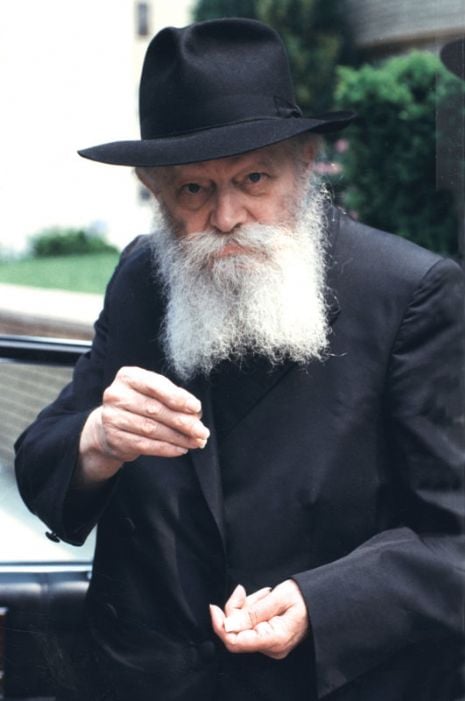
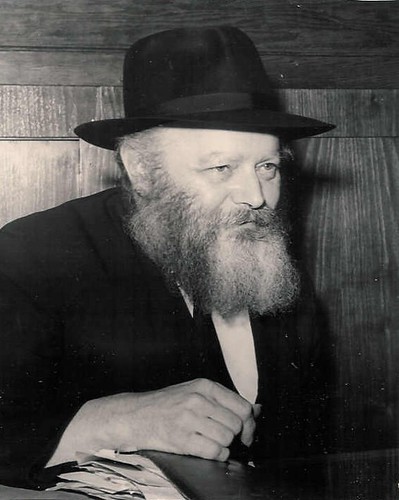
"Moshiach is ready to come now-our part is to increase in acts of goodness and kindness" -The Rebbe

Showing posts with label ways of Chassidus. Show all posts

Sunday, August 26, 2012

Chassidus: A Philosophy and a Lifestyle

Chassidus: A philosophy and a lifestyle

Rabbi Yehoishophot Oliver

The derech of Chassidus consists of both a philosophy—“the study of Chassidus” and a lifestyle—“the ways of Chassidus” (see here). The two are more than necessary, complementary aspects of a Chassidic lifestyle—they are interdependent and inextricable.

The teachings of Chassidus inherently necessitate that one follow a Chassidic lifestyle, and so the lifestyle is the fulfillment of those teachings. Conversely, one who follows the lifestyle but neglects to study the teachings—of course, each person according to his or her individual level—will in one way or another be lacking in the lifestyle as well.

To explain, the core of Chassidus is to promote a pure belief in the unity of Hashem. Now, belief in divine unity is by no means a novelty of Chassidus. However, before Chassidus was revealed, divine unity meant that His existence is simple, a unity that transcends all parts. Moreover, Hashem is the only Creator—He doesn’t share His control over the universe with any other force, nor does He have any helpers, and therefore one’s prayers should be directed to Him alone.

Yet according to this worldview, the world exists. True, it exists because Hashem created it, but now that the deed is done, the world is in fact real. But Chassidus takes divine unity further, teaching that not only is Hashem the one and only deity, but He is the only being in existence. In reality, “ein od milvado”—nothing beside Him exists.

(This statement raises many questions, naturally, such as 1. How can Chassidus declare that the world doesn’t exist if the Torah says that Hashem created the world? 2. How can I reconcile the belief that only Hashem exists with my tangible observation of the vast array of multiplicity in the world? 3. Doesn’t the Torah itself recognize the world’s existence by requiring that we keep Mitzvos with physical objects according to certain physical specifications? And so on.

Suffice it to say that these and many other questions on this matter are discussed in Chassidus, and the one who truly seeks Hashem will not suffice with reading almost glib, “standing-on-one-foot” summaries of this incredibly profound concept, for after all, the entire corpus of the literature of Chassidus Chabad comes to explain this teaching, and so the serious student will fulfill his duty to learn. In any case, addressing these questions is beyond the scope of this article.)

One who learns and understands to a significant degree that only Hashem exists reaches a certain inner awareness of this fundamental truth, and this spurs him to desire to live a very different kind of lifestyle from one who lacks this sensitivity. When one realizes that only Hashem exists, and this is in fact the core of the entire Torah, then an onus lies on the person to live a lifestyle that reflects that belief.

According to Chassidus, this is the meaning of the Torah’s mandate,[1] “All your actions should be for the sake of Heaven”: Bring consciousness of Hashem and the devotion to serve Him to permeate every single aspect of your life—without exception. Thus, the Jewish people are called “one nation on the earth,”[2] for our mission is to bring consciousness of Hashem’s oneness down into the mundane world, and into every aspect of it.[3] Then Hashem is not only one in theory, but also in practice.

__________________
[1] Avos 2:12.
[2] Shmuel II 7:23.
[3] Cf. Tanya 114a.


Dedicated in honor of the wedding of Shmuel Aaron ben Liba and Malka Aida bas Devorah Forshner on 8 Elul, 5772.


Dedicated in the merit of a speedy release for the captives Yonasan ben Malka (Jonathan Pollard), Sholom Mordechai Halevi ben Rivka (Sholom Rubashkin), Yaakov Yehuda ben Shaindel (Jacob Ostreicher), and Zeva Rochel bas Chaya (Wendy Weiner Runge).


___________________________________
Like what you read? The articles I write take a lot of time and effort. Please contact me to sponsor an article for (at least) $36 in honor of the birthday, wedding anniversary, or yarhtzeit of a loved one, or for a refuah shleimah or the like. Also, see here concerning the tremendous merit of supporting the dissemination of Chassidus, and the blessings that one receives for doing so.

Tuesday, November 23, 2010

Chassidus: Study and ways

We will soon celebrate the chassidishe Yom Tov of Yud-Tes Kislev, when we wish one another to be written and sealed for a good year in the study and ways of Chassidus. What is the meaning of this distinction? Below is a simple example of the difference between the study of Chassidus and the ways of Chassidus, and the way that they go hand in hand (on this topic, see also here).
The Previous Rebbe once taught:


G–d runs the world by Hashgacha Pratis, personal Divine Providence. Thus, if someone loses a two-ruble coin and experiences pain, he is a fool. By the same token, if one earns well and therefore straightens his posture [i.e., feels arrogance], he is also a fool. For everything occurs by Hashgacha Pratis. G–d runs the world, and we can rely on Him to guide us for the good and with precise deliberation. We need only ask that this too become manifest in the form of visible, revealed blessings.


Once, in a time of distress, great Jewish leaders convened to seek a solution. A simple Jew entered and said: Why are you worrying—G–d is our Father!


Shemu’os V’Sipurim, Vol. 3, p. 116.
In this case, the study of Chassidus involves thoroughly grasping the principle of Hashgachah Pratis as taught in depth in Chassidus.


The ways of Chassidus, however, consist of the effort to bring this awareness to affect one’s emotions, to the point that it informs one’s responses in daily life.


As explained at length in the Rebbe Rashab’s Kuntres HaTefillah and other sources in Chabad teachings, intellectual knowledge can only be truly internalized through the discipline of Avodas HaTefillah, in-depth meditation in prayer according to the Chabad tradition. So as far as cultivating sensitivity to Hashgachah Pratis is concerned, in-depth meditation on this concept before or during prayer will bring the person to sense this awareness to the point that he is neither distraught at material loss, nor elated at material gain. And even if he does not actually attain this goal, he will come ever closer to it.


May we merit to suceed in our efforts in both the study and the ways of Chassidus in the coming chassidishe year.

Sunday, October 10, 2010

Chassidic Customs: A Hiddur in Hiskashrus


In
Likkutei Sichos (Vol. 29, p. 211 ff.), the Rebbe explains that the reason that the Rebbeim of Chabad didn’t sleep in the Sukkah is that they felt the makifim deBina, the lofty divine light that shines in the Sukkah. Since it would have distressed them to sleep in such a holy environment, and “One who feels pain [by staying inside the Sukkah] is exempt from [the Mitzvah of] Sukkah” (Shulchan Aruch Orach Chaim 640:5), they were exempt from the Mitzvah of sleeping in the Sukkah.


Now, this is all very well for the Rebbeim themselves. As great and holy Tzaddikim who perceived spiritual realities, their distress at sleeping in the Sukkah was surely a tangible pain that justified their exemption from this otherwise obligatory practice. However, on what basis do their followers, regular people who do not sense sublime spiritual realities, choose to refrain from sleeping in the Sukkah? 


The Rebbe explains:
Chassidim, since they are bound up with the Rebbeim of Chabad, study their teachings (with the goal of implementing them) and follow in their ways—the customs of their Rebbeim.


This is along the lines of what the Gemara relates concerning Rav Acha, who would “beautify [the Mitzvah] with ‘two and one’”—by taking a myrtle branch with only “two leaves on one point and one leaf below, which rose up and covered the other two” (Sukkah 32b). This was consistent with the opinion of Rav Kahane [who had declared that it is permitted to use such a myrtle branch], despite the fact that Rav Kahane himself had only said that “one may even use [a myrtle branch of] ‘two and one’”; however, “three on one stem is certainly acceptable [i.e., the best manner of performing the Mitzvah].” However, “Since it went forth from the mouth of Rav Kahane,” his student regarded it as a hiddur [beatification] of the Mitzvah to make a point of acting according to Rav Kahane’s opinion. [The Rebbe goes on to explain an additional reason for not sleeping in the Sukkah.]
Chassidim feel a very intense natural bond with their Rebbe, and this brings them to naturally strive to emulate their Rebbe’s conduct, even when that conduct may appear, or may even actually be, a lower standard in the strict sense. Emulating their Rebbe or otherwise declaring their adherence to their Rebbe is a hiddur in Hiskashrus, a beautification of the Mitzvah of connecting to one’s Rebbe, that is so significant that it overrides other otherwise valid halachic considerations.


Elsewhere (Toras Menachem 5712, Vol. 5, p. 144 ff.), the Rebbe discusses this concept in connection with the Chabad custom on Pesach to avoid eating gebrochtz (Matzah mixed with water). On the first seven days of Pesach we are very particular not to let even the tiniest drop of water fall on Matzah in order to avoid even the smallest trace of gebrochtz. Yet on Acharon Shel Pesach (the last day of Pesach), not only did the Previous Rebbe not avoid gebrochtz, he would make a point of dipping the Matzah in every single dish.


“This conduct was surprising in my eyes,” the Rebbe says, until his attention was drawn to the above Talmudic statement concerning Rav Acha. Then, the Rebbe relates, he understood it: Since the Previous Rebbe had seen that his father, the Rebbe Rashab, would eat gebrochtz on Acharon Shel Pesach, he would make a point of eating gebrochtz on Acharon Shel Pesach as well—since it went forth from the mouth of his Rebbeim.


The Rebbe then stated that the above episode serves as a response to those who challenge various customs of chassidim, and cite various reasons for their arguments. Some examples are long farbrengens: Why waste so much time on a farbrengen? Why not toast L’Chaim, sing a niggun, finish the farbrengen in a half an hour, and sit down to learn Torah? Also, why do chassidim spend hours preparing for davvenen; why not prepare less, and davven at the proper time?


To this the Rebbe responded:
All the questions should be completely irrelevant, because we know that these are customs of chassidim [adopted because they were] either seen or heard from the Rebbeim.

It may appear to him that it will be better if he acts differently. For example, by davvenen in the proper time he will gain more time to learn Torah, and other such good things. Nevertheless, “Since it went forth from the mouth of Rav Kahane,” since he knows that this is the conduct of the Rebbeim, he should not seek [other] hiddurim. On the contrary, he should practice the hiddur of following their conduct—[as it says of Rav Acha, that] “He would beautify [the Mitzvah] with ‘two and one.’”

It is written, “According to the Torah that they will instruct you ... Do not stray from the thing that they tell you, to the right or to the left” (Devarim 17:11). This verse obligates us to follow the Beis Din of the generation (Mishneh Torah, beg. Laws of Mamrim) “even if they tells you about right that it is left, and about left that it is right” (Ibid. Sifri, Rashi). This applies to such an extent that even a student who has reached the point that he is worthy of ruling a matter of Jewish law, if he ruled that one should disregard the ruling of the Beis Din, he has the halachic status of a “rebellious elder” (Mishneh Torah, ibid. 3:4). 

A similar principle applies in this case. Following Chassidic customs as taught by the Rebbeim is in the category of the obligation to follow “According to the Torah that they will instruct you” and “Do not stray from the thing that they tell you.” Thus, one should not seek [other] ways of beautifying the Mitzvah. Rather, the beautification ought to be—following the instruction of the Rebbeim.

Tuesday, October 5, 2010

Being a chossid is about inner change


Being a chossid is about inner change

Rabbi Yehoishophot Oliver

The Previous Rebbe once spoke very harshly against a trend toward superficiality that he observed:
Nowadays so-called young chassidic men (“chassidishe yungerleit”) are supposedly becoming chassidim on their own. They are educating themselves and guiding themselves, so alas, we can understand what sort of education it is, and what sort of guidance it is.


The young chassidic men of today have made peace with the enemies of Chassidus of old, such as hypocrisy, falsehood, talebearing, gossip, arrogance, insolence, and bad-heartedness. It is only that they wrap it up in superficial, supposedly chassidic garb.


Do not be offended that I describe all these things with their true names. Sometimes one must articulate the truth, and plead for divine compassion that [Hashem should help us to] have compassion upon ourselves, and see what sort of spiritually chaotic situation we are in.


The young chassidic men of today, and even those who learned in the chassidic Yeshivos, are also becoming dragged along by the trend toward the alien attitude of superficiality [“chitzoniyus”].


This is the attitude that one becomes a chossid through superficial Chassidic practices such as attending a farbrengen, participating in a Chassidic celebration, marking a Hillula [passing of a Rebbe], wearing Chassidic garb, and singing a Chassidic melody. This approach has, may G–d save us, destroyed many, many souls of Chabad chassidim, and caused many young chassidic men to unfortunately—it is bitter for me to say the sad truth—drown in the depths of evil.


It is difficult to speak and utter the truth, but nothing else will help; no matter how difficult it may be, the situation must be described as it is.


There are certain chassidic married men who were raised in a chassidic environment, in frum, chassidic homes, and were taught by chassidic teachers. This has brought their trappings to be chassidic; however, their inner selves are empty.


These men are empty of Torah, fear of Heaven, and fine character traits.


The reason for all this is the lack of obedience. From a very young age he did not accept the yoke of an educator and a guide. He educated himself and guided himself, and this “education” produced a wild fruit such as this, with a pleasant, shiny exterior, and a rotten interior.


Sefer HaSichos 5697, p. 182.
In my own words, with explanation:


Being a Chabad chossid is about inner change.


This inner change consists of learning and understanding Hashem’s greatness as explained at great length in Chassidus Chabad, and bringing that awareness to permeate one’s emotions with love and fear of Hashem, love of one’s fellow Jew, fine character traits, and devotion to the observance of Mitzvos (on the last point, see here).


A part, and a necessary part, of effecting that inner change is engaging in “the ways of Chassidus,” such as singing a chassidishe niggun, attending a farbrengen, wearing the chassidishe garb, and so on. These are all surely vital practices for every chossid (see here). However, the reason that they are effective is that the makif (“encompassing light”) is a preparation for the pnimi (“inner light”) (for explanation of this concept, see here; for another explanation along similar lines, see here).


When one approaches these practices with full awareness that they are a means to an end—facilitating the inner change demanded of a Chabad chossid—then they are able to have their desired effect, and then they in fact enable one to reach heights of spiritual sensitivity and greatness otherwise unattainable.


However, even very holy ideas and practices can be abused and taken out of context, and this may lead to very unfortunate results, may Hashem save us.


For many it is “easier” to engage in these more external practices (although some have the opposite problem, but here is not the place to elaborate) that require relatively less effort.


However, being a chossid is a “package deal.” So when one deliberately ignores some of the demands of Chassidus and dwells upon others that one finds personally more exciting, one is left with nothing. Perhaps this is along the lines of the rabbinic statement: “What does it mean, ‘He who keeps company with harlots forfeits his wealth’? Whoever says, this topic is pleasing and this one isn't pleasing, loses the wealth of Torah.” (Eruvin 64a)


If one would regularly seek chassidishe guidance and direction from a mashpia and an asei lecha rav, this phenomenon would not occur, for they would point out this neglect and demand that it be corrected.


It is my belief that the vast majority of problems in today’s generation of chassidim stem from a lack of awareness of this point.


(For other posts of mine along these lines, see here and here.)

Tuesday, August 24, 2010

Wearing a kapoteh on Shabbos

On Shabbos Bereishis 5711 (1950), the Rebbe said to Rabbi Greenglass of Montreal:
It should become standard for married chassidim to wear silk kapotes on Shabbos and Yom Tov, and I wish to thank in advance those who will do so. The idea that one’s garments on Shabbos and Yom Tov should be silken is mentioned in a Ma’amar of the Rebbe Rashab [1].


In general, the behavior [of chassidei Chabad] should be distinctive, and this should express itself in the fact that on Shabbos and Yom Tov one wears a silk kapote.


I am surprised at those chassidim who do not wear silk kapotes on Shabbos and Yom Tov It appears that the reason for this [failure to observe this custom] is the poverty that prevailed in Russia, which meant that chassidim were not able to wear silk kapotes.


In any case, the time has come that people should start wearing silk kapotes, and over time all married chassidim will come to follow this practice.


Toras Menachem 5711, Vol. 1, p. 53. 
[1] The following sources are cited in the footnote to this sicha:

In
Sefer HaMa’amarim 5660-1-2, p. 231 the Rebbe Rashab cites from the works of Kabbalah that on Shabbos one’s garments are connected with the world of Beriah, which parallels chai, the animal world; thus, one’s garments should be made of silk, which comes from the category of chai. (To explain, the four spiritual worlds correspond to the four levels of creation: Atzilus—medaber, mankind; Beriah—chai, the animal kingdom; Yetzirah—tzomeach, plant life; Asiyah—domem, inorganic matter. Thus, since on Shabbos there is a revelation of the world of Beriah, it is fitting to wear garments made from animal kingdom.)


Likewise, in Sefer HaMa’amarim 5671, p. 247 the Rebbe Rashab mentions the same practice, and also explains that since on Shabbos the world receives from the level of Hashem’s thought, so to speak (the worlds of Beriah, Yetzirah, and Asiyah corresponding in Kabbalistic thought to thought, speech, and action respectively), on Shabbos one should wear garments made from chai, while during the week one should wear garments made from tzomeach, plant life.


In Sefer HaMa’amarim 5672, Vol. 2, pp. 872-873, the Rebbe Rashab cites this in the name of the Mikdash Melech (a classic commentary on the Zohar written by Rabbi Shlomo Bazuglo).
In addition to the point the Rebbe makes that on Shabbos chassidim ought to wear a silk kapoteh, it appears clear and self-evident that the Rebbe is also making an implied statement that ... on Shabbos chassidim ought to davka wear a kapoteh, and not suffice with a suit.

Monday, March 15, 2010

Following the "chassidishe Shulchan Aruch"

Someone once wrote to the Rebbe (Igros Kodesh, Vol. 10, p. 396) and complained that although he prays with enthusiasm, in the middle of his Tefillah he suddenly feels overcome by heaviness. The Rebbe responded that at such times he should take a break and relax, but that this relaxation should obviously conform both with the Shulchan Aruch and the “chassidishe Shulchan Aruch.”

A
chossid’s identity as a chossid should permeate every aspect of his life. One might think that if I am already very inspired, why does it matter so much if I relax by, let’s say, reading a newspaper (obviously, we are only talking about perusing articles that contain completely permitted content)? If I am doing the main thing—learning Torah, praying enthusiastically, and engaging in good deeds—is that not sufficient?

No, the way one relaxes
does matter, for even if a given practice is not technically forbidden by the
Shulchan Aruch, a chossid is not satisfied. He is constantly asking himself what is expected of him according to the chassidishe Shulchan Aruch, the higher standard of living and observance expected of a chossid.

In the case of relaxing, although a chossid needs relaxation and recreation from time to time like anyone else, especially when he feels very weak (see the above letter), he will seek outlets for this need that, though perhaps light, still inspire him and draw him closer to Hashem. An example of a method for such relaxation would be reading inspiring stories from Jewish history, stories of Tzaddikim, and of chassidim. Another might be listening to niggunim (Chassidic melodies).

And just as one cannot fulfill the regular Shulchan Aruch without studying it, so does one need to study the chassidishe Shulchan Aruch—which, for a Chabad chossid, can be found in the teachings of the Rebbeim of Chabad—in order to adhere to it properly.

Monday, July 27, 2009

Missing the Fairs—with Good Reason!


At times Chabad chassidim are distinguished by what we do, but at other times, we are distinguished by what we don’t do. I am not referring to neglecting something that we should be doing, but to our refraining from following certain minhagim (Jewish customs) followed by many (and sometimes most or even all) other groups, Chassidic or otherwise. Although these other minhagim are totally legitimate and sublime (“yesodosom beharerei kodesh”), our Rebbeim taught us not to follow them. Below is a partial list. Chabad chassidim:
  • do not grow long pei’yos (sidelocks—see Igros Kodesh, Vol. 20, pp. 9-10)
  • do not sleep in the Sukkah (see Likkutei Sichos, Vol. 20, p. 211 ff.)
  • do not eat shalosh se’udos (the third meal of Shabbos—see Likkutei Sichos, Vol. 21, pp. 84 ff.), although we do eat a morsel—see HaYom Yom 22 Adar I
  • recite a nusach (prayer text) in which certain prayers and hymns are omitted, such as Aanim zemiros, Veshomru, Yigdal, Akdomos, and so on
  • do not recite Selichos during the Aseres Yemei Teshuvah
This creates a sort of anomaly. On the one hand, as Chabad chassidim we believe that the derech of Chassidus Chabad is the highest form of serving Hashem. Yet at first glance, the fact that in a number of areas we customarily do less appears to contradict this.

Perhaps the following story can resolve this:
Once I had a private audience with the Rebbe, and the subject turned to the greatness of the Mincha prayer of Erev Shabbos. I asked the Rebbe to explain the reason for the Lubavitcher custom not to recite Shir HaShirim on Erev Shabbos. He told me that the Baal HaTanya was once asked why he doesn’t recite Veshomru and Shir HaShirim, which are known to cause a great fair in the supernal realms. He answered that “one doesn’t need to attend all the fairs.”

The Rebbe said to me that he asked his father-in-law, the Previous Rebbe, for an explanation. His father-in-law answered, “Certainly at the time of
Erev Shabbos he was at a more important fair, and thus he doesn’t have any free time to take part in this fair.”

The Rebbe asked further: “I can understand that the Rebbe is at a higher fair, but why don’t the
chassidim recite Shir HaShirim, since it causes such a sublime fair.” His father-in-law responded, “When the Rebbe is at a more important fair, he drags all his chassidim and those bound with him along as well; thus, they too don’t have time to take part in the other fair.”

See also Piskei HaSiddur, where a slightly different version of the story is told:[1]
There is a story oft-told among chassidim that Rabbi Levi Yitzchak of Berditchev, the in-law of the Alter Rebbe, sent him a message (or told him): “When Jews recite the prayer of Veshomru on the night of Shabbos, a fair is held in the heavens; if so, why did you institute that it not be recited?” The Alter Rebbe responded: “A fair is also held in the heavens from the juxtaposition of the prayer of redemption to the Amidah (semichas geula litefillah [and this juxtaposition is missed when one recites Veshomru]), and one cannot attend all the fairs.”
In any case, the relevance is clear. We asked why Chabad chassidim don’t follow these and other sublime minhogei Yisroel (Jewish customs) and benefit from the sublime divine revelations that they bestow? In light of the above story, the explanation is clear. Through our Hiskashrus (bond) to the Rebbeim of Chabad, when we consciously refrain from observing these holy practices (at the same time keeping ourselves busy with other worthy things that the Rebbeim taught us), we connect with other yet more sublime levels of divine revelation that supersede those experienced via those customs. Put simply, when you connect with a higher derech, you connect with higher revelations (however, it should be noted parenthetically that regardless of which derech one chooses, one should choose one specific derech and follow it consistently—see here).

Perhaps this principle can be applied to various other areas as well, such as the choice of which 
seforim to study, and the like.


__________________
[1] Another similar story: When the Alter Rebbe and Rabbi Levi Yitzchak of Berditchev were at the Great Wedding [in which the Alter Rebbe’s daughter married Rabbi Levi Yitzchak of Berditchev’s son], Rabbi Levi Yitzchak suddenly began dancing (without saying “Kadosh”) because he heard how the angels were saying “Kadosh.” The Alter Rebbe commented, “One need not dance at every ‘Kadosh’”. (Sicha of Sukkos 5689)

Thursday, May 21, 2009

Yechidus: Words of affection


One of the central Chassidic practices (darkei haChassidus) is that Chassidim are to travel regularly to the Rebbe for a one-on-one meeting, which is known in Chassidic parlance as Yechidus. This meeting has classically been the cornerstone of the Rebbe-chossid relationship.

In the preface to
Tanya, the Alter Rebbe beautifully describes his special relationship with the chassidim who came to seek his advice in Yechidus: “Words of affection were common between us, and they revealed before me all the hidden aspects of their heart in matters of serving Hashem related to the heart.” See also the Alter Rebbe’s words in Mei’ah She’arim p. 58 (cited in Likkutei Sichos, Vol. 5, p. 334): “ ... One cries out in Yechidus at one’s distance from the living G–d.”

First, these sources show that although advice is sought in this meeting, it is much more than a patient visiting a doctor and receiving a prescription. It is a unity between souls in an awesomely deep, personal, and loving relationship, in which profound mutual love is expressed.

The explanation of this deep relationship is that a Rebbe is a
Neshamah Kelalis, a “general soul,” of which the chossid is an individual component. When the perat, the individual aspect, connects to its soul-origin directly, this is a very profound, personal experience.


There are so many beautiful stories in Chassidic lore of the deep relationship between
chossid and Rebbe, and how chassidim would yearn to go to Yechidus, and prepare for it for a long time, and regard it as the highest point in their lives.

We also see from these quotes that
Yechidus is a place for the chossid to express his deepest yearnings, viz., to perform Torah and Mitzvos with true love of Hashem and fear of Hashem, to reach true Teshuvah, and thus a truly intimate connection with G–dliness.


(For a Hebrew booklet on the concept of Yechidus, see here.)

Wednesday, March 11, 2009

A chossid needs a Rebbe and a mashpia

Reb Hillel Paritcher once explained that to live the life of a chossid, one needs two vital things:
Every single Jew who wishes to go in the ways of Chassidus needs to be mekushar [bound] with the Tzaddik of the generation, such as the Rebbe. He should also acquire for himself a teacher, who is a chossid, to teach him and explain to him well the teachings of the Rebbe and [to explain to him] all of Chassidus. For the Tzaddik elicits the level of seeing G–dliness into one’s soul [which is the level of Chochmah], while the chossid elicits the level of hearing G–dliness into one’s soul, which is the level of Binah. This will suffice for the understanding person.

Migdal Oz, p. 353.
In my own words: It is not enough to study Chassidus and follow Chassidic customs on one’s own. In order for these things to have their desired effect, one needs two forms of outside help:

1. Hiskashrus (a bond) with a Rebbe. Since the Rebbe himself sees G–dliness, he is able to make makes the G–dliness one connects with through learning Chassidus real; this is the idea of “seeing” G–dliness, as it were (see here).

2. A chossid to guide him and explain the Rebbe’s teachings to him—what is today referred to as a mashpia (as distinct from an asei lecha Rav—see here). This enables the Rebbe’s teachings to permeate the chossid intellectually. This is the idea of Binah, which is the idea of attaining abstract understanding of G–dliness. This is compared to “hearing” G–dliness, just as one hears about something that is distant. 

This guidance also seems to be needed in order to guide the person in applying the teachings to himself personally, for the purpose of learning Torah in general and Chassidus in particular is to affect one personally. On the contrary, this is the true measure of whether these teachings have indeed permeated him.