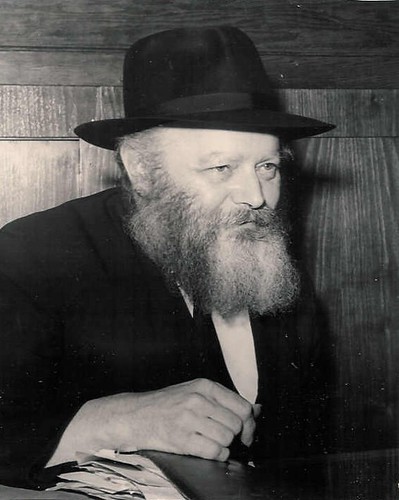
"Moshiach is ready to come now-our part is to increase in acts of goodness and kindness" -The Rebbe

Showing posts with label concepts in Tanya. Show all posts

Monday, August 20, 2012

An Unflinching Reckoning


An Unflinching Reckoning

Rabbi Yehoishophot Oliver

Our Sages warn us: “Don’t judge your fellow until you have reached his place.”[1] The Bartenura explains: “If you see that your fellow has been tested and succumbed, do not judge him as guilty until you are tested like him and you are saved.”

The Torah requires that when we see fault and even sin in our fellow Jew, we give him the benefit of the doubt that his behavior stems from “his place,” which consists of two influences: 1. his external, physical location, which constantly bombards him with temptation; 2. his inner, spiritual “location,” which is his very powerful evil inclination, which constantly bombards him with inner struggles.[2] We discussed this in an earlier post here.

It should be noted that this perspective is only appropriate when viewing another. When viewing oneself, on the contrary, one should not seek to excuse one’s own behavior (with the exception of one who was raised in an atmosphere of secularism, and was therefore genuinely a tinok shenishba, one so completely ignorant of Torah that he or she is not held to blame for his actions in violation of Torah).

Rather, one should take full responsibility—both for his actions and for his inactions, and in both his relationship with Hashem and with his fellow. Some actions Hashem expected him to do, yet he inexcusably neglected to do them; conversely, when faced with temptation, he inexcusably chose to sin. Had he been truly permeated with awareness of Hashem’s constant presence, he would not have sinned no matter how great the temptation.

However, the one who seeks refuge in excuses 1. does himself a disservice; 2. deceives himself.

1. He does himself a disservice. Every excuse distances the Jew from Teshuvah, for why should one sincerely regret actions that were simply not his fault? And if his unfortunate circumstances indeed forced him to do wrong, how could he possibly do Teshuvah, and truly change and fix himself? He is a hapless victim of circumstance. Moreover, whenever he is faced with temptation down the line, he will succumb and excuse his inappropriate behavior with more claims that come down to the belief that he is fundamentally incapable of being in control of his life and himself. One with such a mentality cannot ever truly grow and mature in his character traits; on the contrary, he is at constant, high risk of falling into ever more unsavory behaviors.

2. He deceives himself. The Torah is eternal,[3] and so it is not only applicable when all is well, such as during the era when the Beis HaMikdash stood, but in every single time and place, forever, even during the darkest periods of exile. The one who claims to be a victim of circumstance denies this, for he loses sight of the awareness that as difficult as his circumstances may be, they are not some kind of cosmic accident, G-d forbid; rather, Hashem Himself created them, and brought them to the Jew for a reason. Moreover, Hashem declares (what is regardless simple logic): “I only ask of them [the Jewish people] according to their ability,”[4] and therefore He surely endows every single Jew—man, woman, and child—with the ability to overcome whatever tests and temptations he or she may face (and likewise for non-Jews when it comes to their observance of the Laws of Noach and the promotion of justice and righteousness).

This is vital to recognize now, in the month of Elul. In this month every Jew is charged with making a cheshbon nefesh, a spiritual stocktaking, in preparation for the month of Tishrei. The key to success in this endeavor is simply being ruthlessly honest with oneself and taking full responsibility for one’s own actions.

Based on the Previous RebbeAni Ledodi, in Sefer HaMaamarim 5700.

____________________________
[1] Avos 2:4.
[2] Tanya ch. 30, beg.
[3] Ibid., ch. 17, beg.
[4] Vayikra Rabba 12:3.


Dedicated in the merit of a speedy release for the captives Yonasan ben Malka (Jonathan Pollard), Sholom Mordechai Halevi ben Rivka (Sholom Rubashkin), Yaakov Yehuda ben Shaindel (Jacob Ostreicher), and Zeva Rochel bas Chaya (Wendy Weiner Runge).

___________________________________
Like what you read? The articles I write take a lot of time and effort. Please contact me to sponsor an article for (at least) $36 in honor of the birthday, wedding anniversary, or yarhtzeit of a loved one, or for a refuah shleimah or the like. Also, see here concerning the tremendous merit of supporting the dissemination of Chassidus, and the blessings that one receives for doing so.

Monday, November 21, 2011

How to View Sin and Sinners

The Tanya[1] speaks of a “kal shebekalim,” a person who lives a sinful, corrupt lifestyle. When we view him, we might jump to judge and condemn him for his revolting behavior. But the Torah exhorts us: “Do not judge your fellow until you have stood in his place.”[2]

Although this person’s sins are not justifiable, G–d forbid, they are understandable in light of the excruciatingly difficult situation in which Hashem puts him: 1. His obligation to earn a living necessitates that he spend all his time in a corrupt environment in which he is exposed to all manner of debauchery and crime, and is constantly faced with very difficult challenges; 2. Hashem created him with an intense evil inclination.

These two elements—a negative environment, and a strong evil inclination—combine against him such that when he is faced with temptation, the passion to sin burns within him so feverishly that he can only overcome it through a herculean effort. Is it any wonder, then, that he fails?

Yes, he has free choice. By reminding himself that Hashem is watching his every deed, he can arouse himself to fear Hashem and restrain himself from stumbling in sin. Since he could have used this method to resist temptation, his failure to do so is inexcusable. “It was very hard” is just not good enough.

However, this is a thought that the sinner should swell upon in order to recognize his responsibility and do sincere teshuvah. The observer should also be aware of this, to the extent necessary to ensure that he doesn’t go so far in focusing on the greatness of the sinner’s struggle that he comes to think that restraint is so difficult that he foolishly excuses his own sin, and says from the outset, “I will sin and repent.”[3]

However, when viewing the sinner, the observer should not focus on the sinner’s responsibility, but on reflecting upon how grueling are the sinner’s circumstances.

Moreover, our sages say of the one who observes a sinner, “Be lowly of spirit before every man”[4]—even a terrible sinner. The main reason that he is sinning is that Hashem has chosen to throw him into unfavorable circumstances. Consider that if you were in his circumstances, you would most likely act the same—and perhaps you would be even worse.

Thus, no matter how low the level of the Jew who has sunken into sin, may G-d save us, one must speak with him in a soft, gentle manner.

Adapted from Tanya ch. 30.
_______________________________
[1] Cf. Hisva’aduyos 5742, Vol. 3, pp. 1423-1424
[2] Avos 2:4.
[3] Yoma 85b. Cf. Tanya ch. 25.
[4] Avos 4:10.
[5] Ibid. 1:6.

This post was dedicated by Reb Yisroel Meir Raphael and family.

Like what you read? The articles I write take a lot of time and effort. Please contact me to sponsor an article for $36 in honor of the birthday, wedding anniversary, or yarhtzeit of a loved one, or for a refuah shleimah or the like. Also, see here concerning the tremendous merit of supporting the dissemination of Chassidus, and the blessings that one receives for doing so.

Thursday, November 17, 2011

The Neshamah: The Jew’s True Inner Self

The Neshamah: The Jew’s True Inner Self

Rabbi Yehoishophot Oliver


The Rambam discusses[1] a case of a husband who refuses to grant his wife a get when the beis din (Jewish court) requires it. Although our sages do not usually follow such an approach, in this extreme case, for the wife’s sake, they require that the husband be forced—even, if necessary, by the use of physical force—to release his wife from marriage by issuing her a get.

But, the Rambam asks, how can such a get be valid? Isn’t this a get me’useh, a get given under duress, which is invalid? The Rambam explains that Torah only recognizes an act as coercion when one was coerced into doing an act that Torah doesn’t require. However, if one was coerced to fulfill a Torah requirement, he is considered to have done so of his own volition. For since he is a Jew, his true desire is to perform the Mitzvos. In the Rambam’s words:
... He wants to be a Jew; he wants to perform all the mitzvos and distance himself from transgressions, and [the] only [reason that he acts to the contrary is that] his evil inclination has overpowered him. So once he is beaten to the extent that his evil inclination has become weakened, and he says I want [to divorce], he has surely divorced of his own volition.
In the language of Chassidus, when the husband refuses to obey the beis din, he is being consumed by his Bestial Soul (the term more commonly used in this literature to refer to the Evil Inclination). But his true inner self is his Neshamah, his Divine Soul. When pressure is applied upon the Bestial Soul, it stops obstructing the will of the Neshamah, and the divorce is considered to have been issued voluntarily, for the Neshamah wants to obey the beis din.

In other words, although the Bestial Soul is very much a part of the person—in fact, for most of us, it is our conscious self[2]—Torah views it as external and additional; it is not the Jew’s true, inner self. His true self is his Neshamah

The Neshamah possesses a natural love for Hashem that spurs an intense desire to connect with Him, and a natural awe of Hashem that makes him recoil from sin and want to keep a distance from it,[3] even to the point of being willing to give up his life rather than sin.[4] Concerning this, the Alter Rebbe declared: “A Jew neither desires, nor is able, to sever himself from G–dliness.”[5] 

This awareness can also encourage the Jew in his performing the Mitzvah of Teshuvah, of repenting for sin.[6] Since the Jew’s true, inner desire is to serve Hashem, as soon as he sins, he regrets, feels pained, and worries over it. I.e., deep down, he does Teshuvah immediately. I.e., the Jew’s connection with his true, inner self is even more emphasized with regard to Teshuvah than other Mitzvos, for the Jew’s Neshamah not only desires to keep all the Mitzvos, but it actually does Teshuvah as soon as he sins, and so in order to do Teshuvah all the Jew need do is reveal his inner Teshuvah to his external, conscious self.

(For an earlier post on this topic, see here.)
____________________________________

[1] Mishneh Torah, Laws of Divorceend ch. 2.
[2] Cf. Tanya ch. 29: “היא היא האדם עצמו.”
[3] Ibid. chs. 141925.
[4] Ibid. chs. 181924.
[5] Hayom Yom p. 73.
[6] Sefer HaMa’amarim Melukat, Vol. 5, p. 56


This post has been dedicated by Rabbi Dov and Shevi Oliver of Monsey in honor of the yahrtzeit of Rephoel Dovid ben Kasriel, ע"ה, on 13 Tishrei.

Like what you read? The articles I write take a lot of time and effort. Please contact me to sponsor an article for $36 in honor of the birthday, wedding anniversary, or yarhtzeit of a loved one, or for a refuah shleimah or the like. Also, see here concerning the tremendous merit of supporting the dissemination of Chassidus, and the blessings that one receives for doing so.

Saturday, August 6, 2011

The transformational power of Torah

The transformational power of Torah

Rabbi Yehoishophot Oliver

In the first chapter of the Tanya, the Alter Rebbe describes the various unworthy character traits of the Jew’s Bestial Soul: anger, arrogance, frivolity, depression, laziness, and so on. But then the Alter Rebbe explains that by nature, this soul also possesses certain noble qualities, listing as examples the traits of compassion and the desire to perform deeds of loving-kindness. This is drawn from the Gemara,[1] which states of the Jewish people: “Three signs identify this people: They are merciful, bashful, and they perform deeds of loving-kindness.” But why does the Alter Rebbe omit the quality of bashfulness from his list of traits?

Another question may be asked. The Gemara states: “Why was the Torah given to the Jewish people? Because they are strong-willed.”[2] Rashi comments: “The Torah was given to them so that through consistent study of it, it would weaken the strength [of their evil inclination] and subdue their hearts.” The Gemara then cites the verse, “From His right hand, He presented a fiery law to them,”[3] explaining: “Hashem declared: ‘These people are fit that the fiery law be given to them.’” The Maharsha there explains that because of the Torah’s fiery power, it is fitting for the Torah to be given to them, in order to subdue and humble them. The Gemara then interprets that verse in a different but similar manner: “The nature of these people is fiery, for had the Torah not been given to the nation of Israel, no nation or tongue could withstand them.”

What emerges from this is that since Jews are fiery, audacious, and strong-willed, the fiery energy of the Torah is crucial for them to counter their nature and humble their hearts before Hashem.

So by nature, Jews are very strong-willed—and even more so than non-Jews. (Perhaps this explains the stereotype in the secular world of Jewish chutzpah, insolence.) But, the Maharsha asks,[4] doesn’t this contradict another statement of our Sages stating that Jews possess the quality of shame? He explains that this quality is different from those of loving-kindness and compassion. The Jewish people are not naturally bashful; rather, they acquire this quality by virtue of their consistent Torah study.

Likewise, the Maharsha continues, the verse describes the purpose of the revelation at Mount Sinai: “So that the awe of Him will be on your faces, so that you not sin.”[5] Our Sages explains that “the awe of Him” refers to the quality of being susceptible to shame, which leads to “so that you not sin”—fear of sin.[6] So the awesome phenomenon of the Revelation at Mount Sinai imbued shame before Hashem and fear of sin within the souls of the Jews present, which they then bequeathed to their descendants. This clearly demonstrates that the quality of bashfulness comes to us from the Torah.

This also explains why the Alter Rebbe omits the quality of shame from his list of Jewish traits, for this section of Tanya is devoted to explaining the natural qualities of the Jew’s Bestial Soul. In general, Jews are naturally warm, friendly people. They enjoy doing favors and bestowing hospitality; similarly, they cannot bear to see others in pain, and so they strive to care for the needy, destitute, and downtrodden. Since these feelings comes naturally for a Jew, he or she will typically act in this way even if, for whatever unfortunate reason, he or she is not yet Torah-observant, or is significantly lacking in observance.

Bashfulness, however, which is related to tznius (modesty) may not come naturally to a Jew. On the contrary, by nature Jews are even more chutzpah’dik (insolent) than non-Jews, as mentioned. However, through devotion to Torah, a Jew subdues his Bestial Soul. Then not only will he not behave insolently, but on the contrary, he will rise to a far more advanced level of shame and modesty than non-Jews.

It should be noted that although women are exempt from studying Torah to the degree required of men, Torah will also subdue their evil inclinations:

a. When they study topics in Torah relevant to them, as Jewish law requires of them;[7]

b. When they encourage their menfolk to learn Torah, as the Gemara states: “How do women acquire the merit of Torah? By bringing their sons to school to learn Torah and by allowing their husbands to learn in the Beis Midrash, and waiting for them to come home.”[8]

Likewise, it appears that although all Jews are obligated to fix times for Torah study, baalei esek, those who must be involved in the world in order to earn their livelihood, have a portion in Torah, which helps them subdue their evil inclinations, by supporting Torah scholars.

This awareness of the awesome power of Torah study to keep us “on the straight and narrow” should dramatically change the way we view Torah study. Torah study is not some kind of spiritual luxury, a noble deed, and an act of selfless love and devotion for Hashem. Torah study is the medication for the evil inclination, as the Gemara says, “If this vile one encounters you, drag him to the Beis Medrash [house of Torah study].”[9]

In summary, when the Gemara states that the Jewish people possess the quality of shame and modesty, it is referring to a potential. The intense experience of the Revelation at Sinai imbued within the Bestial Soul of a Jew the potential for consistent Torah study to transform his personality, such that he will excel in shame, modesty, and bittul (submissiveness) before Hashem.

May we all merit that this potential reach full fulfillment within us, and may we succeed at influencing our fellow Jews who need it to do likewise.

Based on Igros Kodesh, Vol. 3, pp. 9-10.

_______________________________
[1] Yevamos 79a.
[2] Beitzah 25b.
[3] Devarim 33:2.
[4] Chiddushei Aggados on Yevamos ibid.
[5] Shemos 20:17.
[6] Nedarim 20a.
[7] See The Laws of Torah Study in Shulchan Aruch Admur HaZaken, ch. 2.
[8] Berachos 17b.
[9] Kiddushin 15a.


This post was dedicated by Reb Kasriel ben Yehudis and Chana Feige bas Reizl (my parents, tzu langeh, gezunteh, zisseh yoren) in honor of their 36th wedding anniversary. This post was also dedicated by Reb Menachem Kovacs, who requested that this message be attached:
"Zachor: to mark the 6th anniversary of the expulsion of the Jews from Gush Katif and the Northern Shomron; we continue to pray and work for their restoration and for the Ge'ula Shlayma. Thank you."
Like what you read? The articles I write take a lot of time and effort. Please contact me to sponsor an article for $36 in honor of the birthday, wedding anniversary, or yarhtzeit of a loved one, or for a refuah shleimah or the like. Also, see here concerning the tremendous merit of supporting the dissemination of Chassidus, and the blessings that one receives for doing so.

Monday, May 23, 2011

Ahavas Yisrael: Not just a slogan

It appears to me that Ahavas Yisrael (the Mitzvah to love one’s fellow Jew) has become a slogan, and not of the positive kind. The purpose of a slogan is to remind us of something, but at the same time it causes us to forget, because the constant repetition of the idea makes it so routine that the opposite happenswe forget what it actually means and why it was so important to emphasize in the first place.

Ahavas Yisrael, on the most basic level, means being really nice to another Jew. Friendly. Warm. Welcoming. Accepting. Kind. Sensitive. Respectful. Genuinely interested in his or her welfare.

To accomplish this, we need to
develop empathy. We need to be able to pull ourselves out of our own natural box and try to to consider another Jew’s feelings and needs. And not out of a dry sense of obligation to Hashem (although this is indeed an obligation), but out of a true feeling that since this Jew is my brother or sister, I should care about him or her and unite with him or her as much as possible.

But by nature we are so distant from other people and so attached to ourselves. We don’t stop thinking about ourselves. I, me. And even when we do (albeit rarely) think about others, most of the time, we only think about how they can somehow benefit us. S
ubconsciously, each person thinks that the entire universe revolves around him or her.

Developing empathy means learning that other people really and truly matter. In fact, they matter just as much as oneself, if not more. And therefore they deserve the same amount of respect and caring that one would want for oneself.

Of course, since developing this feeling means changing one
s innate emotions, it doesn’t come naturally. It requires strenuous, sustained effort. In the parlance of Chabad literature, this effort is termed avodah.


As the Alter Rebbe explains in Tanya ch. 32, the key to
ahavas Yisrael is bringing the Neshama (soul) to dominate in the body. For it is the Neshama that truly unites us, for all Neshamos stem from Hashem, just like all siblings, no matter how different they are from one another, stem from the same parents.

Thus, when a Jew exerts the effort necessary to attune himself to the needs of his
Neshama, then ahavas Yisrael will come naturally. Then Ahavas Yisrael will no longer be a slogan; rather, it will be a normal part of life.

Thursday, March 17, 2011

On removing sadness and maintaining joy

Strength is not only physical; it is also emotional. And defeating an opponent requires both kinds of strength. In fact, sometimes the key to victory is not physical prowess, but motivation and enthusiasm. A warrior who is physically mighty, but feeling weak and sluggish, will lose when fighting against an opponent who is physically weak, but feeling energetic and confident.

In our inner world as Jews, a titanic struggle is taking place between two implacable opponents: the evil inclination, also known as the bestial soul, and the good inclination, also known as the divine soul. Each side craves total control of the Jew
’s thought, speech, and action, and will stop at nothing to accomplish its goal.

However, before discussing how to go about waging this war most effectively, let us come to terms with the most basic fact of this situation: In order to defeat the evil inclination, a Jew must fight, and he must fight enthusiastically and courageously. This is war.


(This is the reason that armies use anthems and march songsin order to infuse morale and confidence in their forces. Similarly, football teams hire professional coaches to egg on their players .)

The Jew must believe that he can emerge victorious in his inner struggle, and that despite the odds against him, he will win. Then, with the help of Hashem, he stands a good chance of winning. If, however, he doubts his abilities; if he is feeling weak, depressed, and low, then he is bound to lose.

This is not only true of a person who suffers from depression for no apparent reason.[1] Even if one
’s sadness is totally legitimate and understandable, and no one will have any complaints against him for feeling that way, he must know that it must be overcome. The sadness is poison for his Neshamah, for it will weigh him down and sap him of the inner strength that he needs in order to defeat his evil inclination. And the more depressed he feels, the more easily the evil inclination will be able to entice him to sin.

In general, there are two legitimate reasons for sadness: Sadness from the awareness of one
’s sins and the tremendous damage that they have wrought, and sadness from suffering that one has undergone.

In order to eliminate such sadness it is not sufficient to smile and clap one’s hands (although such external methods are recommended, as they may well significantly diminish the sadness, or at least help one cope with it). Each of these kinds of sadness can be eliminated by contemplating certain thoughts:

If one is sad about one’s sins, one should allocate a specific time (usually while reciting the Shema before going to sleep) in which to do Teshuvah. One should then consider one’s behavior, identify what one had done wrong, reflect upon the severity of the sins, regret them sincerely, and genuinely commit to changing in the future.

After this accounting and process of inner change is complete, one should believe wholeheartedly that Hashem has forgiven him, and be joyful.

Until then, when thoughts of past sins arise, one should simply make a mental note of them, and postpone further reflection on them to that designated time, knowing that the sadness at an inappropriate time is in fact a sneaky ploy of the evil inclination to weaken the Jew so that he falls prey to the enticements of the evil inclination.

If, however, the sadness has come from painful events in one’s life, G–d forbid, know and contemplate that in reality, these events are an expression of Hashem’s love. He is revealing to you a level of G–dliness that is so sublime that from your perspective, it is painful, because you lack the spiritual vessels to contain it. Work to refine yourself, and evoke love of Hashem within yourself, to the extent that knowing that you are experiencing a sublime level of divine revelation will lead you to joy, despite the difficulties of the external reality. As a reward for this joy,
when Moshiach comes, you will be privileged to perceive this very divine revelation in all its glory, without experiencing any negative repercussions.

In summary, joy is vital for a Jew to serve Hashem well and overcome the evil inclination
; conversely, sadness severely endangers one’s spiritual safety and must therefore be eliminated. Even legitimate sadness can and must be removed by using certain specific meditations, enabling the Jew to maintain an emotional state of joy, and thus have the upper hand in his war against the evil inclination.

___________________________
[1] Cf. Tanya ch. 31: “בשעה שהוא עצב בלא"ה ממילי דעלמא או כך בלי שום סבה.”
[2] The Previous Rebbe said: “A soldier ... even though he enters a situation of danger, he goes forth with a joyful song ... he goes with joy, and this makes him the victor” (Sefer HaMa’amarim 5710, p. 191; quoted in Likkutei Sichos, Vol. 3, p. 799).

Adapted from Tanya, chs. 26, 9.

Tuesday, January 4, 2011

Don't despair, imperfection is not failure

Earlier it was explained that serving Hashem involves both Iskafya, self-restraint, and Is’hapcha, inner transformation.

However, even after years of striving for inner change, at times the person may be unpleasantly confronted with the realization that his inner self is far, very far, from having been transformed. In a moment of temptation or provocation he loses control, and at that moment all his refined and holy thoughts vanish without a trace. He feels the same raw and wild character traits coursing through him that were there “from his youth” and even “from the moment he stirred to leave the womb” (as referred to in the post linked to above).

This discourages him from striving to change himself. He wonders despairingly, “Of what value were all these years of effort?” He feels like a miserable failure, and wishes to “surrender” in the fight against the evil inclination.

Yet these very doubts are in fact a devious ploy of the evil inclination, and for several reasons:

1) Striving to improve one’s character traits is part of serving Hashem. One should not serve Hashem “for the sake of receiving a reward” (Avos 1:3)—not even for the reward of feeling fulfilled at succeeding in refining oneself. One should strive to improve oneself simply because this is the will of Hashem. Of course, if one reaches the point at which he feels confident that his efforts have borne fruit, so much the better. However, this is only a bonus, and not the reason that one should strive for self-refinement.


2) In reality, over time the person has changed. If he examines himself honestly and compares himself as he is now to the way he was before he decided to devote himself earnestly to serving Hashem and improving himself, he will surely notice a significant change. Beforehand, his ugly character traits were far more severe, and over time, the frequency of occasions in which he lost control diminished, as did the intensity of these desires. He has also significantly developed positive, noble character traits that hardly existed before.

Although the person’s old bad traits still emerge from time to time, and this is a cause for concern, this is not a cause for despair. It is simply an indication that more work remains for him to do—and this is why his soul is still in his body.


3) Hashem created the person’s evil inclination for a reason—in order for the person to be tested by struggling against it. This struggle is most likely meant to continue for the person’s entire life, until his last breath, for only very few reach the level of the Tzaddik, who has vanquished his evil inclination altogether. Moreover, the very fact that the person can even entertain the thought that such base desires do not befit him indicates that he doesn't know his place, for it is simply not his mission in life to reach the level of Tzaddik, and he is destined to struggle with his evil inclination in one form or another.


Rather, his mission is to perform Iskafya. Every act of Iskafya brings Hashem tremendous pleasure, and draws a powerful divine light upon the person. And the main thing is that he fulfills the purpose for which he was created.

With Hashem’s help, the person’s efforts will also bear fruit, and he will transform his inner self to a certain degree, to the point that he will struggle in more subtle areas than he did before. Yet even if one never reaches this point, or does not succeed to the degree he had hoped and aimed for, it doesn’t matter. The main thing is not the nature of the person’s struggle, but his effort. Thus, the one who exerts great effort to overcome a base desire is in a sense superior to the one who performs exceptionally good deeds without effort. As long as the person is struggling, he is fulfilling his purpose in the world.


Based on Tanya chs. 15, 27, 29, 35, classes from my Mashpi’im, and other sources.

Monday, January 3, 2011

True Life—Bonding with Hashem


True Life—Bonding with Hashem

Rabbi Yehoishophot Oliver

There are two kinds of life—physical life and spiritual life. These two kinds of life need not coexist; thus, one can be alive physically, but dead spiritually.

We can easily understand what physical life is, but what is spiritual life? Spiritual life, which is true life consists of being connected to Hashem, the Source of all life.[1] This is the meaning of the verse, “And you, who cling to Hashem, your G-d, are all alive today.”[2] Only when we are clinging to Hashem do we truly live.


But why does a bond with Hashem create true life? Chassidus defines life as permanence, and its opposite, death, as impermanence. This is the deeper meaning behind the biblical requirement that the preparation of the ashes of the Red Calf involve “living waters.”[3] 

In what sense can water, an inanimate object, be considered “living”? Living is associated with constancy. Thus, Halacha defines water as living if it stems from a river that flows constantly, without drying up.[4] However, a river that dries up even once in seven years fails to qualify as living waters even when it is gushing profusely. Such waters are termed “disappointing waters,”[5] for they seem real, but are in fact fake.

Since Hashem’s existence is permanent and everlasting, He, and everything and everyone bound to Him, are considered truly alive.

This is also what it means for an entity to be holy. A holy object is not Hashem (G–d forbid), but it is not mundane either. Rather, it is bound with Hashem (to whatever degree), and this bond invests it with true life.

How does one connect with Hashem, and bring holiness upon oneself, or upon an object in the world? Hashem grants us the ability to attain this through our acting with bittul, which literally means “self-nullification,” i.e., humility and submission before Hashem.[6]

In contrast, a force of Kelipah (lit. “shell,” i.e., concealment of Hashem) is, by definition, not subservient to Hashem, and is therefore not truly alive. Thus, the forces of Kelipah are called “a place of death and impurity, may Hashem save us.”[7] Likewise, one who is wicked and has thereby made himself a vehicle for the forces of Kelipah[8] is considered spiritually dead, as our sages say: “The wicked, even during their lifetime, are called dead.”[9]

[1] In the language of Chassidus, “Chayei ha’chayim boruch Hu.”

[2] Devarim 4:4.
[3] Bamidbar 19:17.
[4] Parah 8:9.
[5] In the Hebrew, “neharos ha’mechazvin.”
[6] Tanya ch. 6: וצד הקדושה אינו אלא השראה והמשכה מקדושתו של הקב"ה ואין הקב"ה שורה אלא על דבר שבטל אצלו יתברך
[7] ibid. ch. 22.
[8] ibid. ch. 29: וכן להפך נעשה מרכבה טמאה בעת זו להיכלות הטומאה שמהן מושפעות כל
.מחשבות רעות וכן בדבור ומעשה
[9] Berachos 18a. Tanya ch. 19.

Tuesday, February 9, 2010

Worthwhile Sacrifices


Worthwhile Sacrifices

Rabbi Y. Oliver

I recently travelled on a plane, and I derived several important lessons from the experience. Here is one:

When something is truly important to us, we are willing to sacrifice for it.

Most people will not wake up early or put themselves in a situation in which they know they will lose a lot of sleep. If they missed their daily
shiur in Chassidus or Nigleh, or they didn’t finish Chitas, they may say that they can’t do it late or wake up early for it, because they will lose sleep. Likewise, they may say that they can’t stay at a farbrengen, or come altogether, because it will mean losing sleep.

But the traveller on an expensive plane flight somehow forgets these concerns. This shows us that when something is very important, and you’ve invested a lot for it, you have no trouble losing some sleep. The temporary discomfort is more than worthwhile when compared with the long-term profit one hopes to gain, and the amount of money one has invested.

This concept is reflected in
Tanya, chapter 25, where the Alter Rebbe urges one to be wary of the “battles of the [evil] inclination and its schemes to cool a person off [by enticing him] not to forfeit his money and his bodily health.”

Of course, there is also a limit to how much one can give up his money, or lose sleep, and the like. One who gives away all his money to
tzedakah will become a pauper and have to collect money himself. Likewise, someone who literally never sleeps may have a nervous breakdown and then not be capable of anything.

However, these are extremes, and this is clearly not what the Alter Rebbe means. The Alter Rebbe is saying that when someone comes to your door collecting and you have an opportunity to give
tzedakah, but it may mean giving up something you would have liked to have, don’t turn him down. If you miss eight hours sleep, and only get six and a half because you stayed later at a farbrengen or learnt with a chavrusa in the only time available, you’ll survive.

What about the discomfort, and even the pain, that it may involve? When we truly appreciate the value of Torah study and the like, we will not regard it as a loss in the first place. As the Rebbe puts it:

As we have often discussed, in order to accomplish a goal of tremendous importance, any effort exerted is utterly trivial when compared with the importance of the task. Thus, no effort should be spared in activities related to such an endeavor. This would even be true if one’s chances of success were doubtful.

This can be compared to a person advised to invest one copper coin on the chance that he may earn thousands upon thousands of golden coins, jewels, and pearls. He would surely not hesitate for even a moment to invest this coin, although the profit is uncertain.

If this is even true of material profit, it surely applies with respect to the tremendous spiritual benefit (aside from the inherent value of fulfilling of a divine command) of bringing the entire world to recognize the existence of the Creator and Director of the universe. There is surely no comparison between the efforts invested in this campaign and its tremendous importance. This would even be true if success was uncertain, and it is all the more so when experience shows the extent of our success.

Hisva’aduyos 5743, Vol. 3, pp. 1336-1337.

Sunday, November 22, 2009

How Can Evil Come from G-d?

How Can Evil Come from G-d?

Rabbi Y. Oliver

There is an age-old question: How can evil emanate from an All-Good Creator?

The key to answering this question is understanding the concept of divine speech. What does the verse mean when it says, “G-d said, ‘let there be ... ’” during the six days of creation? Of course, G-d has no mouth, lips, or vocal chords with which to speak, as it is one of the 13 Principles of the Torah (as famously formulated by Maimonides), that G-d possesses no form. If so, in what sense can it be said that divine creation resembles the process of human speech?

Furthermore, if an analogy is employed from the physical realm, why is it specifically written that G-d spoke, and not that He thought, or another metaphor?

This can be understood from the Kabbalah, which develops this analogy: In speech one communicates his inner thoughts to another person. He accomplishes this via the combination of different words, which in turn consist of the combination of different letters, all carefully arranged.

Similarly, G-d sought to create an entity that would feel itself to be separate from Him (although in reality “There is nothing else” but G-d—
Devarim 4:35). Thus, creation is compared to speech, and this is the meaning of G-d’s statements, “Let there be ... ” in the account of the Creation. There were altogether ten such utterances, with which the entire universe was created. Moreover, the Baal Shem Tov teaches that these utterances are constantly recreating everything in existence.

But if these utterances created everything, why are only certain creatures listed, and the vast majority omitted? Why are rocks, for instance, not mentioned?

The answer, as explained in the Tanya, is that these utterances were only intended to create vast cosmic forces. For instance, the utterance “Let there be a firmament” created the general division between the firmament and the earth, but not the details of those entities. Similarly, “Let the earth put forth plants” imbued within the earth the general potential to produce plant life; it did not create individual plants. And so on.

Thus, the divine energy in these utterances was far too intense for individual creations, such as rocks, to contain. The only way to create these creatures was for G-d to diminish the intensity of the utterances to the point that the individual creations could handle the energy received.

Here we return to the analogy of speech. If one wishes to communicate in a hidden way, one will encode one’s words. Although this is a meaningful form of communication, one’s intention is hidden. Only the code can uncover the encoder’s intention.

Similarly, G-d diminished the tremendous spiritual energy of the Ten Utterances by “encoding” them in various ways. In fact, the Hebrew name of each particular object is the life-force of that object, after having been “encoded.”

Specifically, there are three ways that the intensity of this life-force in the Ten Utterances can be reduced, each one “encoding” successively more than the previous one:

1. Rearranging the letters of the word into a different word.

2. The
Sefer Yetzirah (Book of Formation), an ancient kabbalistic text, explains that there are 231 “gates” through which each of the 22 letters of the Hebrew alphabet is substituted for all the other letters. How does this work? Each of the 22 letters can be substituted for another 21 letters, equalling a total of 462 possible permutations. However, this figure is halved to 231 because the same two letters can be substituted forwards and backwards. For instance, the aleph, the first letter, can be substituted for a beis, the second letter, and vice versa. Together, the forwards and backwards substitutions are called a “gate,” another way in which G-d substitutes the Hebrew letters.

3. Each letter of the Hebrew alphabet corresponds to a number. Thus, a word or phrase has a certain numerical value, and can be substituted for another with the same value.

But why is the analogy of speech used, and not thought? Doesn’t thought also contain letters and words, like speech? The difference is that thought is an internal phenomenon, on its own not accessible to others. In contrast, G-d’s creation of the world involved connecting with forces that regard themselves as external to Him. That’s why this process is compared to speech, which involves going out of oneself and communicating to others.

This answers our original question. Evil is the result of diminution after diminution of the divine life-force—encoding after encoding. On a deeper level, evil too exists by virtue of the divine sustaining energy within it, as in all creatures. But from the perspective of man, this energy is so hidden that not only does he not see it, but he sees the opposite: a force that disobeys and rejects G-d.

Evil exists in order to tempt us. Thus, by overcoming the temptation to evil we reveal the purpose behind it. We thus also reveal the inner truth that the source of life of the evil force is the divine energy constantly recreating it.

Sunday, October 18, 2009

Bridging the chasm between us

Many of us are so “stuck” in ourselves—in our routines, our personal lives, our family, and our immediate daily concerns—that, as legitimate and even necessary as it may be for us to pursue these things, they naturally become a rut from which we can barely see out of. We have boxed ourselves into ourselves, and we have great difficulty simply relating to others who are not part of our little world.

The Alter Rebbe addresses this concern in the book of
Tanya, chapter 32, the chapter famously devoted to explaining the Mitzvah of ahavas Yisrael, loving one’s fellow Jew. There it states that at the core all Jews are one, and yet “the bodies are separate”: The body and the concomitant drive to satisfy one’s selfish material needs (never mind controlling or channeling the urge to indulge one’s more sensual desires) create a tremendous division between us.

The Mitzvah of
ahavas Yisrael obligates us to engage in the lifelong struggle to overcome this distance. This begins with striving for inner self-improvement, by curbing one’s material passions and thereby transcending one’s bodily limitations. In this way one makes the Neshama and its interests and aspirations dominant in one’s life, which sensitizes one to the souls of fellow Jews regardless of the bodily separation.

But how can one tell whether efforts at sensitizing oneself have borne fruit, and have produced a feeling of true love for one’s fellow Jew? Practically speaking, one way of measuring how far one has progressed is to consider whether one eagerly fulfils the Mitzvah to rejoice in the celebrations of fellow Jews, and whether one is genuinely pained when other Jews are in distress or grieving. As
Rabeinu Yona writes:
If your fellow is in distress, feel pained for them ... and rejoice in their prosperity. If you hear about the distress of Jews who live far away, groan and pray for them, and all the more so for those who are close.

Sefer Ha’yira l’Rabeinu Yona, sec. beg. ve’im yovo’u.
Thus, not only should we share in the joys and sorrows of a member of our own community, but those of every single Jew in the world that comes to our knowledge.

It sounds noble and holy, but sadly, if we are to be honest with ourselves, it is very far from reality. When we hear of a child born, how much do we rejoice? When we hear of the passing of an elderly Jew, how much do we mourn? When we hear of a Jew losing his job, how much is our compassion and concern aroused? Indeed, these are very sobering questions.

Nowhere are the material pains of our fellow Jews as obvious as they are today in
Eretz Yisroel, where Jews suffer from rockets, suicide bombings, kidnappings, sniper fire, and the trauma of constant fear of such attacks.

Then there is the perhaps even more painful phenomenon of Jew against Jew:
  • Jews knowingly endangering Jews by handing over guns, land, and money to our sworn enemies (as in Oslo and its follow-up deals), by removing checkpoints, by releasing terrorists with blood on their hands, or who wanted to have blood on their hands, in ridiculous exchanges, and so on;
  • Jews expelling Jews from their homes—“because they had no choice but to follow orders” (as in Gush Katif and Northern Shomron, and more recently in Chevron and other places);
  • Jews mercilessly beating those who simply protest against destruction of Jewish property (as in Amonah, and on other occasions);
  • Jews preventing Jews from building their property, forcing them to live in ghetto-like conditions (as is currently the case in Yehuda and Shomron);
  • ... and the list goes on.
When we hear that our fellow Jews are abused, discriminated against, victimized, demonized, expelled, dispossessed, betrayed, traumatized, injured, or slain, by strangers and even by brothers, it ought to make a difference to us. Not only should we not come up with transparent, pathetic excuses to look the other way (such as “we don’t get involved in politics” or “people will be turned off if we speak about such topics”), but it ought to matter to us, bother us, shake us up, outrage us.

As the Rebbe said many times concerning such events, “When it hurts, you scream!” If we’re not screaming, then it means we’re not hurting. If we’re not hurting, then our love for our fellow Jew is clearly lacking. And this stems from the fact that we fall short spiritually. Although we davven with a Minyan, study Torah, and so on, our heart is not in it. It’s difficult to say it, but we’ve succumbed to a self-centered lifestyle.

Perhaps we need to review
Tanya, chapter 32, and reflect upon its message persistently. Until, with the help of Hashem, it truly sinks in.

Thursday, May 21, 2009

Yechidus: Words of affection


One of the central Chassidic practices (darkei haChassidus) is that Chassidim are to travel regularly to the Rebbe for a one-on-one meeting, which is known in Chassidic parlance as Yechidus. This meeting has classically been the cornerstone of the Rebbe-chossid relationship.

In the preface to
Tanya, the Alter Rebbe beautifully describes his special relationship with the chassidim who came to seek his advice in Yechidus: “Words of affection were common between us, and they revealed before me all the hidden aspects of their heart in matters of serving Hashem related to the heart.” See also the Alter Rebbe’s words in Mei’ah She’arim p. 58 (cited in Likkutei Sichos, Vol. 5, p. 334): “ ... One cries out in Yechidus at one’s distance from the living G–d.”

First, these sources show that although advice is sought in this meeting, it is much more than a patient visiting a doctor and receiving a prescription. It is a unity between souls in an awesomely deep, personal, and loving relationship, in which profound mutual love is expressed.

The explanation of this deep relationship is that a Rebbe is a
Neshamah Kelalis, a “general soul,” of which the chossid is an individual component. When the perat, the individual aspect, connects to its soul-origin directly, this is a very profound, personal experience.


There are so many beautiful stories in Chassidic lore of the deep relationship between
chossid and Rebbe, and how chassidim would yearn to go to Yechidus, and prepare for it for a long time, and regard it as the highest point in their lives.

We also see from these quotes that
Yechidus is a place for the chossid to express his deepest yearnings, viz., to perform Torah and Mitzvos with true love of Hashem and fear of Hashem, to reach true Teshuvah, and thus a truly intimate connection with G–dliness.


(For a Hebrew booklet on the concept of Yechidus, see here.)

Wednesday, December 17, 2008

Iskafya makes us receptive

What do we do if we’re not inspired? We’re really trying to be inspired, or so we think, but ... there’s no progress.


At the beginning of Tanya chapter 29, the Alter Rebbe quotes the statement of the Zohar: If the wood doesn’t catch on fire, we break it (up into smaller pieces). Similarly, if the body doesn’t become lit with the light of the Neshama, we break it. The Alter Rebbe then explains that by reflecting upon a meditation that makes the body feel low, we make it receptive for the light of the Neshama.

This is also the idea of iskafya, self-restraint.

Men darf zich a beig ton. We have to restrain ourselves from indulgence.

But what does this involve? Starving ourselves? Of course not—we must be healthy in order to serve Hashem. Rather, it means regularly holding ourselves back from some material activity for which we have a strong desire. It means that when you have a strong desire for some material pleasure, you davka don’t give in to it. And even if you don’t hold yourself back every time, at least make it a regular part of your behavior.

Iskafya depends upon the individual. For many, perhaps most, it means indulging less. However, it could mean davka eating for someone who doesn’t want to eat. When Rabbi Gershon Mendel Garelik, Rav of Italy, was a young student, the Rebbe told him in Yechidus to make sure to finish everything on his plate. The reason seems to have been that he ate very little and was of ill health. Similarly, each person has to assess individually in which areas he needs to break himself.

In any case, the purpose isn’t to break and deprive the person for its own sake, but to change one’s inner self. Every single time the person breaks himself, he becomes more aidel, refined, and more of a keli, more receptive. More easily able to grasp abstract concepts in Chassidus. More easily concentrate on meditation in Tefillah and the words of Tefillah. More enthusiastically and genuinely do a favor for a fellow Jew. Try it and see.