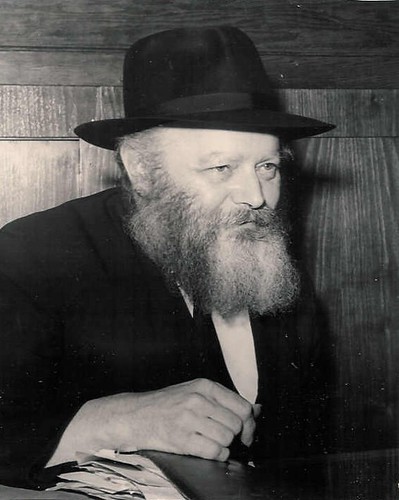
"Moshiach is ready to come now-our part is to increase in acts of goodness and kindness" -The Rebbe

Showing posts with label love for the Rebbe. Show all posts

Sunday, September 19, 2010

Rebbe and Chossid: Imagining the Reunion

The Previous Rebbe once declared at a farbrengen:
Everyone should remind themselves of ten minutes in which he stood before my father [the Rebbe Rashab], and [consider] the way he is now, and that he will have to appear before my father [when Moshiach comes].
We can surely apply this statement to our current situation, after Gimmel Tammuz. To state the obvious, one of the main problems that we as chassidim face in our time is that we do not see the Rebbe physically. Yes, we are able to visit the Rebbe at his holy Ohel and bask in his physical presence. Yes, we can view pictures and videos, and with an ease and availability completely not possible even a decade ago, and we surely need to appreciate and make the most of this. Likewise, audio of the Rebbe speaking is more available than ever before. And despite it all, at the end of the day, we don’t see the Rebbe himself with our eyes of flesh.

Obviously, part of the interim solution to this problem is to remind ourselves constantly of the truth that the Rebbe taught us again and again when discussing the Previous Rebbe (and especially over the course of the year after the Previous Rebbe’s Histalkussee, for example, here) that a Rebbe never abandons his chassidim, and so we, too, know (see here) that the Rebbe davvens for us, blesses us, guides us, and leads us even now no less than before. In fact, in a sense he leads us even more than before, albeit in a hidden way.

Yet of course, all this is not enough. When the Rebbe is hidden from the chossid (due to our many sins), the chossid should not be satisfied with relating to the Rebbe in a hidden way, because this is not the way that the relationship of Rebbe and chossid ought to be. Rather, he should be filled with an intense desire to be physically reunited with the Rebbe.


The Rebbe himself has set this example for us, for he famously wished at the conclusion of his very first ma’amar (see here): “May we merit to see the [Previous] Rebbe, down here in a physical body and within our immediate reach, and he will redeem us.” Moreover, a chossid should regard it as his personal responsibility to bring this reunion about, as the Rebbe wrote to Reb Avrohom Parizh: “Reb Avrohom, we have to bring the Rebbe back” (Igros Kodesh, Vol. 4, p. 156).

But imagining, yearning, and praying to see the Rebbe again,
as important as they are, are not enough. Chassidim are bound to the Rebbe through an intense love (see here), and part of love is a desire to make ones beloved happy, and to avoid causing him or her pain. Thus, the desire to be reunited with the Rebbe should also bring us to Teshuvah, to change our behavior such that it conforms with the Rebbes instructions totally, for we realize that not only is the Rebbe pained now when we behave inappropriately (for he surely sees the way we are acting even now), but when we will at long last be reunited with the Rebbe (and it is only a matter of time, im yirtzeh Hashem), he will look at us and look through us and be reminded of exactly how we acted when he was hidden. And we will look back at him.

So lets imagine it, and ask ourselves fearlessly exactly what type of response we will deserve, as painful as that question may be.

We cannot escape the fact that whether the Rebbes response will be one of joyful pride or painful disappointment depends upon the way we choose to act now, in the moments before we are reunited. So lets act wisely and make sure we don’t, as they say, have “egg on our faces” when Moshiach comes.

Monday, December 21, 2009

Hei Teves: Celebrating our victory

On Hei (the fifth of) Teves every year, chassidim celebrate the day that the secular court issued the verdict that the seforim (holy books) of the Previous Rebbe’s library should be returned to their rightful owners, Agudas Chassidei Chabad, after a large number of these priceless works had been stolen. Chassidim dubbed this the day of Didan notzach, which means literally “victory is ours.”

But why should we be so happy, as if celebrating a
personal victory? After all, we weren’t there. Many of us (such as the writer of this post) were little children when this whole saga occurred, and others hadn’t even been born. And even of those who were adults at the time and remember the events clearly, how many were directly involved? Yes, some went to the trouble to sit in the court during the case, but most didn’t even do that.

In fact, this question strikes to the core of what it means to be a
chossid.

At first
chassidim didn’t understand why the theft mattered so much; however, they witnessed the simple fact that the Rebbe was deeply distressed over the situation. So first and foremost, chassidim were distressed on account of that very fact: Since chassidim share a deep, personal, loving relationship with the Rebbe, when something distresses the Rebbe, chassidim are distressed too.

But for a true
chossid, that is not enough. Just as when a close friend is suffering, one wants to know why this is so, and seeks to help him out, so is it with a chossid and his or her Rebbe. When the Rebbe is in pain, the chossid wants to understand why, to share that feeling with him, and to do whatever is in his or her power to remove that pain.

This is the meaning of
didan. Didan means ours. The Rebbe’s joy is our joy, and the Rebbe’s pain is our pain, because we’re his chassidim. But this bond can’t come automatically. It requires Avodah, hard work at self-refinement, so that instead of only thinking about ourselves—whether selfish indulgences, or even our legitimate physical needs (and may all Jews be blessed with abundant prosperity)—we think about Hashem, and what matters to Him. And then we realize that we should consider and connect with the holy wishes of the Tzaddik that He sent us to reveal His Will to us and His expectation of us. That the Rebbe is the source of our Neshamos, and so we need to connect with that source in order connect with Hashem.

Then his pain is our pain ... and his joy is our joy, his victory is our victory. To suggest a little interpretation: When we have
didan—the identification with the Rebbe, then there will also be notzach—the identification with his victory.

In this case, the joy of
Hei Teves—of which chassidim said, “One who didn’t see the joy of Hei Teves, never saw joy in his life”—was a direct and natural result of empathizing with the pain of the Rebbe during the period before the verdict was issued. When we in our time develop our bond with the Rebbe in general, and reflect upon the pain that the Rebbe suffered over the debacle of the stolen seforim in particular, we will be able to truly share in the Rebbe’s joy on this day. Or, in the words of Tehillim, “Those who sow in tears, shall reap with joy” (Tehillim 126:5).

L’Chaim!

Wednesday, December 9, 2009

Why did the Alter Rebbe go to prison?


Why did the Alter Rebbe go to prison?

Rabbi Y. Oliver

The Previous Rebbe related:
The Mitteler Rebbe said: The Alter Rebbe consented to being taken to prison because he wanted to test the brotherly love of the chassidim, [to see] how they would take his imprisonment [another version: “how chassidim would feel his imprisonment”]. ...

The Rebbe Rashab explained this as follows: A Jewish leader [lit. “shepherd”] needs to know the state of his followers [lit. “flock”], and once the Alter Rebbe would learn that his
chassidim are lacking in brotherly love, he would be able to correct this situation, and in order to complete his task of rectifying his flock, it was worthwhile for him to endanger himself!


Sefer HaSichos 5696-Choref 5700, pp. 208-209.
In my own words: As discussed earlier, a chossid relates to his Rebbe like a son relates to a father; it follows that a chossid should relate to fellow chassidim with the same love one has for siblings.

However, in an ordinary setting, the routine of daily life will often conceal a deeply-felt love, even a love between blood siblings. So in order to test the true strength of the love between
chassidim, the Alter Rebbe wanted them to be thrust into circumstances in which such love typically comes to the fore. Just as when a father is in danger, his children unite to do whatever possible to rescue him, so did the Alter Rebbe hope that when he would be imprisoned, the chassidim would unite with brotherly love with the goal of rescuing him. If they would not, this would indicate that they lacked the quality of brotherly love, and he would know to take the necessary steps to rectify it upon his release. It was so important for the Alter Rebbe to ensure that the chassidim felt true brotherly love for one another that he decided that it was warranted to endanger his life for this purpose.

We have been taught that everything that happens to a Rebbe takes place with his consent (
Likkutei Dibburim, Vol. 1 p. 89). So although Hashem put the Alter Rebbe in circumstances in which he would be arrested, the Alter Rebbe chose to allow that process to take its course. Likewise, it follows that on a certain level the Rebbe agreed to be concealed from us through his histalkus on Gimmel Tammuz.

Likewise, it is reasonable to infer that just as in prison the Alter Rebbe concealed himself from his
chassidim with the intention of establishing the degree of brotherly love between the chassidim, so is it with us after Gimmel Tammuz: at least one way of explaining our current situation is that Hashem and the Rebbe are testing our love for our fellow chassidim
.

However, it should also be pointed out that the Previous Rebbe mentions that the Alter Rebbe agreed to be arrested in order to see how the
chassidim “would take his imprisonment” or how they would “feel his imprisonment.” Either way, this expression implies that the ordeal of the Alter Rebbe’s imprisonment was also meant to test the depth of the commitment and Hiskashrus (bond) between the chassidim and the Alter Rebbe. Perhaps we can therefore also infer from this that in our situation as well, our Hiskashrus is being tested.

These two ideas—testing the bond of the
chassidim with one another, and of the chassidim with the Rebbe—are interdependent, for, as mentioned, only by truly realizing that “we are all children of one father” can true bonding between chassidim take place.

Thursday, May 21, 2009

Yechidus: Words of affection


One of the central Chassidic practices (darkei haChassidus) is that Chassidim are to travel regularly to the Rebbe for a one-on-one meeting, which is known in Chassidic parlance as Yechidus. This meeting has classically been the cornerstone of the Rebbe-chossid relationship.

In the preface to
Tanya, the Alter Rebbe beautifully describes his special relationship with the chassidim who came to seek his advice in Yechidus: “Words of affection were common between us, and they revealed before me all the hidden aspects of their heart in matters of serving Hashem related to the heart.” See also the Alter Rebbe’s words in Mei’ah She’arim p. 58 (cited in Likkutei Sichos, Vol. 5, p. 334): “ ... One cries out in Yechidus at one’s distance from the living G–d.”

First, these sources show that although advice is sought in this meeting, it is much more than a patient visiting a doctor and receiving a prescription. It is a unity between souls in an awesomely deep, personal, and loving relationship, in which profound mutual love is expressed.

The explanation of this deep relationship is that a Rebbe is a
Neshamah Kelalis, a “general soul,” of which the chossid is an individual component. When the perat, the individual aspect, connects to its soul-origin directly, this is a very profound, personal experience.


There are so many beautiful stories in Chassidic lore of the deep relationship between
chossid and Rebbe, and how chassidim would yearn to go to Yechidus, and prepare for it for a long time, and regard it as the highest point in their lives.

We also see from these quotes that
Yechidus is a place for the chossid to express his deepest yearnings, viz., to perform Torah and Mitzvos with true love of Hashem and fear of Hashem, to reach true Teshuvah, and thus a truly intimate connection with G–dliness.


(For a Hebrew booklet on the concept of Yechidus, see here.)

Sunday, April 19, 2009

When You're In Love, You Don't Complain


When You're In Love,
You Don't Complain

Rabbi Yehoishophot Oliver

The Talmud states: “A person [i.e., a Jew] does not mind performing a Mitzvah, whether personally or with his money” (Pesachim 4b).

From time to time I’ve heard the complaint, “Oy, 
Shabbos is coming soon, we have to clean and cook,” and especially, Pesach is coming, we’ll be in the kitchen for a week.”

Although this language is in a way understandable, I find it distressing.
Mitzvos, even when they are physically difficult, should not be regarded as a burden. A Jew, who was created in order to serve Hashem, should be happy at the opportunity to perform a Mitzvah—even if doing so involves physical effort, inconvenience, and 
even financial expense.

But how does one reach this level? The truth is that one does not need to create this 
feeling, for a Jew feels this way by nature, as quoted above. This is because every Jew possesses a natural feeling of love for Hashem (see Tanya chs. 18-19, 25). However, due to various negative experiences and influences, he may become desensitized (see here) lose this feeling on the conscious level, thus losing touch with his true inner self. Love is then lacking in his relationship with Hashem, and in order for it to be revived, the Jew needs to work at refining himself.

But why is love of 
Hashem so vital? It cannot be denied that fear of rebelling against Hashem is enough to inspire a person to perform Torah and Mitzvos.

The answer is that although fear of 
Hashem is a necessary starting point, when we serve Hashem out of fear alone, we ultimately come to see serving Hashem as a burden, leading to complaints such as those listed above.

So how can a Jew come to serve 
Hashem out of deep love, such that he is inspired to perform Mitzvos unbegrudgingly? This can only come through knowledge, as we can understand from our relationships with people. For instance, although we don’t know the policeman, we obey him out of fear of the repercussions. This fear is real and effective. In contrast, genuine love comes through knowing and appreciating another person on a personal level.

So how can one come to know 
Hashem, the Object of this love? By studying sources that describe Hashem’s greatness (which have been revealed in our generation in the teachings of Chassidus) and connecting to Hashem in a personal way through prayer, which involves reflecting on all of Hashem’s kindnesses to the person. Slowly but surely, this will lead the person to serve Hashem out of love. Not only will the Mitzvos not then be regarded as a burden, but as a priceless privilege and opportunity.

The same principle holds true concerning a 
chossid’s relationship with the Rebbe.

Some people have committed to be 
chassidim, but sadly their relationship is primarily based on fear, not love. They don’t want to disobey the Rebbe’s directives because they believe that that would be wrong, and/or because they know of stories of others who did so and did not prosper. However, they lack a significant appreciation of what a Rebbe is, and a sense of a personal bond with him.

This feeling of love will not come on its own. It needs to be actively developed. One can accomplish this by learning about the meaning of the concept of a Rebbe (e.g., on 
this blog), his relationship with chassidim, and reminding oneself of all the guidance and blessings that the Rebbe has showered upon oneself personally.

______________________________________
Dedicated by avi mori, Reb Kasriel Oliver and family (tzu langeh gezunte, zisseh yoren) in honor of the Yahrtzeit, on 3rd Adar, of Yehudis bas Reb Dov Ber a''h.

Sunday, February 1, 2009

A Love That Transcends All


A Love That Transcends All

Rabbi Y. Oliver


Earlier I quoted the HaYom Yom of 26 Shevat, which discusses the love between Rebbe and chossid, and concludes by describing this bond of love as so intense and powerful that “it knows no barriers and transcends the limits of time and space.”

This is also of particular relevance for chassidim after Gimmel Tammuz, when the Rebbe is physically hidden from us. This statement of the Previous Rebbe emphasizes that no obstacle can overcome the bond between chossid and Rebbe, and this surely includes the superficial phenomenon that occurred on Gimmel Tammuz. The chossid who is truly devoted will be able to overcome this difficulty, and even deepen his relationship with the Rebbe despite the external concealment.

No better example for such a deep devotion can be found than the example set for us by the Rebbe himself, whose devotion to the Previous Rebbe never waned, and only increased further and further, despite the Previous Rebbe’s Histalkus (passing).

Although this might seem like an advanced level, since “I [Hashem] only ask of them [the Jewish people] according to their ability” (Bamidbar Rabba 12:3), Hashem surely grants us the ability to attain this level of connection.

The main thing is that attaining and maintaining this connection enables us to deal with the intense spiritual darkness of the exile. We are then not only not deterred by it, but inspired to overcome it, emulating the Rebbe’s inspiration for serving Hashem and for revealing Hashem in the world, and thereby preparing it for the ultimate revelation of Hashem in the world, with the coming of Moshiach, who will usher in the true and final redemption.


Monday, September 22, 2008

The Rebbe's love for Chassidim, and vice versa


The Previous Rebbe describes the special love in the Rebbe/chossid relationship:
אהבה איז דער רוח החיים אין עבודת החסידות, דער חוט המקשר חסידים איינעם מיט דעם אנדערען, און דער חוט המקשר רבי מיט חסידים און חסידים מיט'ן רבי'ן. עס איז הן בדרך אור ישר הן בדרך אור חוזר, האט קיינע מחיצות ניט, און עס איז העכער פון דער הגבלה פון מקום וזמן

היום יום כו שבט.
Ahava, love, is the breath of life in the Avoda [divine service] of Chassidus. It is the thread that binds chassidim to each other, that binds the Rebbe to the chassidim, and the chassidim to the Rebbe. Ahava works in a direct way [initiated affection] and also in a reflective way [responding the other person’s affection]. It knows no barriers and transcends the limits of time and space.

HaYom Yom 26 Shevat.
In my own words:

Chassidus
teaches that in the Rebbe-chossid relationship, three types of love should be actively developed:
  • the Rebbe should develop love for the chassidim;
  • the chassidim should develop love for the Rebbe; and
  • the chassidim should develop love for one another.
This could be a love that is initiated, or a love that comes as a response to the other person:
  • when the Rebbe initiates an expression of love for the chassidim, the chassidim respond in kind, or vice versa;
  • when one chossid initiates an expression of love for another chossid, he responds in kind.