"Moshiach is ready to come now-our part is to increase in acts of goodness and kindness" -The Rebbe

Wednesday, August 10, 2011

Being a chossid: A lifetime of striving


Being a chossid: A lifetime of striving

Rabbi Y. Oliver

Chassidus Chabad calls the Jew to engage in lengthy, in-depth, rigorous study of Hashem’s greatness, with the goal of reflecting upon that knowledge and thereby evoking love and fear of Hashem, and true love of one’s fellow Jew.


So what if the chossid feels that this goal is impossibly distant, whether because the chossid believes that he or she lacks the intellectual abilities, patience, or sufficient time to be truly devoted to such in-depth study and prayer?


1. The possibility that one may never actually reach the intellectual and emotional ideal of Chabad Chassidus is not a reason not to strive for it, for, in the words of our Sages, “You do not have to finish the task, but neither are you free to desist from it.”[1]


2. The avodah of Chassidus is not necessarily about reaching a goal. It is about the journey, about the striving and the yearning. As the Alter Rebbe says,[2] an oved, literally, “one who serves Hashem,” is in the middle of the avodah, still struggling and fighting, and may be very far from the desired destination. Yet what matters is that he or she is forging ahead, undaunted by the mammoth task ahead, joyful and confident in his or her service of Hashem despite the long journey ahead.

3. The only ones who ever become millionaires are those who aspire to that goal; those content with a life of simple means will almost certainly never become wealthy. Likewise, the only way to be “in the running” to reach great spiritual heights is by simply setting them as one’s goal.

4. Continuing from the previous analogy, even if the entrepreneur never reaches millionaire status, he at least stands a chance of being much more wealthy than he would have been otherwise. Similarly, if someone is constantly striving to reach a lofty spiritual level, he will at least reach a level far beyond what he could have reached without this aspiration.

5. “[Hashem says:] I only ask of them [the Jewish people] according to their ability.”[3] Hashem only expects us to try as hard as we can. More than that, we are not expected to do.


So even if, due to circumstances beyond the chossid’s control, he or she is unable to devote the amount of time and energy necessary to actually accomplish that goal, the efforts in that direction are not in vain. It is not a matter of all or nothing.


6. Every effort the chossid makes in striving towards this noble goal according to his or her abilities and opportunities will certainly being spiritual and material benefit and endow the person with the strength to overcome the evil inclination as he is now.


And after all, Hashem was the One to put the person in this predicament, so it is surely His will that the person serve Hashem in this way.


7. If the chossid’s yearning is genuine, then when more opportunities for inner growth present themselves, he or she grabs them eagerly, acknowledging them as a divine gift.[4] And the more the chossid shows Hashem how much he or she yearns to serve Hashem, the more opportunities Hashem gives for such growth. 

And who knows, maybe the chossid will, one day, reach the heights for which he or she yearns.


___________________________
[1] Pirkei Avos 2:21.
[2] Tanya ch. 15.
[3] Numbers Rabba 12:3.
[4] Cf. Tanya ch. 34: “'ואם ירחיב ה' לו עוד אזי טהור ידים יוסיף אומץ ומחשבה טובה כו.”


This post was dedicated by: 

~Rivka Katz and family, in honor of the graduation of their daughter, Dilkah Beilah bas Rivka Leah. ~Reb Kasriel ben Yehudis and Chana Feige bas Reizl (my parents, tzu langeh, gezunteh, zisseh yoren) in honor of their 36th wedding anniversary. 
~Reb Menachem Kovacs, who requested that this message be attached:
"Zachor: to mark the 6th anniversary of the expulsion of the Jews from Gush Katif and the Northern Shomron; we continue to pray and work for their restoration and for the Ge'ula Shlayma. Thank you."
Like what you read? The articles I write take a lot of time and effort. Please contact me to sponsor an article for $36 in honor of the birthday, wedding anniversary, or yarhtzeit of a loved one, or for a refuah shleimah or the like. Also, see here concerning the tremendous merit of supporting the dissemination of Chassidus, and the blessings that one receives for doing so.

Saturday, August 6, 2011

The transformational power of Torah

The transformational power of Torah

Rabbi Yehoishophot Oliver

In the first chapter of the Tanya, the Alter Rebbe describes the various unworthy character traits of the Jew’s Bestial Soul: anger, arrogance, frivolity, depression, laziness, and so on. But then the Alter Rebbe explains that by nature, this soul also possesses certain noble qualities, listing as examples the traits of compassion and the desire to perform deeds of loving-kindness. This is drawn from the Gemara,[1] which states of the Jewish people: “Three signs identify this people: They are merciful, bashful, and they perform deeds of loving-kindness.” But why does the Alter Rebbe omit the quality of bashfulness from his list of traits?

Another question may be asked. The Gemara states: “Why was the Torah given to the Jewish people? Because they are strong-willed.”[2] Rashi comments: “The Torah was given to them so that through consistent study of it, it would weaken the strength [of their evil inclination] and subdue their hearts.” The Gemara then cites the verse, “From His right hand, He presented a fiery law to them,”[3] explaining: “Hashem declared: ‘These people are fit that the fiery law be given to them.’” The Maharsha there explains that because of the Torah’s fiery power, it is fitting for the Torah to be given to them, in order to subdue and humble them. The Gemara then interprets that verse in a different but similar manner: “The nature of these people is fiery, for had the Torah not been given to the nation of Israel, no nation or tongue could withstand them.”

What emerges from this is that since Jews are fiery, audacious, and strong-willed, the fiery energy of the Torah is crucial for them to counter their nature and humble their hearts before Hashem.

So by nature, Jews are very strong-willed—and even more so than non-Jews. (Perhaps this explains the stereotype in the secular world of Jewish chutzpah, insolence.) But, the Maharsha asks,[4] doesn’t this contradict another statement of our Sages stating that Jews possess the quality of shame? He explains that this quality is different from those of loving-kindness and compassion. The Jewish people are not naturally bashful; rather, they acquire this quality by virtue of their consistent Torah study.

Likewise, the Maharsha continues, the verse describes the purpose of the revelation at Mount Sinai: “So that the awe of Him will be on your faces, so that you not sin.”[5] Our Sages explains that “the awe of Him” refers to the quality of being susceptible to shame, which leads to “so that you not sin”—fear of sin.[6] So the awesome phenomenon of the Revelation at Mount Sinai imbued shame before Hashem and fear of sin within the souls of the Jews present, which they then bequeathed to their descendants. This clearly demonstrates that the quality of bashfulness comes to us from the Torah.

This also explains why the Alter Rebbe omits the quality of shame from his list of Jewish traits, for this section of Tanya is devoted to explaining the natural qualities of the Jew’s Bestial Soul. In general, Jews are naturally warm, friendly people. They enjoy doing favors and bestowing hospitality; similarly, they cannot bear to see others in pain, and so they strive to care for the needy, destitute, and downtrodden. Since these feelings comes naturally for a Jew, he or she will typically act in this way even if, for whatever unfortunate reason, he or she is not yet Torah-observant, or is significantly lacking in observance.

Bashfulness, however, which is related to tznius (modesty) may not come naturally to a Jew. On the contrary, by nature Jews are even more chutzpah’dik (insolent) than non-Jews, as mentioned. However, through devotion to Torah, a Jew subdues his Bestial Soul. Then not only will he not behave insolently, but on the contrary, he will rise to a far more advanced level of shame and modesty than non-Jews.

It should be noted that although women are exempt from studying Torah to the degree required of men, Torah will also subdue their evil inclinations:

a. When they study topics in Torah relevant to them, as Jewish law requires of them;[7]

b. When they encourage their menfolk to learn Torah, as the Gemara states: “How do women acquire the merit of Torah? By bringing their sons to school to learn Torah and by allowing their husbands to learn in the Beis Midrash, and waiting for them to come home.”[8]

Likewise, it appears that although all Jews are obligated to fix times for Torah study, baalei esek, those who must be involved in the world in order to earn their livelihood, have a portion in Torah, which helps them subdue their evil inclinations, by supporting Torah scholars.

This awareness of the awesome power of Torah study to keep us “on the straight and narrow” should dramatically change the way we view Torah study. Torah study is not some kind of spiritual luxury, a noble deed, and an act of selfless love and devotion for Hashem. Torah study is the medication for the evil inclination, as the Gemara says, “If this vile one encounters you, drag him to the Beis Medrash [house of Torah study].”[9]

In summary, when the Gemara states that the Jewish people possess the quality of shame and modesty, it is referring to a potential. The intense experience of the Revelation at Sinai imbued within the Bestial Soul of a Jew the potential for consistent Torah study to transform his personality, such that he will excel in shame, modesty, and bittul (submissiveness) before Hashem.

May we all merit that this potential reach full fulfillment within us, and may we succeed at influencing our fellow Jews who need it to do likewise.

Based on Igros Kodesh, Vol. 3, pp. 9-10.

_______________________________
[1] Yevamos 79a.
[2] Beitzah 25b.
[3] Devarim 33:2.
[4] Chiddushei Aggados on Yevamos ibid.
[5] Shemos 20:17.
[6] Nedarim 20a.
[7] See The Laws of Torah Study in Shulchan Aruch Admur HaZaken, ch. 2.
[8] Berachos 17b.
[9] Kiddushin 15a.


This post was dedicated by Reb Kasriel ben Yehudis and Chana Feige bas Reizl (my parents, tzu langeh, gezunteh, zisseh yoren) in honor of their 36th wedding anniversary. This post was also dedicated by Reb Menachem Kovacs, who requested that this message be attached:
"Zachor: to mark the 6th anniversary of the expulsion of the Jews from Gush Katif and the Northern Shomron; we continue to pray and work for their restoration and for the Ge'ula Shlayma. Thank you."
Like what you read? The articles I write take a lot of time and effort. Please contact me to sponsor an article for $36 in honor of the birthday, wedding anniversary, or yarhtzeit of a loved one, or for a refuah shleimah or the like. Also, see here concerning the tremendous merit of supporting the dissemination of Chassidus, and the blessings that one receives for doing so.

Monday, August 1, 2011

"Engrave" G-dliness Into Your Very Being


"Engrave" G-dliness Into Your Very Being

Rabbi Y. Oliver


In general, there are two kinds of letters:[1] written, as with the letters of a Sefer Torah; and engraved, as with the letters in the Luchos (Tablets).[2]

In written letters, ink is attached to the parchment in a way that forms holy letters. However, the ink is a substance foreign from the parchment, and so even as it unites with the parchment, it bonds only with the parchment’s surface, but remains separate from the parchment. This creates the possibility that the ink might somehow become erased and detached from the parchment.

In contrast, in the case of engraved letters, only one entity exists—the rock. The letters have no separate existence from the rock upon which they are engraved, and so the two are inseparable.

The Luchos had a further quality—one that was miraculous. They were carved all the way through to the other side.[3] This required a miracle, for in such a case, the centers of the round letters samech (ס) and the final mem (ם) could not otherwise have remained suspended in mid-air.[4] This is also why the Luchos were called “Luchos of the Testimony,” for the manner in which they were inscribed testified to their divine origin.[5]

This represents a further level of unification with G–dliness, for in regular engraving, only the surface of one side of the stone is engraved, while the other side remains untouched. But since the letters of the Luchos penetrated through to the other side, no part of the Luchos remained unaffected by the letters.

What is the deeper significance of this, especially in light of the principle that “Hashem never performs a miracle unnecessarily”[6]? The Luchos were the ultimate physical embodiment of the word of Hashem. Thus, they represent the Torah as it exists in its supernal source. On this level, “The Torah and Hashem are entirely one”[7]—the letters of Torah are utterly united with pure G–dliness.

However, when the Torah descends into our world, it becomes vested in the Written Torah—it becomes inscribed as ink on parchment. So although the letters of the Written Torah are very holy, once they descend into our lowly world, they do not retain the awesome holiness of their source.

This also teaches us how to study Torah. It is not enough to study Torah and unite with it by merely comprehending and remembering it well, for then the holiness of Torah is still superimposed on the person—akin to written letters.

Rather, just as engraved letters become one with the substance upon which they are engraved, so should the Torah one learns become one with his being. Moreover, just as the engraved letters in the Luchos cut all the way through to the other side, permeating every aspect of the Luchos, so should the Torah that one learns permeate every aspect of his being.

This is the deeper meaning of the verse, “If you go in my chukim [statutes],”[8] which Rashi interprets to mean “if you toil in Torah.” Since the word chukim is related to the word chakikah, engraving, on a deeper level, the verse is exhorting us to learn Torah in a way that it permeates our being, as discussed above.

When the Torah permeates us fully, we will naturally toil in our study of it, for when something permeates a person, he is willing and eager to exert effort for it, for he feels that it is his. But if the thing does not permeate him, he will only trouble himself to do as much as is technically required. This is along the lines of the difference between an employer and an employee—even the most devoted employee will not exert himself to the extent of the employer, for the employer knows that it is his business.

And from one’s toil in Torah study, this filters down into one’s observance of Mitzvos—that the Mitzvos are all kept in a way of “engraved letters”—they permeate the entire being of the Jew who performs them.

Adapted from Hisva’aduyos 5749, Vol. 3, pp. 184-185.

__________________________________
[1] Likkutei Torah 56a.
[2] “The Luchos were Hashem’s handiwork, and the script was the script of Hashem, engraved upon the Luchos” (Shemos 32:16).
[3] “ ... The Luchos were inscribed on both their sides; they were inscribed on one side and on the other” (ibid. 32:15).
[4] Rashi, ibid.
[5] Ohr HaChayim, ibid.
[6] Derashos HaRan, sec. 8.
[7] Zohar 3:73a.
[8] Vaykira 26:3.

This post was dedicated by Reb Kasriel ben Yehudis and Chana Feige bas Reizl (my parents, tzu langeh, gezunteh, zisseh yoren) in honor of their 36th wedding anniversary. This post was also dedicated by Reb Menachem Kovacs, who requested that this message be attached:
"Zachor: to mark the 6th anniversary of the expulsion of the Jews from Gush Katif and the Northern Shomron; we continue to pray and work for their restoration and for the Ge'ula Shlayma. Thank you."

Like what you read? The articles I write take a lot of time and effort. Please contact me to sponsor an article for $36 in honor of the birthday, wedding anniversary, or yarhtzeit of a loved one, or for a refuah shleimah or the like. Also, see here concerning the tremendous merit of supporting the dissemination of Chassidus, and the blessings that one receives for doing so.

Saturday, July 30, 2011

The Jew's mission: Recovering Hashem's lost gems

The Baal Shem Tov[1] offers the following parable for the spiritual process by which the sparks of holiness came into our physical world:

A king once lost a precious gem from his ring, and many of his subjects—servants, ministers, generals, and so on—volunteered to search for it. However, the king refused to allow them to. Instead, he instructed his precious only son to search for the lost object and return it.

The king did not do so because he suspected that his other subjects might pocket the gem. Rather, he wanted to be able to give the opportunity to his son to find it, so that his son would receive the credit. Moreover, he even dropped his son several hints as to the whereabouts of the gem. But how did the king know so well where the gem was to be found? In fact, it was all a setup. The king had deliberately feigned to have accidentally lost the gem only so that his son would find it, and so that the father could beam with pride at his son’s accomplishment.

Likewise, Hashem deliberately caused the sparks to fall into the physical world, and then insisted that only the Jewish people, of whom it is written, “You are sons of Hashem, your G–d,”[2] be charged with the mission of refining them.

So when a non-Jew uses an object in the world with the intention to serve Hashem, careful to do so in a way that conforms 
both with the letter and the spirit of the Noahide laws, he performs his duty, pleases the King of all kings, Hashem, and civilizes the world and makes it a fit vessel for G–dliness. But refining the lofty sparks of holiness trapped in the physical world is a task and privilege specifically assigned to the Jewish people.

_______________________
[1] Kesser Shem Tov §194.
[2] Devarim 14:1.

This post was dedicated by Reb Kasriel ben Yehudis and Chana Feige bas Reizl (my parents, tzu langeh yoren) in honor of their 36th wedding anniversary. This post was also dedicated by Reb Menachem Kovacs, who requested that this message be attached:

"Zachor: to mark the 6th anniversary of the expulsion of the Jews from Gush Katif and the Northern Shomron; we continue to pray and work for their restoration and for the Ge'ula Shlayma. Thank you."

Like what you read? The articles I write take a lot of time and effort. Please contact me to sponsor an article for $36 in honor of the birthday, wedding anniversary, or yarhtzeit of a loved one, or for a refuah shleimah or the like. Also, see here concerning the tremendous merit of supporting the dissemination of Chassidus, and the blessings that one receives for doing so.

Sunday, July 24, 2011

The Contribution of Chassidus Over Kabbalah


The Contribution of Chassidus Over Kabbalah

Rabbi Yehoishophot Oliver

At first glance, both Kabbalah and Chassidus explain Hashem’s greatness. And yet, since Kabbalah was  revealed before Chassidus, Chassidus must have come to add something new and more. What?

This is a broad topic, and of course, an article of this length cannot do it justice, but I will discuss one aspect of it below.

Although Kabbalah offers wondrous explanations of G–dliness, when these ideas are examined, the explanations it gives are incomplete. The wisdom of Kabbalah is so lofty that it does not truly descend into human intellect, and so a regular person cannot properly grasp it, even if he is highly intelligent. Who then can grasp it? One who is somehow attuned to a certain level of spirituality that transcends intellect. This exalted spiritual state “fills in the gaps,” enabling one to
“decipher the code,” and properly grasp these rarefied concepts.

There are two ways of possessing this level of spiritual sensitivity.

From above: A Jew who is born with a particularly lofty neshamah may be endowed with the power to grasp these lofty concepts.

From below: A Jew who has invested tremendous effort to rectify all his sins and failings and has succeeded, and has then gone still further and reached an advanced level of self-refinement, may manage to elevate himself to this level.

Until Chassidus was revealed, one who aimed to truly grasp the explanations of the sublime levels of G–d’s greatness found in Kabbalah had to be a fit “vessel” by fulfilling at least one of the above requirements. The revelation of Chassidus, however, made it possible for any Jew to grasp Hashem’s greatness, even without satisfying either of these requirements.

But what is so different and special about Chassidus? What quality does it have that Kabbalah lacks, making it accessible to every Jew? The answer: Chassidus in general, and Chassidus Chabad in particular, brings Hashem’s greatness down into sechel enoshi, human understanding.

How does it do this? It is written, “From my flesh I see Hashem.”[1] This verse encapsulates the entire goal of Chassidus—to explain in great depth and in great detail the faculties of the soul, and how they interact with one another. Since the Jew’s soul descends from the higher spiritual worlds,[2] everything in his or her inner self parallels the higher realms, and can thus be used to understand them. Chassidus therefore uses as its mashal (analogy, pl. meshalim) the soul’s faculties
—“my flesh”—in all their intricacies, through which we are able to “see Hashem”—to understand the nimshal (concept being explained by the analogy) of sublime levels of Hashem’s greatness.

Although Kabbalah also employs analogies from the soul to explain G–dliness, it never explains exactly which aspect of them corresponds to the nimshal in what way; it merely states the analogies, no more. If any explanation is provided, it is minimal.

This is one reason that it is considered dangerous to study Kabbalah without 
being truly a vessel for it. The lack of down-to-earth explanation makes one liable to fall into the trap of construing the analogies in Kabbalah literally.

This misconception is called hagshamah—lit., “making material,” or “corporealization.” Its opposite is hafshatah, literally, “divestiture,” or “abstraction.” Hafshatah is the ability to “see through” the details of the mashal to the nimshal of the sublime levels of G–dliness that it is coming to inform us of. Since this is a requirement for studying Kabbalah, we find that the Baal Shem Tov instructed those whom he saw as susceptible to hagshamah—apparently, the vast majority of people—not to study Kabbalah.

Now, let’s explain hagshamah further. On the lowest level of hagshamah, one believes that Hashem literally has a hand or foot, or the like, G–d forbid. A less coarse, but still forbidden level of hagshamah is to believe that Hashem is some kind of limited entity, albeit a very sublime one, such as one of the Sephiros (divine attributes), and to pray to a Sephirah, G–d forbid, instead of to Hashem Himself.[3]

An even more abstract kind of hagshamah, but hagshamah nonetheless, is an incomplete understanding of an analogy, applying aspects of it to Hashem that were not meant to be applied, and neglecting to apply aspects of it to Hashem that were meant to be applied; this is in itself hagshamah, G–d forbid.

And when one “coarsens” Hashem, G–d forbid, while studying Kabbalah, this in turn greatly “coarsens” the student of Kabbalah; in other words, it has a very detrimental spiritual effect upon him (along the lines of the words of our Sages that if one learns Torah inappropriately, it becomes a “potion of death”[4] for him). And this is indeed tragic, for his intention in his studies was surely to become more refined.

This explains further what was quoted earlier that to learn Kabbalah one must either have a lofty neshamah or be very refined, for only then can we be confident that the person will not fall into hagshamah.

In contrast, the analogies offered in Chassidus are always accompanied with explanations[5
] that make clear that not only does Hashem in His Essence (“Atzmus”) have no physical form, but He has no spiritual form either. Likewise, these explanations make clear which aspects of the analogies are relevant, and which are not.

Therefore, the student who has acquired a broad knowledge in Chassidus may be equipped to study Kabbalah as well and understand it properly.[6] Conversely, in our time, Chassidus is vital to protect one from misunderstanding concepts in Kabbalah. So for someone to learn Kabbalah without the explanations of Chassidus and “make his own way” in Kabbalah is presumptuous—he would be presuming himself not in the category of those whom the Baal Shem Tov warned against learning works of Kabbalah lest they commit hagshamah and thereby become greatly coarsened.[7] Moreover, it is not enough to learn texts that explain the deeper meaning of these Kabbalistic concepts briefly; one must also study Chassidus, which explains them in depth.[8] Thus, learning Chassidus before Kabbalah is vital.[5]

Based on Kuntres Inyanah Shel Toras HaChassidus, p. 1.
Toras Sholom, pp. 113, 185. See also the article on p. 20 here.

___________________________
[1] Iyov 19:26.
[2] Tanya, ch. 3, beg.
[3] Derech Mitzvosecha, Shoresh Mitzvas HaTefillah, 115b. Cf. Shivchei HaBesht, p. 250.
[4] Yoma 72b.
[5] Igros Kodesh, Vol. 22, pp. 58-59. See also Likkutei Sichos, Vol. 30, p. 292, where the Rebbe warns that only one who has actually attained expertise in Chassidus by studying it diligently for many years is fit to issue a ruling on whether Chassidus is similar or different from Kabbalah with regard to the various restrictions on the study of Kabbalah.
[6] Likkutei Sichos, Vol. 35, p. 295.
[7] Igros Kodesh, Vol. 8, p. 223. Also, see ibid. Vol. 13, p. 403.
[8] Likkutei Sichos, Vol. 20, p. 594.


This post was written by the author in honor of the third birthday of his daughter, Shaina bas Atarah Arielle, on 22 Tammuz. It was also dedicated by Rivkah Katz and family, so that it be a merit for the refuah sheleimah of HaRav Meir HaKohen ben Rochel Dilkah. Lastly, this post was dedicated by Ephraim Tunick in honor of his mother, Miriam Shaina bas Asher ע"ה.


Like what you read? The articles I write take a lot of time and effort. Please contact me to sponsor an article for $36 in honor of the birthday, wedding anniversary, or yarhtzeit of a loved one, or for a refuah shleimah or the like. Also, see here concerning the tremendous merit of supporting the dissemination of Chassidus, and the blessings that one receives for doing so.

Wednesday, July 20, 2011

The Purpose of Creation: Hashem Dwelling Down Here


The Purpose of Creation:
Hashem Dwelling Down Here

Rabbi Y. Oliver


What is the purpose of creation, and what is the purpose of our individual lives? Why are we here?

According to Chassidus, the answer to this question lies in our Sages’ statement: “Hashem desired to have a dwelling place in the lower worlds.”[1] Chassidus explains that the phrase “the lower worlds” refers primarily to our physical world, which is the lowest of all the worlds. This is the place where He yearns for His Shechinah, the divine presence, to be revealed.

To be specific, within our world, Hashem wishes to have his primary dwelling place in the Beis Hamikdash, as He instructed, “Make for me a Mishkan, and I will dwell amongst them.”[3] On the basic level, this verse means that the Mishkan and the Beis Hamikdash (the latter being a progression from the former) were places appropriate for the indwelling of the Shechinah, and these domains of concentrated holiness then served as beacons of divine light for the rest of the world.

But if so, why does it refer to the Mishkan in the plural, saying that Hashem will dwell “amongst them”? Shouldn’t the verse have used the singular “within it”—the Mishkan?

Here the verse alludes to the fact that in addition to Hashem’s desire to dwell within the Mishkan and Beis Hamikdash, He desires to dwell “among them”—to establish a Mishkan within the heart of every single Jew.

More specifically, there are two elements, or stages, in the Jew’s mission to make a personal Mishkan for Hashem. Hashem desires that the Jew reveal the Shechinah, the divine presence:

1. within his inner self—in his mind and heart, and in his thought, speech, and action;

2. in the world around him, beginning from his home, and spreading out to his community, and the world around him, according to each Jew’s opportunities and talents.

These two tasks were achieved in the most complete way through the Mishkan, and later on, the Beis Hamikdash.

Now that we are in exile, and we no longer have the Beis Hamikdash, we have been charged with the mission of revealing G–dliness within ourselves and the world around us. In this merit, Hashem will return the Beis Hamikdash to us, “measure for measure” with the coming of Moshiach now!

_______________________________
[1] Midrash Tanchuma, Naso, sec. 16.
[2] Tanya ch. 36.
[3] Shemos 25:8.
[4] Sotah 8b.

Based on Sefer HaMa’amarim Kuntreisim, Vol. 2, p. 828 ff. s.v. Basi L’gani.


This post was dedicated by Rivkah Katz and family, in honor of the graduation of their daughter, Dilkah Beilah bas Rivka Leah. This post was also dedicated by Menachem Kovacs in honor of the Yahrzeit of his father, Eliezer ben Shalom ע"ה, on 17 Sivan.


Like what you read? The articles I write take a lot of time and effort. Please contact me to sponsor an article for $36 in honor of the birthday, wedding anniversary, or yarhtzeit of a loved one, or for a refuah shleimah or the like. Also, see here concerning the tremendous merit of supporting the dissemination of Chassidus, and the blessings that one receives for doing so.

Sunday, July 10, 2011

A Jew? Sin?! Unthinkable!

A Jew? Sin?! Unthinkable!

Rabbi Y. Oliver


The Zohar[1] says that the verse, “Nefesh ki secheta”—“When a Jew sins,”[2] should be read as an expression of incredulity: “How could a Jew sin?!”

Just a second. What does this mean? Unfortunately, the reality is that almost everyone—even those who sincerely strive to do the right thing both in their relationship with Hashem and with other people, do slip here and there and sin, and in both of these relationships. And then there are “sins that a person tramples with his feet”[3]—behaviors commonly regarded as “not so terrible,” which are prevalent even among those who are otherwise observant. These include bittul Torah (neglect of Torah study), lashon hora (gossip), indulgence in permitted pleasures, and so on.[4] So how do we understand the Zohar’s shock?

The Hebrew word for world, olam, is etymologically related to the word he’elem, concealment, for the world conceals the true reality of Hashem. In our world, where Hashem’s presence is the most hidden, the world also conceals the spiritual processes that underlie the physical world around us. Thus, when we only consider things from a coarse, physical perspective, we are bound to reach incorrect interpretations and conclusions.

However, Hashem reveals His all-perfect, all-knowing wisdom to us in the Torah, and so gives us the inside scoop on deeper spiritual realities. Through Torah, the Jew is privy to the true perspective on everything in the world around us, while everyone else is confused, or interpreting worldly phenomena in a way exactly contrary to their true nature.

Similarly, when we approach a Jew, we should look to the Torah, and especially its inner dimension, to reveal to us a Jew’s true nature. By nature, not only does a Jew not sin, but the very thought of sin comes as a total shock. What? A Jew? Sin?? It makes no sense!

Rather, the sin is something superimposed, that comes due to the influences of the Jew’s non-Jewish environment; it is not his or her true inner core and identity. Thus, “Even while [the Jew] sins, his soul is still faithful to Hashem.”[5]

This is also the deeper meaning of the Previous Rebbe’s teaching: “Just as a Jew should know the shortcomings, so should he know his own strengths.”[6] One should know the shortcomings in order to correct them, and the strengths in order to be able to utilize them to perform to the utmost in one’s service of Hashem.

The Rebbe[7] points out the apparent inconsistency of the Previous Rebbe’s choice of words. When speaking of shortcomings, the Previous Rebbe said “the shortcomings,” without identifying the possessor of those shortcomings, while in reference to the strengths, he explains, “one’s own strengths.” The Rebbe interprets that the Previous Rebbe meant to make a statement about the fundamental identity of a Jew. Since a Jew’s virtues are true to the wishes of his Neshamah, they can be truly attributed to him; in contrast, when he sins and falls short, these are not his sins; rather, they are sins that attached themselves to him from without.

So when a Jew sins, he goes totally against his nature.

Let’s explain this more deeply. The Neshamah of a Jew consists of five levels (see here). The lowest is the level of Nefesh, which becomes vested in his body and sustains the Jew’s thought, speech, and action in Torah and Mitzvos.

Now, the Hebrew for “when a Jew sins” is “nefesh ki secheta”—literally, “when a Nefesh sins.” So Chassidus interprets the Zohar’s shock to mean that for a Jew, sin is totally unthinkable not only for the essence of the soul, but also for the four higher levels of the external manifestations of the soul—Ruach, Neshamah, Chayah, and Yechidah. Even for the lowest level, Nefesh—which is technically able to take part in a sin through the influence of the Bestial Soul—although sin is not unthinkable, it comes as a total shock![8]

When a Jew realizes that his sins do not define his true self; rather, they are an external force that somehow became stuck to him, this knowledge helps him keep his spirits up despite his low state. At the same time, it empowers him with the confidence that no matter what he did wrong, he can fix it. He is then motivated to do everything in his power to rectify his sins through sincere Teshuvah, and then Hashem will forgive and favor him as if he had never sinned.[9]

________________________________________
[1] Zohar 3:13b, beg.
[2] Vayikra 4:1.
[3] Avoda Zara 18a.
[4] Tanya ch. 30.
[5] ibid. ch. 24, end.
[6] Likkutei Dibburim, Vol. 4, p. 581.
[7] Hisva’aduyos 5742, Vol. 1, pp. 53-54.
[8] Sefer HaMaamarim, Basi Legani, Vol. 1, p. 46.
[9] Mishneh Torah, Laws of Teshuvah, 7:4.


This post has been dedicated by Rabbi Shimon Cowen and family lizchus Zalman HaKohen ben Sarah, in the zchus of R' Dovid Fishel ben Rochel for a refuah shleima u'krova, and by Menachem Kovacs in honor of the Yahrzeit of his father, Eliezer ben Shalom ע"ה, on 17 Sivan.


Like what you read? The articles I write take a lot of time and effort. Please contact me to sponsor an article for $36 in honor of the birthday, wedding anniversary, or yarhtzeit of a loved one, or for a refuah shleimah or the like. Also, see here concerning the tremendous merit of supporting the dissemination of Chassidus, and the blessings that one receives for doing so.

Sunday, July 3, 2011

Reaching a Higher Level of Consciousness


Reaching a Higher Level 
of Consciousness

Rabbi Yehoishophot Oliver


There are two general perspectives or mental states that one can experience. In the terminology of Kabbalah and Chassidus: mochin de’gadlus, “higher consciousness,” and mochin de’katnus, “small-mindedness.”

When you are in a state of mochin de
’gadlus, you see the big picture, the vast plan, and the underlying purpose of everything around you. Hashem’s absolute reality is real, unquestionable, even tangible, and so you view all worldly things as trivial and fleeting. This awareness naturally brings to vibrant passion and zeal in your divine service (see here).

Likewise, your deep connectedness with higher, spiritual truths makes you ready to have self-sacrifice for a noble cause. You do not care to give up personal preferences and do things that are difficult and demanding, because you believe so deeply in the worthiness of your mission, to which you have been summoned by a higher calling.

However, in a state of mochin de
’katnus, you fail to see the vast plan and the deeper meaning behind the world around you. You miss the forest for the trees, and so you get bogged down with material and even trivial concerns. Although you still believe in Hashem and perform the mitzvos, there is a sense of distance and detachment from the truth of His reality, and this is also reflected in a diminished sense of excitement and inspiration in your divine service. You dwell on superficial, material realities, and lack patience and true joy. You think that material pleasures will bring you true fulfillment, while the thought of efforts at growing spiritually is anything but pleasurable. You are preoccupied with satisfying your immediate conveniences, desires, and needs, and serving Hashem is the last thing on your mind. 

Another way of putting it is the distinction between maturity and immaturity. There is a fundamental difference between a mature mentality and a childish one. As the Alter Rebbe writes: “The emotions are commensurate with the intellect, for a child desires and likes petty things of meager value, for his mind is small and too narrow to appreciate more precious things. Likewise, he is angered and enraged by trivialities, and the same goes for [the child’s] boasting and other emotions” (Tanya ch. 6). So the direction of the emotions is dictated by one’s intellect. Thus, the child’s undeveloped mental capacities result in emotional immaturity. This is why a child becomes very excited over sweets and toys, and angered when deprived of them. Conversely, he does not grasp the meaning of wealth and power, and thus he does not truly desire them (cf. Kuntres HaTefillah, p. 16).

Similarly, someone who is physically an adult can be in a state of mochin de
’katnus spiritually. They may have little or no interest in tefillah (prayer), Torah study, or anything more than the most basic observance of mitzvos. Their life revolves around superficial things—amassing wealth, prestige, or satisfying material desires. They do their religious duties mechanically, out of rote, waiting impatiently for the moment they will be “free.” They view anyone inspired about spiritual things with disdain, and dismiss them as “religious fanatics.” Ultimately, one who goes down such a path is at risk of renouncing observance of Yiddishkeit altogether, may G–d save us.

A variation on this theme is someone who is apparently very strong in his or her Torah observance, but approaches it in a way of mochin de
’katnus, small-mindedness. This could manifest itself in various ways. One example is a person who follows Halachah meticulously and beyond the letter of the law, which is of course very positive, but falls into severe depression, or gets angry and irritated, whenever he fails even to a minute degree. Or he is obsessively critical of every minute fault in others, and certainly of major ones, but somehow forgets to notice even the minor ones in himself. And so on.

In these cases and many others, the person is not truly thinking about Hashem. He may be keeping Torah and mitzvos in the technical sense, but he is not truly serving Hashem because he does not think about Hashem; instead, he thinks incessantly about technical rules, do’s and don’ts, all the while missing the main thing—that these rules exist in order to bring us to fulfill our inner potential for goodness and holiness, to refine our inner selves and unite us with Hashem and with all around us—which is the mochin de’gadlus perspective.

In any case, keeping Torah and mitzvos, and especially living according to the teachings of Chassidus, means following a program which, if followed correctly, with the right guidance, is designed to lift up our perspective from mochin de
’katnus to mochin de’gadlus.

So, how indeed does one alter one’s mental state from mochin de
’katnus to mochin de’gadlus, or help someone else to achieve this goal? Well, it should be noted that even before we embark on the journey, we have to fix our eyes on the goal. The first step to change is simply recognizing the urgency of the need and cultivating the desire to fill it. But even once one has the desire to grow and change and rise more and more often to a higher state of consciousness, he should realize that it is a gradual process, and although rising ever higher is attainable, it will be a lifelong struggle, that will involve ups and downs. 

How exactly do we attain it? I will leave that for another post...

______________
This post has been dedicated by Yehoshua Solomon l'ilui nishmas Avraham Eitan ben Getzel Yosef, in honor of the Yahrzeit on 2 Tammuz, and by Menachem Kovacs in honor of the Yahrzeit of his father, Eliezer ben Shalom ע"ה, on 17 Sivan.


Like what you read? The articles I write take a lot of time and effort. Please contact me to sponsor an article for $36 in honor of the birthday, wedding anniversary, or yarhtzeit of a loved one, or for a refuah shleimah or the like. Also, see here concerning the tremendous merit of supporting the dissemination of Chassidus, and the blessings that one receives for doing so.

Tuesday, June 28, 2011

Refining the sparks: An individual mission

We are told, “All your deeds should be for the sake of Heaven,”[1] and “In all your ways, you shall know Him.”[2]

The Rambam explains,[3] “One should attune all one’s actions to recognizing Hashem alone. One’s resting, rising, speaking, and everything else, should be for this end. How so? When one conducts business deals, or works for payment, one’s intention should not only be to amass money; rather, one should do business or work for payment in order to be able to obtain the things that the body needs, such as food, drink, a house, and a wife.”

There are no exceptions to this rule. We are obligated to treat all our mundane involvements, all our wealth, and every single object that we own, as items to be used to serve Hashem.[4]

Why is it so necessary to have the proper intention in all one’s mundane involvements?

The reason is that the mission of refining the sparks is not purely collective; if it were, although only Jews could refine these sparks, it would be irrelevant which Jews would refine which sparks. Rather, the purpose of the descent of each individual Jew’s soul into a body is to refine specific sparks, a task with which he alone has been charged.

This is the meaning of the statement of our sages, “One person cannot encroach upon that which has been designated for his fellow.”[5] The true reason that our income comes from one source and not another is not the whim of mere mortals, but divine decree alone.

Likewise, Hashem orchestrates our lives such that we live in a specific place, come into contact with specific people, undergo certain experiences, and earn our living in a particular way, in order to enable us to refine our specific quota of sparks. Even if one tries, G–d forbid,[6] one cannot rob another person of the opportunity to refine the sparks that have been predestined for that person to refine.


Thus, the Talmud teaches: "Forty days before the child is formed, a Heavenly voice proclaims that the daughter of so-and-so will be his wife, that a certain house will be his home, and that a certain field will be his field."[7]

This also explains the fact that one may notice an important task that needs to be done that is being overlooked by everyone else, even scholars and leaders far greater than oneself.[8] Hashem is deliberately preventing them from noticing this breach, because it is not their personal task. Instead, Hashem brings someone else, even one of lesser stature, to notice the need because he is meant to accomplish this task. This is the reason that Hashem hid even from Moshe Rabeinu the Halacha concerning how to act when one sees a Jew publicly engaging in relations with a gentile woman, and only Pinchas remembered it—even though Moshe Rabeinu was the one to teach it! Hashem put this thought in Pinchas’ mind because he was meant to carry out this task so that he would acquire the status of a Kohen.[9]


This, the Baal Shem Tov teaches, is also the reason that some people have a natural strong liking for one thing, while another person despises that thing, and has a strong liking for something else.[10]

When you eat, it is not only about satisfying your body’s desires or maintaining its survival; when you sleep, it’s not only about resting your body; when you do business, it’s not about amassing money, whether out of a desire for wealth, or even simply to pay the bills. And the same goes for your possessions: Your cabinet, dining table, pillows, alarm clock—and even apparent luxury items, such as your tennis racket, iPod, and chess set—they all contain sparks of holiness that belong to you and you alone.

This is also the meaning of “Everything is in the hands of Heaven except the fear of Heaven.”[11] You think that you chose the décor of the lounge room because it looks pretty, that you bought your chess set because you like the marble it’s made of, that you chose to live in the city because you like the hustle and bustle. Think again. The only decision we can truly make is whether to do a Mitzvah or not, or whether to sin or not. And the reason that Hashem is deciding the course that the person takes in the physical world is in order to direct him along the path in which he will have the opportunity to refine the specific sparks of holiness that belong to his soul.

____________________________________
[1] Avos 2:12.
[2] Mishlei 3:6.
[3] Mishneh Torah, Hilchos Dei’os, 3:2.
[4] Likkutei Sichos, Vol. 12, p. 118.
[5] Yoma 38b; cf. Rashi there.
[6] Hisva’aduyos 5749, Vol. 2, p. 480.
[7] Sotah 2a.
[8] Likkutei Sichos, Vol. 2, pp. 342-343.
[9] Bamidbar Rabba 20:24.
[10] Tzavaas Harivash §109.
[11] Berachos 33b.

________________
Dedicated by Menachem Kovacs in honor of the Rebbe and Rebbetzin's arrival in New York on 28 Sivan 1941 (70 years ago), which began their countless accomplishments based in the USA.

Like what you read? The articles I write take a lot of time and effort. Please contact me to sponsor an article for $36 in honor of the birthday, wedding anniversary, or yarhtzeit of a loved one, or for a refuah shleimah or the like. Also, see here concerning the tremendous merit of supporting the dissemination of Chassidus, and the blessings that one receives for doing so.

Thursday, June 23, 2011

Dressing Like a G-d-fearing Jew


The Rebbe relates:
A well-known story is told that once, in Lubavitch, a shochet was fired because he began to wear boots. How, then, was it that in later times, the Rebbe’im themselves wore boots?

The reason for this is simple. The shochet wasn’t fired because it is somehow forbidden to wear boots; rather, in that historical context, this act revealed that the shochet was loose and not G–d-fearing. During that period, only the impious would wear boots, while G–d-fearing Jews would not. So when that shochet deviated from the standard conduct of the G–d-fearing community, and began to wear boots, like empty people, this expressed that he was not G–d-fearing.*

However, once G–d-fearing Jews began wearing boots as well, then circumstances changed; obviously, there is nothing inherently wrong with wearing boots.

Hisva’aduyos 5743, Vol. 2, p. 759. Cf. Igros Kodesh, Vol. 9, p. 460.

*Elsewhere (Likkutei Sichos, Vol. 18, p. 460), the Rebbe adds: “In the time of this shochet, boots were a new thing, and only the Jews who dressed and acted like the pritzim [sing. poritz—the wealthy non-Jewish landowners], took part in their wild parties, and the like, would dress that way. If someone dressed like this, people knew that he had strayed from the proper path. In the end, it became known that this shochet and his family had indeed strayed from the proper path.”
In various times and places, G–d-fearing Jews wore various garments. What is important to consider is not the exact garment worn, but the simple fact that for whatever reason (and I don’t think that the superficial reason that this particular “fashion” was adopted really matters here), it has become accepted that in a particular time and place, a G–d-fearing Jew dresses in this particular way. So, as superficial as it sounds, one who fears Hashem naturally wants to conform to this way of dress, in order to make his identity as a G–d-fearing Jew known to others.

Conversely, if the person make a point of dressing differently from the way that G–d-fearing Jews typically dress in his particular cultural milieu, and davka imitating the dress of the non-Jews around him, he is making an unmistakeable statement about his degenerate values and low spiritual level. He lacks fear of Hashem, and therefore identifies with the goyishe culture of his time, instead of following the Torah’s mandate for the Jewish people to distance and distinguish themselves from non-Jews and their culture (see here).


Some further comments:

Despite the above, of course, one has the ability to be hypocritical, so although a pious person will dress the part, as above, pious dress does not in itself prove piety.

It should also be noted that nowadays, this principle may not always apply. This story occurred during an era in which the vast majority of Jews were Torah-observant, and the ones who abandoned observance were the exceptions, and moreover, they had been raised observing Torah and Mitzvos. However, the majority of Jews today are not yet Torah-observant, and they have been raised without Torah observance. In this context, those who are slowly finding their way back to their heritage from a world of secularism may continue to wear somewhat non-Jewish looking garments not because they are on the verge of leaving the fold, but because they are still in the process of entering it—a journey along which one must progress gradually, as explained here.


This post has been dedicated by the Weinberger family לעילוי נשמת Melech ben Mordechai Shmuel ע"ה, and by Menachem Kovacs in honor of the Yahrzeit of his father, Eliezer ben Shalom ע"ה, on 17 Sivan.

____________
Like what you read? The articles I write take a lot of time and effort. Please contact me to sponsor an article for $36 in honor of the birthday, wedding anniversary, or yarhtzeit of a loved one, or for a refuah shleimah or the like. Also, see here concerning the tremendous merit of supporting the dissemination of Chassidus, and the blessings that one receives for doing so.
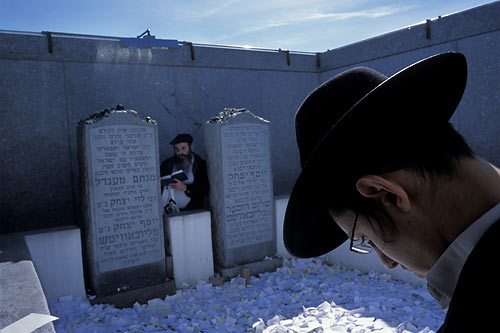
Monday, June 20, 2011

The inner harmony behind the conflict of souls


The inner harmony behind
the struggle of Souls

Rabbi Yehoishophot Oliver

In order to enable us to have free choice, such that the task of refining the sparks be earned through our efforts, we were created in a way that we must constantly struggle.

Generally speaking, a Jew possesses two souls—the Bestial Soul, and the Divine Soul, or Neshamah. At first glance, the desires of these two souls are opposite. The Bestial Soul is drawn to the physical and coarse, while the Neshamah gravitates to the spiritual and G–dly.

The Bestial Soul seeks survival, self-interest, and self-gratification, while the Neshamah desires to serve Hashem, draw close to Him, and ultimately become subsumed within Him (Tanya ch. 19).

The Jew (with rare exceptions) was born to spend his entire life waging an intense struggle between the Bestial Soul and the Neshamah
. These two souls struggle for total, absolute control of the Jew’s thought, speech, and action. This is akin to two kings locked in constant battle, each fighting for total control over a small city, with neither willing to allow one inch for the other (cf. ibid. chs. 9, 27, 35).


A deeper perspective

Despite this constant state of vehement conflict between the Neshamah and the Bestial Soul, when we view our inner selves as purely in a state of conflict, then once we follow the desires of the Bestial Soul and become immersed in the physical, we typically neglect the spiritual.


Yet this dichotomy is only true on the superficial level. The Baal Shem Tov teaches (as explained recently here) that the true reason for our attractions to particular material pursuits is that the Neshamah is pulling us in that direction because it senses the sparks of holiness that it needs to refine there. By being mindful of this, in a sense one has seen through the conflict (along the lines of the parable from a prostitute discussed here), and the struggle is no longer. Now, the goals of the Neshamah and the Bestial Soul can consciously converge.

How will this manifest itself? On the one hand, the person will not inappropriately pull away from the physical, thinking that any involvement with it is damaging to the Neshamah. At the same time, the awareness that the Neshamah in fact desires that one be involved with the physical grants one the inner strength not to become immersed and inappropriately preoccupied with one’s material pursuits. After all, if the true reason for one’s physical desire is the urging of the Neshamah, then that desire ought to be obtained in a way that the Neshamah would wish. (This is also the concept of balancing ratzo and shov—see here
and here).

For example, a businessman will make sure to attend the Minyan, and fix times for Torah study. Likewise, he will be scrupulously honest in his business dealings, despite the constant temptations that he faces. Similarly, eating, drinking, and the like will be done in a refined manner and in moderation.

This goal is accomplished best when the person is not just aware of the above concept in general, but he reminds himself of it every single time that he engages in anything physical. This is the idea of having kavanah—the conscious intention to refine the sparks that lie within the physical object from which the person is benefiting.

In this way, the sparks of holiness in the physical world will be refined most effectively, and the Neshamah
’s mission in this world will be fulfilled in the fullest manner.


______________
Like what you read? The articles I write take a lot of time and effort. Please contact me to sponsor an article for $36 in honor of the birthday, wedding anniversary, or yarhtzeit of a loved one, or for a refuah shleimah or the like. Also, see here concerning the tremendous merit of supporting the dissemination of Chassidus, and the blessings that one receives for doing so.

Saturday, June 18, 2011

The true purpose of thirst and hunger

Without intense Avodah (toil at self-refinement), most of us operate primarily on the basis of our natural desires, by the urgings of the Bestial Soul.[1] However, this level of motivation is superficial. On the conscious level, the Jew’s actions may be motivated by his Bestial Soul; however, in reality even these desires stem from the Neshamah.

E.g., on the external level, hunger and thirst for physical food and drink stem from the 
Bestial Soul’s desire to satisfy the body’s physical needs, or from the desire to indulge. For most of us in our default state of functioning, when we crave to sink our teeth into a succulent chop of steak, or lick a mouth-watering ice-cream with our tongue, or simply eat a tuna sandwich for lunch, we are following the lead of the body and the Bestial Soul. Fulfilling a divine mission is not at all on our minds.

However, the Baal Shem Tov teaches that deep down, our physical desires are motivated by pure, spiritual urges.[2] The Neshamah senses the sparks of holiness hidden in the physical (see here), knows that this is the entire purpose of its descent into the body, and yearns to accomplish this task.

Unfortunately, since regular people are not truly in touch with their Neshamos (only Tzaddikim are on this level—see Tanya, ch. 29, beg.), the Neshamah cannot communicate this
directly to the conscious persona of the person. Instead, it must garb its message in the language of the Bestial Soul. So on the conscious level, the Neshamah’s craving for the spiritual manifests itself in an animalistic craving for the physical.

When it comes to food and drink, this urge manifests itself in pangs of physical thirst and hunger.

However, the same holds true for all aspects of life. The true reason that the Bestial Soul feels attracted toward anything is that the Neshamah is pushing the person to accomplish a certain spiritual task.

For example, the desire to enter into a particular line of work in order to earn a living stems from the sparks of holiness that this Jew has been charged with refining through doing such work.


Once, a Jew who was fit to become a rabbi chose for whatever reason to become a businessman instead. The Previous Rebbe wrote to him that the true reason that he chose as he did was that his Neshamah yearned for the sparks of holiness in the physical, and so he should not allow himself to become immersed in the desire for the physical and lose sight of the true purpose of his involvement there—refining the physical.[3]

Likewise, on a number of occasions, the Rebbe cited this teaching and used it to explain various phenomena:

· The desire to travel for a summer holiday to the mountains (
“bungalow colony”), supposedly because of the clear air there, stems from the Neshamah’s desire for the opportunity to spread Torah and Mitzvos to an extent not ordinarily possible.[4]

· The desire to leave Eretz Yisroel and settle in the Diaspora stems from the inner desire to refine the sparks of holiness that those who leave are destined to refine in the Diaspora.[5]

__________________
[1] Tanya ch. 29.
[2] Kesser Shem Tov §194.
[3] Likkutei Sichos, Vol. 1, p. 177.
[4] Toras Menachem 5712, Vol. 6.
[5] Toras Menachem 5712, Vol. 5, p. 155.

This post has been dedicated by the Sager family in prayer for a refuah sheleima for their son, Eliyahu David ben Rut Sara, and by Menachem Kovacs in honor of the Yahrzeit of his father, Eliezer ben Shalom ע"ה, on 17 Sivan.

Like what you read? The articles I write take a lot of time and effort. Please contact me to sponsor an article for $36 in honor of the birthday, wedding anniversary, or yarhtzeit of a loved one, or for a refuah shleimah or the like. Also, see here concerning the tremendous merit of supporting the dissemination of Chassidus, and the blessings that one receives for doing so.

Wednesday, June 15, 2011

The Jew's mission: Refining the sparks


Our entire physical universe is nothing but the lowest level in a mind-blowingly awesome, complex system of higher spiritual realms. This multiverse is known as Seder Hishtalshelus (literally, “The Order of the Chain [of worlds]”; for more explanation, see here).

The physical world in which we live is the lowest level of all.[1] Yet despite its lowliness, in our world there lie hidden, intensely lofty spiritual energies. How did they enter this world? During the preliminary stages to the process of the creation of Seder Hishtalshelus, sparks of intense divine light fell from the spiritual world of Tohu (lit., “chaos”), which is a level of intense divine revelation higher than all of Seder Hishtalshelus (further explanation of the concept of Tohu is beyond the scope of this essay), all the way down into the lowest level of
Seder Hishtalshelus—our physical world.

What makes our world so low? The spiritual energy within it stems from the forces of Kelipah (lit., “shell”)—spiritual forces that conceal the true reality of ubiquitous G–dliness (for more explanation, see here). Moreover, ours is a world in which G–dliness is hidden
to the utmost—to a degree more intense than in any of the higher realms. In fact, our physical world is filled with the forces of Kelipah.[1]

The forces of Kelipah in the physical world encompass the myriad sparks of holiness that fell from the world of Tohu, and hold them in a state of captivity.

How is this situation to be mended? The Jewish people have been charged with the mission of releasing these sparks of holiness from their captivity. And we have been endowed with the power to accomplish this through our having been given Torah and Mitzvos. By using physical objects either to perform Mitzvos or to serve Hashem “for the sake of Heaven”[2] in mundane matters (such as eating, drinking, pursuing a livelihood, etc.) according to the dictates of Shulchan Aruch (the Code of Jewish Law), the Jew extracts the divine sparks from within these objects, refines them, and elevates them back to their source in the world of Tohu.

This is the mission of the Jew in the world, the purpose of the descent of his or her soul into a body, and the collective mission of the Jewish people as a whole. When this task has been accomplished, Moshiach will come.[3]

(For more posts explaining this topic, see here, here, and here.)


________________________
[1] Tanya ch. 36. Cf. ibid. ch. 24:
"הרע שבעוה"ז החומרי הוא שמרי הקליפות הגסות כו' והוא תכלית הבירור וכו' ולכן כל מעשה עוה"ז קשים ורעים והרשעים גוברים בו"
[2] Avos 2:12.
[2] Tanya ch. 37.


This post has been dedicated in memory of Shaina Hinda bas Tzvi ע"ה, by Dr. Jeffrey Kaufman, and by Menachem Kovacs in honor of the Yahrzeit of his father Eliezer ben Shalom ע"ה on 17 Sivan.


Like what you read? The articles I write take a lot of time and effort. Please contact me to sponsor an article for (at least) $36 in honor of the birthday, wedding anniversary, or yarhtzeit of a loved one, or for a refuah shleimah or the like. Also, see here concerning the tremendous merit of supporting the dissemination of Chassidus, and the blessings that one receives for doing so.