"Moshiach is ready to come now-our part is to increase in acts of goodness and kindness" -The Rebbe

Sunday, September 19, 2010

Rebbe and Chossid: Imagining the Reunion

The Previous Rebbe once declared at a farbrengen:
Everyone should remind themselves of ten minutes in which he stood before my father [the Rebbe Rashab], and [consider] the way he is now, and that he will have to appear before my father [when Moshiach comes].
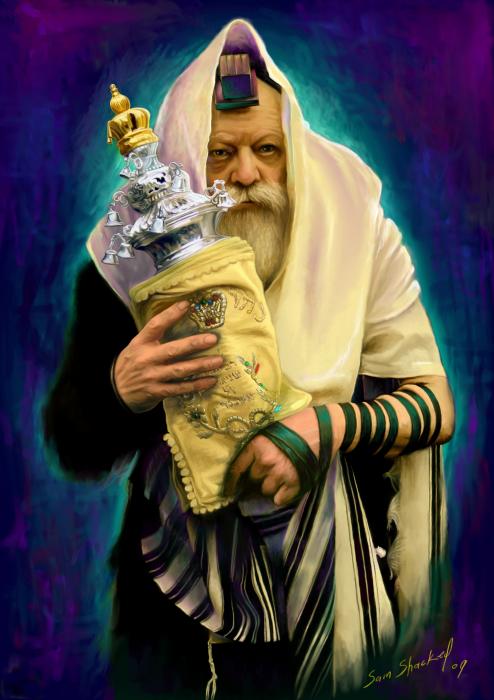
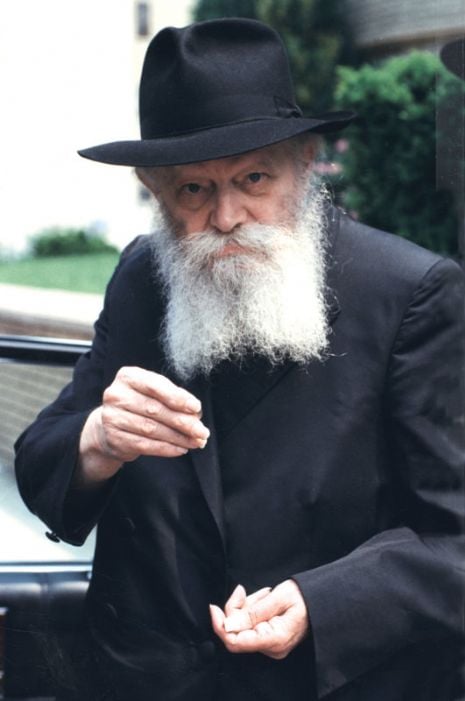
We can surely apply this statement to our current situation, after Gimmel Tammuz. To state the obvious, one of the main problems that we as chassidim face in our time is that we do not see the Rebbe physically. Yes, we are able to visit the Rebbe at his holy Ohel and bask in his physical presence. Yes, we can view pictures and videos, and with an ease and availability completely not possible even a decade ago, and we surely need to appreciate and make the most of this. Likewise, audio of the Rebbe speaking is more available than ever before. And despite it all, at the end of the day, we don’t see the Rebbe himself with our eyes of flesh.

Obviously, part of the interim solution to this problem is to remind ourselves constantly of the truth that the Rebbe taught us again and again when discussing the Previous Rebbe (and especially over the course of the year after the Previous Rebbe’s Histalkus—see, for example, here) that a Rebbe never abandons his chassidim, and so we, too, know (see here) that the Rebbe davvens for us, blesses us, guides us, and leads us even now no less than before. In fact, in a sense he leads us even more than before, albeit in a hidden way.

Yet of course, all this is not enough. When the Rebbe is hidden from the chossid (due to our many sins), the chossid should not be satisfied with relating to the Rebbe in a hidden way, because this is not the way that the relationship of Rebbe and chossid ought to be. Rather, he should be filled with an intense desire to be physically reunited with the Rebbe.


The Rebbe himself has set this example for us, for he famously wished at the conclusion of his very first ma’amar (see here): “May we merit to see the [Previous] Rebbe, down here in a physical body and within our immediate reach, and he will redeem us.” Moreover, a chossid should regard it as his personal responsibility to bring this reunion about, as the Rebbe wrote to Reb Avrohom Parizh: “Reb Avrohom, we have to bring the Rebbe back” (Igros Kodesh, Vol. 4, p. 156).

But imagining, yearning, and praying to see the Rebbe again,
as important as they are, are not enough. Chassidim are bound to the Rebbe through an intense love (see here), and part of love is a desire to make one’s beloved happy, and to avoid causing him or her pain. Thus, the desire to be reunited with the Rebbe should also bring us to Teshuvah, to change our behavior such that it conforms with the Rebbe’s instructions totally, for we realize that not only is the Rebbe pained now when we behave inappropriately (for he surely sees the way we are acting even now), but when we will at long last be reunited with the Rebbe (and it is only a matter of time, im yirtzeh Hashem), he will look at us and look through us and be reminded of exactly how we acted when he was hidden. And we will look back at him.

So let’s imagine it, and ask ourselves fearlessly exactly what type of response we will deserve, as painful as that question may be.

We cannot escape the fact that whether the Rebbe’s response will be one of joyful pride or painful disappointment depends upon the way we choose to act now, in the moments before we are reunited. So let’s act wisely and make sure we don’t, as they say, have “egg on our faces” when Moshiach comes.

Thursday, September 16, 2010

Pure performance of Mitzvos—through Hiskashrus

Reb Itche Der Masmid once used the following analogy to explain the necessity to maintain a relationship with a Rebbe:
When a sheep goes astray in the forest, it knows that it must make its voice heard so that its shepherd will find it and save it. Yet it also knows that crying out may enable carnivorous animals to identify its location and devour it. The animal is stuck, for if it does not cry out, it will remain lost.


The lesson from this is: Performing a Mitzvah may engender a certain sense of arrogance. However, if one doesn’t perform the Mitzvah, he faces an even more perilous option—neglecting to fulfill Hashem’s will.


The solution to this is “Seek Your servant” (Tehillim 119:176). One should seek a true servant of Hashem—the Rebbe—and turn to him. Then one is assured that he will be saved from the danger of arrogance that is associated with performing a Mitzvah.


Yiras Hashem Otzaro, p. 147.
This can apparently be explained in a straightforward manner. A Rebbe is in a constant state of total bittul (self-abnegation), in which his sense of self is only the sense of the G–dliness within him (see here). Thus, by maintaining Hiskashrus (bonding) with him, one is able to significantly connect with his level of bittul to Hashem, and thereby transcend the arrogance that performing the Mitzvah may otherwise cause.


Another related explanation may perhaps be that the reason that a person is able to feel arrogant in his performance of Mitzvos is that he feels distant from Hashem, and lacks a sense of the reality of Hashem’s presence. However, since the Rebbe “sees” G-dliness (see here), by bonding with him we too are able to sense the reality of Hashem’s presence in a very tangible manner (albeit not to anywhere near the degree that he has attained). This feeling humbles us, and so precludes any trace of arrogance.


(Concerning the ability that the Rebbe grants for one to perform Mitzvos in the most complete manner, see also here.)

Wednesday, September 15, 2010

The Moshiach paradox: Preparing and praying

The Moshiach Paradox:
Preparing and Praying

Rabbi Y. Oliver

When Reb Itche Der Masmid would speak of the imminent arrival of Moshiach, he would say, “If only I had another fifteen years to prepare!” In other words, although he was confident that Moshiach would come immediately, since he felt that he wasn’t truly ready, he wished that he could have more time to prepare.


Yiras Hashem Otzaro, p. 144.
Chassidus Chabad teaches that everything a Jew does should be done in a way of pnimiyus, through full preparation, and so every chossid yearns that everything he does be done in a way of pnimiyus, and if it is not, he feels pained. So when he thinks of the coming of Moshiach, a part of him may thus legitimately desire that Moshiach’s coming be delayed so that he can prepare himself further.


However, at the same time, the one’s faculty of emunah will bring him to feel that Moshiach’s arrival is imminent. One feels this all the more now that the Rebbe has declared that “The time of your redemption has arrived!” and that “Ot, ot, kumt Moshiach! (Moshiach is coming very soon)!” Moreover, one davvens sincerely for Moshiach to come immediately because he senses the pain of the Shechinah and the Jewish people in exile. He yearns for the end of the concealment of G–dliness that exile brings, and for Hashem to be revealed in all His glory. He also yearns to be able to serve Hashem in the fullest manner possible—“According to the Mitzvah of Your will” (Mussaf liturgy)—for only when Moshiach comes will we be able to perform all the Mitzvos in the proper manner, and he yearns for the Jewish people as a whole to be able to serve Hashem in this way. 


These considerations override the personal wish that the exile be lengthened so that one can prepare more fully for Moshiach’s arrival. One willingly forgoes personal perfection for the sake of these infinitely greater concerns, and cries out “ad mosai?!”—how long?! Enough of this exile; Hashem, have mercy on us, and send Moshiach now!


When these two conflicting feelings are combined, one feels the intense desire to utilize every single remaining moment of the exile to prepare as much as possible for the coming of Moshiach, while simultaneously pleading that Moshiach come immediately, even if that means that Moshiach will arrive long before one has finished his personal preparation.

Tuesday, September 7, 2010

Tashlich and Jewish Pride

Tashlich and Jewish Pride

Rabbi Y. Oliver

When the Previous Rebbe first came to Crown Heights in 1940, due to his physical frailty he would not walk to the nearby Botanical Gardens to perform the ritual of Tashlich; instead, he would go on one of the days before Yom Kippur, usually 8 Tishrei (a day especially associated with divine compassion). Each chossid would go to Tashlich separately on the day of Rosh Hashanah when it was convenient for them, or whenever they would go on the following days.


However, when the Rebbe came to Crown Heights the following year, he instructed that everyone walk together in a parade in double file, and sing niggunim (songs) the entire way there and back. It appears that Rebbe’s reason for this was that in those times there were Jews living in the entire area, including many non-religious ones, and this would inspire them. One of the songs that the Rebbe instructed they sing was “volt ich gehat der koiach,” which speaks about keeping Shabbos.


One of Reb Zalman Posner’s relatives told me the following story. In the forties, public displays of Yiddishkeit were unheard-of, and regarded as highly odd. So when the Rebbe first called for the chassidim to sing on the way to Tashlich, Reb Zalman Posner, then a young boy, felt very self-conscious and embarrassed walking with the parade of chassidim to Tashlich. So he was happy when the mashpia, Reb Shmuel Levitin, who was then an elderly chossid, asked Reb Zalman to accompany him on the way to Tashlich, because this meant that he would be lagging behind, and not have to walk with the parade.


On their way back, they walked past an area in which many not-yet-religious Jews lived, and a group of them were standing outside in their Yom Tov finery, but not wearing yarmulkehs. A man approached them and inquired about the reason for the singing. Reb Zalman hesitantly responded that they were singing in honor of the holiday. “Really?” the man said. “You should know that when I heard them singing, it ignited a flame within me.” Reb Zalman realized that Hashem was conveying to him the Rebbe’s wisdom in initiating public displays of Jewish pride.

Sunday, September 5, 2010

A Rebbe's role vis-à-vis his predecessors


A Rebbe's role vis-à-vis his predecessors

Rabbi Y. Oliver

On the one hand, the Rebbe is our Rebbe now, and the earlier Rebbeim are not; on the other, he is the continuation of his predecessors, who are all our Rebbeim now (see here). I would like to briefly explore the elements of this apparent contradiction (see here for an earlier post resolving this issue).


It would seem that a Rebbe (i.e., a Rebbe of Chabad, as this article is based on Chabad sources that discuss the role of Chabad Rebbeim) plays a number of interconnected roles vis-à-vis his predecessors:
  • a Rebbe teaches the chassidim in his generation the teachings of his predecessors, impresses upon them the relevance of the teachings of his predecessors, and encourages them to study his predecessors’ works (see Kuntres HaTefillah p. 11); this includes printing the works of his predecessors, as took place in earlier generations, and as we witness especially in our generation, in the Rebbe’s campaign to publish all the manuscripts of all his predecessors’ writings;
  • a Rebbe selects specific teachings from his predecessors upon which to lay extra emphasis over others, as per the needs of the time (ibid.);
  • a Rebbe takes the teachings of his predecessors and explains them further, so that the next generation, which is on a relatively lower spiritual level, can understand them (ibid.);
  • a Rebbe reveals profound teachings that were known but zealously hidden until his time, in order to bring Moshiach (see here);
  • a Rebbe doesn’t only teach and explain what was taught earlier, but he has the special ability to innovate new concepts in Chassidus that were perhaps not even consciously known to his predecessors (I was taught this, but I am still seeking a source for it);
  • a Rebbe reveals G–dliness in the world (especially through the Chassidus that he reveals), each Rebbe doing so progressively more than his predecessors and thereby drawing the Shechinah (Hashem’s Presence) ever closer to this world, until the seventh Rebbe, our Rebbe, reveals G–dliness fully in this world (see the Rebbe’s very first maamar—Toras Menachem 5711, Vol. 1, p. 195), with the coming of Moshiach.
I believe that especially in this dark time after Gimmel Tammuz, it is vital that we understand and internalize the above. This will imbue us with the motivation and passion to devote ourselves to studying and disseminating the teachings of all the previous Rebbeim, and especially those of the Rebbe, and implementing them in our daily lives, thereby bringing Moshiach now!

Thursday, September 2, 2010

Unnoticed dollars and unscathed picture

I heard the following story from Yaakov Cohen of the Beis Yisroel neighborhood of Yerushalayim. He is from a Litvishe background, went to the Mir Yeshiva as a bochur, and still identifies as such. 

When visiting America in 5743, he visited Crown Heights and received dollars from the Rebbe. He has since left these dollars on open display in his parents’ home. Recently, while the family was away on a day trip, Arabs broke into their home and combed every millimeter of the house, stealing anything and everything that they could find of value. There was only one thing that they missed—the dollars of the Rebbe that were on open display!


This strikes me as very similar to the episode in India, where terrorists attacked the Beis Chabad, killing all there (may their blood be avenged) and devastating the entire building—but leaving a large picture of the Rebbe unscathed.


To me, the significance of this is that the Rebbe represents a level of holiness so sublime and powerful that no kelipos, forces of evil, can touch it.

Sunday, August 29, 2010

Don't dress like a chossid if you don't want to act like one!

A distinctive dress code identifies one as a member of a particular group throughout the world, and the world of religious Jewry is no exception. 


It is minhag Chabad to wear a kapoteh on Shabbos (as discussed earlier). Since a person is largely defined by his clothes, it has become communally accepted that by choosing to wear this garb, one is in effect declaring that one identifies as a Chabad chossid; conversely, by choosing not to wear such garb, one fails to truly identify himself as a Chabad chossid.


Now I’m not quite sure why this is the case, and moreover I question whether it’s correct to make this the measure of identification. However, what is clear is that it is popularly regarded as such. So someone who takes upon himself to wear a kapoteh, which is generally a distinctive Chabad garb, is viewed by others, rightly or wrongly, as someone who wants to be viewed as a Chabad chossid, and thus for all intents and purposes, is a Chabad chossid. 


Now, since the wearer of this garb knows that this is what others will think, even if he has some other intention in wearing this garb, that is irrelevant; he must consider the way he will be perceived by others. Thus, we find that according to Halacha one is considered to be desecrating Hashem’s name whenever one does something that others will perceive as wrong; even if one has a valid reason for doing so, it is a chillul Hashem, and one’s intentions are irrelevant.


So when someone who wears a kapoteh talks during the minyan, in addition to desecrating the name of Hashem, he is desecrating the name of the Rebbeim of Chabad, and the path in the service of Hashem that they have propounded. However, when he talks during the minyan and does not wear a kapoteh, he is desecrating the name of Hashem in general and his actions are of course wrong and indefensible, but he is not desecrating the name of the Rebbeim of Chabad. In this respect, his actions are less worse.


If you know that you’re going to talk in Shul, don’t come. And if you must come, at least don’t wear a kapoteh. Because if you show no respect for Shul, then your kapoteh and the declaration of affiliation that it signifies is meaningless and worse.


The same goes for those who trim their beards. Now, although many halachic authorities forbid trimming one’s beard, many using very harsh language, it is true that according to some, it is permitted when done in a certain way. However, those who have taken upon themselves to be chassidei Chabad are bound to follow the halachic rulings of the Rebbeim of Chabad, and since the Tzemach Tzedek maintains unequivocally that trimming one’s beard is forbidden min haTorah, one who identifies as a Chabad chossid and trims his beard violates a severe sin.


The same also goes for women who dress immodestly, and those who allow some of their hair to be exposed by wearing a tichel or the like, instead of following the Rebbe’s clear directive to wear a sheitel. And so on.


I am not claiming to be perfect myself, or claiming that all those who don’t fall short in these areas are perfect or anything approaching it. What I’m saying is simple—if you have chosen to openly, consistently, and most significantly, premeditatedly flaunt the minimum standards of observance of Shulchan Aruch expected of a Chabad chossid, then do yourself and everyone else a favor and don’t identify as one. 


Because by doing so, not only are you sinning more than if you had not so identified, you are causing others to sin. When the atmosphere in the community is such that talking in Shul, trimming, dressing immodestly, and so on, is acceptable, then those who are already weak follow the bad example of those individuals, some of those who are stronger are weakened, and in general, the entire community is dragged into the mud.


I’m sure many of you will brand me intolerant. So be it. But, I say to these flagrant violators, what about your intolerance? Your intolerance for the clear rulings of Shulchan Aruch, disrespect for the standards of the community that you so proudly claim to adhere to, and disrespect for the Rebbe and his teachings, to which you declare yourself to be so loyal? What about your selfish, stubborn refusal to consider the spiritual damage you wreak upon your environment? What about your insensitivity to the sincere religious feelings of those who truly want to serve Hashem in the community, and their desire to live and raise their children in a wholesome atmosphere of G-d-fearing Jews and devoted chassidim?


If you must do these things, please, I beg of you, stop identifying yourself as formal members of the Chassidic community. If you must, dub yourself a “friend of Chabad.” Come and learn Chassidus, attend farbrengens and the like, and grow at your own pace. If and when you reach the point in your spiritual growth at which you are ready to follow the required standards of behavior, then your choice to openly and proudly identify yourself as a chossid will elevate both yourself and the community. 


Until then ... leave the kapoteh at home.


(See also this letter of the Frierdiker Rebbe, which expresses a sentiment similar, and perhaps even stronger, than that in the above article.)

Thursday, August 26, 2010

Gradual Growth for Beginners


Gradual Growth for Beginners

Rabbi Y. Oliver

How does one go about teaching Jews coming from an assimilated background how to adopt Torah observance? It involves understanding where they are coming from.

For them (especially if they are older), even a small change from their regular schedule of observance usually requires a tremendous internal effort. Thus, demanding that they take on everything at once, or even many things at once, or even several things at once, may be so overwhelming that they will end up doing nothing, as the Gemara states, “One who grabs too much ends up with nothing”.[1] This could mean that they will not listen in the first place, or it could mean that they will listen and do as expected, but will over time come to feel resentful, and that the change in their lifestyle was forced.


Thus, often it is only appropriate to encourage beginners to take upon themselves one solitary Mitzvah. Once they have done that Mitzvah for a while, and feel comfortable doing it, then they can take on another, until they feel comfortable doing that one, and so on.

Thus, those who are in the position of teaching beginners to Torah observance should guide their students slowly, step by step, instructing the student to focus on bolstering their observance of the specific Mitzvah in which he or she has chosen to grow, and not to jump ahead.


On the other hand, the teacher must avoid any words or actions that could be construed as endorsement of non-observance.  Instead, the teacher must make it clear that the changes that the newcomer has adopted are not the end of the journey, but only the beginning.

This is comparable to teaching a child Alef beis. First one teaches an alef, then a beis, and so on. During this process one does not tell the child that an alef is the only letter there is to know, or the only one worth knowing. Rather, one tells him that today an alef will suffice as a beginning, since one can’t learn everything at once; however, with time he will learn more and more letters, until he will master them all. Then, he will learn to combine different letters into words, and he will learn different words, and ideas in Torah, until he will become, with the help of Hashem, an accomplished great Torah scholar.

When one starts with teaching a child an alef, in no way does this constitute compromise. On the contrary, this is the proper way to learn—to start from the beginning, and advance from step to step.

The same principle holds when teaching the Alef beis of Yiddishkeit. One should encourage the beginner to take upon himself one Mitzvah and continue observing it until he feels comfortable with it. Only then should he take upon himself another, additional Mitzvah, until he feels comfortable with that Mitzvah, and so on. Since “One Mitzvah brings another in its wake,”[2] he will ultimately come to full observance, with the help of Hashem and the support of his teacher and, when possible, of his family and community.

Although this approach seems logical and should be altogether simple and straightforward, it is not intuitively clear for someone who has been raised frum, for he has been trained from early childhood to fulfill all the Mitzvos without compromise. 

Certainly once he has reached Bar or Bas Mitzvah, he is told to keep the entire Shulchan Aruch, whether he feels comfortable doing so or not. The idea of consciously choosing to keep one Mitzvah and not others, even temporarily, runs against his grain (and this is the way he should feel). Thus, when teaching the beginner, the teacher raised frum must make a conscious effort to adjust to the vastly different circumstances of his pupil.

Adapted from Likkutei Sichos, Vol. 33, pp. 145-148.


___________________
[1] Rosh Hashanah 4a.
[2] Avos 4:2.

Tuesday, August 24, 2010

Wearing a kapoteh on Shabbos

On Shabbos Bereishis 5711 (1950), the Rebbe said to Rabbi Greenglass of Montreal:
It should become standard for married chassidim to wear silk kapotes on Shabbos and Yom Tov, and I wish to thank in advance those who will do so. The idea that one’s garments on Shabbos and Yom Tov should be silken is mentioned in a Ma’amar of the Rebbe Rashab [1].


In general, the behavior [of chassidei Chabad] should be distinctive, and this should express itself in the fact that on Shabbos and Yom Tov one wears a silk kapote.


I am surprised at those chassidim who do not wear silk kapotes on Shabbos and Yom Tov It appears that the reason for this [failure to observe this custom] is the poverty that prevailed in Russia, which meant that chassidim were not able to wear silk kapotes.


In any case, the time has come that people should start wearing silk kapotes, and over time all married chassidim will come to follow this practice.


Toras Menachem 5711, Vol. 1, p. 53. 
[1] The following sources are cited in the footnote to this sicha:

In
Sefer HaMa’amarim 5660-1-2, p. 231 the Rebbe Rashab cites from the works of Kabbalah that on Shabbos one’s garments are connected with the world of Beriah, which parallels chai, the animal world; thus, one’s garments should be made of silk, which comes from the category of chai. (To explain, the four spiritual worlds correspond to the four levels of creation: Atzilus—medaber, mankind; Beriah—chai, the animal kingdom; Yetzirah—tzomeach, plant life; Asiyah—domem, inorganic matter. Thus, since on Shabbos there is a revelation of the world of Beriah, it is fitting to wear garments made from animal kingdom.)


Likewise, in Sefer HaMa’amarim 5671, p. 247 the Rebbe Rashab mentions the same practice, and also explains that since on Shabbos the world receives from the level of Hashem’s thought, so to speak (the worlds of Beriah, Yetzirah, and Asiyah corresponding in Kabbalistic thought to thought, speech, and action respectively), on Shabbos one should wear garments made from chai, while during the week one should wear garments made from tzomeach, plant life.


In Sefer HaMa’amarim 5672, Vol. 2, pp. 872-873, the Rebbe Rashab cites this in the name of the Mikdash Melech (a classic commentary on the Zohar written by Rabbi Shlomo Bazuglo).
In addition to the point the Rebbe makes that on Shabbos chassidim ought to wear a silk kapoteh, it appears clear and self-evident that the Rebbe is also making an implied statement that ... on Shabbos chassidim ought to davka wear a kapoteh, and not suffice with a suit.

Thursday, August 19, 2010

Changing our surroundings

Sometimes we may choose to deal with unpleasant situations by withdrawing and thereby escaping from that environment. In the letter below, the Rebbe explains that if one is in a position of influence, he must not immediately withdraw when conflict arises; rather, he should persistently work toward fixing the problem in his current environment, albeit in a constructive manner.
... As for what you write concerning praying with a Minyan—this is one of the foundations [of Jewish observance]. It is understandable that the mundane talking that you hear in Shul disturbs you greatly. However, the solution to this is not to davven alone in your home; instead, you should use your influence, and the warmth with which Hashem has blessed you, to influence those around you to behave in Shul, which is a holy place, as one ought to behave in a holy place. When you speak to a Jew—and the core of every Jew [“pinteleh Yid”] always remains whole—and you speak to him with heartfelt words, ultimately you will succeed, and then the merit that will come to the community will be attributable to you.


Igros Kodesh, Vol. 9, p. 303.
Moreover, the HaYom Yom of 30 Adar I states that affecting one’s environment is a defining quality of a chossid:
My father [the Rebbe Rashab] said, “A chossid creates an environment. If he does not, he had better check his own baggage carefully, to see whether his own affairs are in order. The very fact that he fails to create an environment should make him as broken as a splinter. He must demand of himself: ‘What am I doing in this world?!’”