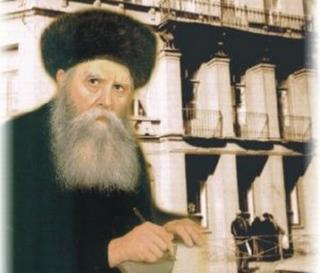
"Moshiach is ready to come now-our part is to increase in acts of goodness and kindness" -The Rebbe

Showing posts with label 10 Shevat. Show all posts

Tuesday, January 22, 2013

The Inner Struggle Against Spiritual Desensitization

The Inner Struggle Against
Spiritual Desensitization

In honor of 10-11 Shevat

Rabbi Yehoishophot Oliver

Our sages say, “A person does not sin unless possessed by a spirit of foolishness.”[1]  It is “foolish” because it seeks to entice the person to sin by concealing from him the truth.

The core truth that the “spirit of foolishness” seeks to conceal is the absolute reality of Hashem. “Hashem Elokim is true; He is the living G–d.”[2] Hashem is the ultimate Truth, He grants life to all creatures, and true life comes only through bonding with Him (see here).

But the “spirit of foolishness” seeks to pull the wool over our eyes and bring us to forget this. Hence it is called Kelipah, “shell,” for it conceals the reality of Hashem just as a peel hides the fruit within it.[3]

When the “spirit of foolishness” takes hold of the person, although he may accept that Hashem exists, and believe in the Torah, this awareness becomes abstract and distant from his heart. How does the Evil Inclination bring the person down to this state?

It does so by enticing him to pursue selfish, crude, base desires with intense passion.[4] He gets so carried away with his lusts that he becomes completely desensitized to spirituality, may G–d save us.

More subtly, the mere immersion in and pleasure from worldly matters, even if they are not outright hedonistic, gradually desensitizes the Jew from holiness. The Hebrew word for world, olam, is etymologically related to the word he’elem, concealment, for the world conceals the true reality of Hashem.[5] Therefore, when the person becomes immersed in worldly, secular pursuits and derives his pleasure from them, that very preoccupation dulls his heart to the spiritual and the holy.

In any case, after some time passes, the person no longer feels the rich beauty of fulfilling Hashem’s Mitzvos, the sublime sweetness of delving into Hashem’s Torah, and the intense ecstasy of pouring out his heart to Hashem in prayer.

Then he degenerates further, until he no longer feels low and embarrassed before Hashem when he sins, no longer feels pained at the thought of rebelling against Hashem, and no longer feels disgust and horror at the thought of living a G–dless life.

Then he degenerates still further, his Bestial Soul taking over to the extent that he behaves like a beast—hence the name. An animal tramples and pays no attention to what is underfoot—whether it’s earth, wood, or a person. It has no ability to discern. So does this degenerate person act without discernment, scoffing at religious people and spiritual pursuits of which he has no concept (although he may choose to perform some Mitzvos—the ones that appeal to him). His failure to recognize the value of the spiritual and even scoff at it stems from his complete desensitization to the spiritual.

When we are aware of this danger, we are able to, with the help of Hashem, be vigilant to sensitize ourselves to holiness by striving to constantly grow in our observance of Torah and Mitzvos, especially through the light and inspiration derived from studying Chassidus and following its ways, thereby overcoming the spiritual darkness of the world in the last moments of exile, and bringing Moshiach now.

Based on this year’s chapter of the Previous Rebbe's Basi Legani (ch. 3).
See p. 7ff. in this booklet).

____________________________
[1] Sotah 3a.
[2] Yirmiyahu 10:10.
[3] Torah Ohr 61d. Sefer HaMa’amarim 5648, p. 220.
[4] Cf. Sefer HaMa’amarim 5709, p. 163ff.
[5] See Likkutei Torah, Shelach 37d. Ibid., Va’eschanan 2c.


Dedicated by Shmuel and Sara Rochel Markel in honor of the birth of their daughter, Yehudis bas Shmuel Leib. Yegadluha leTorah, lechuppah, ulemaasim tovim mitoch harchavah!


Dedicated in the merit of a speedy release for the captives Yonasan ben Malka (Jonathan Pollard), Alan Gross (Aba Chonah ben Chava Chana), Sholom Mordechai Halevi ben Rivka (Sholom Rubashkin), and Zeva Rochel bas Chaya (Wendy Weiner Runge).


~~~~~~~~~~~~~~~~~~~~

Like what you read? The articles I write take a lot of time and effort. Please contact me to sponsor an article for (at least) $36 in honor of the birthday, wedding anniversary, or yarhtzeit of a loved one, or for a refuah shleimah or the like. Also, see here concerning the tremendous merit of supporting the dissemination of Chassidus, and the blessings that one receives for doing so.

Saturday, January 15, 2011

Yud Shvat: Anniversary of the Rebbe's First Maamar


On Yud Shevat, 5710 (1950), the Previous Rebbe passed away. Now, it is clear that in many respects, the Rebbe assumed the role of the Previous Rebbe’s successor immediately upon the Previous Rebbe’s passing. As the verse says, “The sun sets and the sun rises” (Koheles 1:5), which our sages interpret (ibid, Koheles Rabbah) to mean that there is no gap between the leaders of the Jewish people. The same principle applies to Rebbeim (cf. Hisva’aduyos 5742, Vol. 2, p. 1089; Likkutei Sichos, Vol. 12, p. 147).

However, after many months of the chassidim urging the Rebbe to become Rebbe, on the following year, at the farbrengen marking the anniversary of Yud Shevat, the Rebbe delivered a maamar for the first time, and in so doing, the Rebbe accepted the mantle of leadership officially.

Since today, Yud Shevat, is the anniversary of that day, let us consider the way that the Rebbe officially became Rebbe. The main thing that the Rebbe did to become Rebbe was deliver a maamar. Why does delivering a maamar make one a Rebbe?

To answer that question, let us ask: What is a maamar? A maamar is not just an explanation of Chassidus. During the delivery of a maamar, a Rebbe enters a state of deveikus (“intense bonding”) with G-dliness to the extent that G-dliness is revealed in him and to the world to the most pure, intense degree possible before Moshiach comes. Put differently, although at any time Hashem reveals Himself through the Tzaddik (see here), still, this reaches its highest point during the delivery of a maamar, about which Reb Hillel Paritcher said that a Rebbe then reaches the level of “The Shechinah speaks through the throat of Moshe” (Zohar 3:232a, Sefer HaSichos 5697, p. 165).

Reb Hillel Paritcher also expressed this by saying that when a Rebbe delivers a maamar, it is like the Giving of the Torah (see Hisva’aduyos 5748, Vol. 1, p. 35).

Thus, among many other things, this day represents the time when chassidim had their desire to experience the intense divine revelation of hearing Chassidus satisfied. May e experience that revelation again in the very near future, and hear the first post-Moshiach maamar, which will surely be far beyond anything we have yet experienced, but for which all of our strivings should be geared to preparing us.


And to borrow the phrase with which the Rebbe concluded that first maamar (see here): “May we merit to see and be together with the [Previous] Rebbe, down here in a physical body and within our reach, and he will redeem us.”

Monday, January 10, 2011

Chassidus: Hashem's Most Precious Treasure


Chassidus: Hashem's Most Precious Treasure

Rabbi Y. Oliver

The Previous Lubavitcher Rebbe, Rabbi Yosef Yitzchak Schneersohn, passed away on 10 Shevat, 5710.

Towards the end of his life he would edit Chassidic discourses and instruct that they be printed and distributed for study on particular days of note in the Jewish or Chassidic calendar. These discourses were often edited several months in advance. In the case of the discourse entitled Basi LeGani, the discourse that the Previous Rebbe distributed was a longer one to be released in a series of installments. The previously designated date of the release of the first discourse coincided with 10 Shevat, which turned out to be the day of the Previous Rebbe’s passing. After his passing, the later installments were released on the days that he had earlier designated.

In any case, on 10 Shevat of the following year, 5711, the Rebbe based his first Chassidic discourse (which can be heard here) on the one that had been distributed for study a year earlier, Basi LeGani.

Below the Rebbe discusses this discourse:
The Previous Rebbe’s famous discourse,[1] which he distributed with the intention that it be printed in its entirety, discusses the analogy of a king who has “all the precious treasures of fabulous wealth that was collected and amassed for many years, generation after generation, and which was never used for any purpose, but remained hidden and sealed from all eyes. Nevertheless, when he is in the process of winning the war, he squanders all the treasures.”

This analogy is also mentioned in the Chassidic discourses of the Tzemach Tzedek; however, those discourses do not explain this concept at length, with all the minute detail that is found in the discourse of the Previous Rebbe. The Previous Rebbe specifies that these are “hidden treasures” that contain “fabulous wealth” that was amassed by one’s ancestors, and “never used for any purpose,” not even for his ancestors themselves or for their families, and these treasures are even “hidden from the sight of anyone.” Yet in order to win the war, the king opens up all the treasures, and even squanders them.

This appears to require explanation. Chassidic discourses in general are precise in every detail, and only mention the most relevant details. This is surely so in the case of the discourse that was released [to be studied] on the day of the Previous Rebbe’s passing, when “all the deeds, Torah, and service that he performed throughout his life” rise up to their source in the most sublime manner.[2] It is absolutely certain that every detail of this discourse is totally precise.

Accordingly, why did the last discourse given by the Previous Rebbe before his passing discuss so elaborately the concept of squandering all the treasures? In general, why is it important for people like us, simple people, to know about the way that a king acts in general, never mind knowing about the king’s most precious treasures, fabulous wealth amassed by him and his ancestors, if simple people have no clue of the existence of these precious treasures?

The explanation of this is simple. This analogy is relevant to the general activity of the Previous Rebbe, for he began the squandering of all the treasures, by publicizing numerous Chassidic discourses which until this generation were “hidden and sealed from all eyes.” To the extent that the king himself “never used them for any purpose”; nevertheless, in this generation these treasures were revealed.

The Rebbe Rashab[3] once said that there are numerous discourses and topics in the teachings of the Mitteler Rebbe[4] (and thus also in those of the Alter Rebbe,[5] whose teachings are included in those of the Mitteler Rebbe) that still had not begun being worked on. Obviously he was referring to those who are on the level to [truly] “work on them”; in other words, he said this concerning himself. This is similar to the language of the above analogy, “he never used them for any purpose.”

Yet even these hidden, sealed-away treasures were revealed in this generation ... and even squandered, all for the sake of winning the war [i.e., bringing Moshiach]. This generation is the last generation before the redemption, and its purpose[6] is to fight against those who “blaspheme the footsteps of the Moshiach,”[7] and thereby bring the victory of this war. In order to attain this victory all of the most precious treasures have been revealed.

In this generation the final war is being fought, “the war of the house of David,”[8] whose purpose is to fight against those who “blaspheme the footsteps of the Moshiach” and therefore all the most precious treasures must be revealed and squandered, and there is nothing more to wait for, since we find ourselves very close to “that time” when “There will be no more war.”[9]

Hisva’aduyos 5746, Vol. 1, pp. 87, 88, 89.

______________________________________________________
[1] Sefer HaMa’amarim Admur HaRayatz 5710, p. 132.
[2] Tanya, Igeres HaKodesh, epistles 27-28.
[3] The fifth Chabad Rebbe, Rabbi Shalom DovBer of Lubavitch.
[4] The second Chabad Rebbe, Rabbi DovBer of Lubavitch also known as “The Mittele Rebbe.”
[5] The first Chabad Rebbe, Rabbi Shneur Zalman of Liadi, the father of Rabbi DovBer.
[6] See the discourse from the Rebbe Rashab in Sefer HaSichot 5702, p. 141 ff.
[7] Tehillim 89:52. As explained in the above address from the Rebbe Rashab, this phrase from Tehillim alludes to the phenomenon of those who dismiss and oppose the belief in the coming of Moshiach, in the generation immediately before his arrival.
[8] The war of the house of David” refers to the struggle to strengthen and promote the belief in the coming of Moshiach.
[9] Mishneh Torah, Laws of Kings, 12:5.
There is so much to be said here.

I wish to focus for now on the analogy from precious treasures, and the emphasis of the Rebbe that Chassidus Chabad is in fact these most precious treasures—the most sublime, profound secrets that would otherwise have been completely inaccessible, and are only being revealed now for the purpose of bringing Moshiach.

We may know about this concept, but how often do we think about it? (I’m talking to myself here too.) How spoiled we are. Di Rebbe’im hobn gegosn (the Rebbes of Chabad poured freely the teachings of) Chassidus, Hashem’s most sublime, hidden secrets, so hidden that no earlier generations were privileged to them, all so that we would learn it and teach it, and thereby bring Moshiach, and ... that is how we treat it?

How much do we learn it? How much do we teach it? And even if we do learn and teach it to some extent, how do we relate to it—as one relates to Hashem’s most hidden treasures, or as merely interesting philosophy, intellectually stimulating, another edifying topic for study amongst many others?

Let’s face the truth: If we’re not running to learn it, we haven’t truly internalized this analogy.

With Hashem’s help, this year on Yud Shevat we’ll truly grasp this message, and this recognition will affect our attitude and conduct accordingly until next Yud Shevat, by which time Moshiach will, im yirtzeh Hashem, already have arrived.

Monday, October 25, 2010

Do the Hard Work Yourself!

Do the Hard Work Yourself!

Rabbi Y. Oliver

By delivering his first ma’amar [Chassidic discourse], the Rebbe became a Rebbe. Then he declared the importance of the Chabad approach that every chossid should strive constantly for inner change, and not rely on the Rebbe:
Now, listen up, Jews! In general, the Chabad movement demanded that every individual must invest his own effort, and not rely upon the Rebbeim. This is the difference between the philosophy of the Polish school of Chassidus, and that of Chabad. The latter teaches that the verse, “The Tzaddik will live by his faith” [Chavakuk 2:4] should be rendered, “The Tzaddik will give life [i.e., inspire one to serve Hashem] by his faith.” However, we, who belong to the group of Chabad, need to work together on our own, with the 248 limbs and 365 sinews of our body and of our soul.

The Talmud states that “Everything is in the hands of Heaven but the fear of Heaven” [Berachos 33b]. I am not, G–d forbid, refusing to help, and to help according to my ability. However, since everything is in the hands of Heaven but the fear of Heaven, if you will not exert effort on your own, it will not help that we release manuscripts of Chassidus, sing songs, and toast L’Chaim.

The [Previous] Rebbe would sometimes say, “Don’t fool yourselves.” 
Your task is to take the “foolishness of the other side” and the boiling intensity of the Bestial Soul, and transform it to holiness—and this you must do yourself.

Toras Menachem, Vol. 3, p. 212-213.
How significant that this was the very first public statement that the Rebbe chose to make after he assumed the role of successor of the Previous Rebbe!

To sum up in my own words: In Chabad, the Rebbe’s role is to assist, guide, and inspire the chossid to reach a true understanding of Hashem’s greatness and unity, and a true love and fear of Him—but not to do the work himself. Rather, a Chabad chossid is a Jew deeply committed to engaging in the tough, rigorous effort required to attain this self-transformation: in-depth study of Chassidus, hisbonenus on the Chassidus that one has learned, inspired Tefillah, personal application of the lofty concepts of Chassidus in order to correct his flaws and maximize his good qualities, and good deeds.

This is indeed the work of a lifetime. Without this, all the Rebbe’s teachings, blessings, and advice are pointless, for the person is not acting on them.

Monday, January 12, 2009

Rising with the Rebbe

The Rebbe instructed (see the sicha of 12th of Teves 5747) chassidim to spend the entire month before Yud Shevat preparing for it.

The spiritual ascents of the [Previous] Rebbe, whose Hillula[1] we mark today [on 10 Shevat], go “from strength to strength”[2] throughout the year. However, these ascents are incomparably greater on the day of his Hillula. As he ascends, he takes along with him all those who are bound to him. This he ruled concerning himself, that the shepherds of the Jewish people “will not abandon their flock.”[3]

We find that the same was true of
Moshe Rabeinu, of whom it is written, “He executed the justice of G–d, and His judgment with Israel.”[4] This is interpreted[5] to mean that he remained in the desert in order to be with his flock, so that he will be able to bring them along with him to the Land of Israel [when the final Redemption arrives]. The same is true of all the shepherds of the Jewish people—their primary concern is for their flock.

Rabbi Levi Yitzchak of Berditchev once said that if given the choice to be in
Gan Eden on his own, or in Gehinom together with other Jews, he would prefer to be in Gehinom, for the main thing is to be together with other Jews.

This is the quality of a shepherd of the Jewish people: His entire existence and essence is defined by his role and mission as a shepherd, and therefore he doesn’t care about
Gan Eden and the like. What matters to him is to be together with other Jews, for this is his task and mission.

Thus, we can deduce concerning the ascents [in
Gan Eden] of the [Previous] Rebbe that if his ascents were not relevant to us as well, he would forgo them in order to remain together with his flock. It emerges that he does not rise without us; rather, he takes us along with him in his ascents.

Thus, when we move slowly and do not go along with him, not only are we lacking in our fulfillment of his mission, but we obstruct the [Previous] Rebbe from ascending, for he is bound with us.


Toras Menachem, Vol. 7, pp. 337-338.
_________________________________
[1] The anniversary of his passing.
[2]
Tehillim 84:8.
[3]
Igros Kodesh Admur HaRayatz, Vol. 1, p. 141.
[4]
Devarim 33:21.
[5]
Bamidbar Rabbah 19:12.
The relevance of this sicha for Chabad chassidim after Gimmel Tammuz is self-evident, especially in light of the principle that “he rules concerning himself” (see here) that the Rebbe mentions with respect to the way the Previous Rebbe spoke of the Rebbe Rashab.

So I will translate this to our current predicament after Gimmel Tammuz: The Rebbe maintains his bond with chassidim even posthumously, and certainly doesn’t abandon them, G–d forbid. This is because for him, devotion to his chassidim is of the utmost importance, superseding even his enjoyment of spiritual delights. By maintaining our hiskashrus with the Rebbe even after his passing, since the Rebbe surely maintains his bond with us in kind, we too rise to the same lofty heights that he reaches. But this is provided that we are sufficiently devoted to him, for if not, since he always maintains his bond with his followers, the opposite process occurs—the followers’ unworthiness holds the Rebbe back from rising higher, G–d forbid.


Like what you read? The articles I write take a lot of time and effort. Please contact me to sponsor an article for (at least) $36 in honor of the birthday, wedding anniversary, or yarhtzeit of a loved one, or for a refuah shleimah or the like. Also, see here concerning the tremendous merit of supporting the dissemination of Chassidus, and the blessings that one receives for doing so.